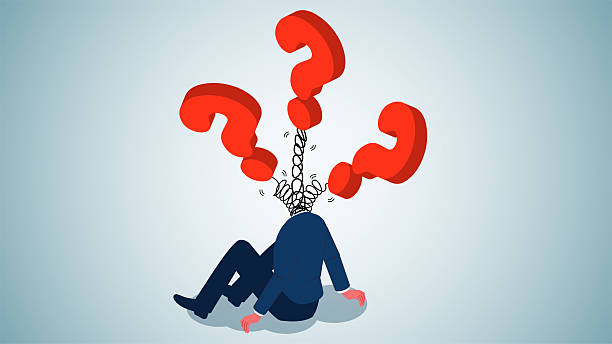
Imagine you are sitting alone in a quiet room. You have a belief that feels solid, perhaps something as simple as “I am a good person” or as complex as “My career path is the right one.” Now, ask yourself one question: why? Not in a defensive way, but with genuine curiosity. Why do you hold this belief? The first answer will come quickly, a surface-level justification. But then you ask again: why is that justification valid? And again. And again. This process of repeated, relentless “why” questions is not a trick or a trap. It is a philosophical exercise known as the Why Ladder, and it is one of the most direct paths to radical self-inquiry. By climbing down this ladder—moving from the top rung of certainty to the bottom rung of raw experience—you transform doubt from an enemy into a tool for dismantling illusion and building unshakeable confidence.
The Why Ladder works because it exploits the natural gap between what we believe and why we believe it. Most of our convictions are inherited from culture, upbringing, or habit. They sit in the mind like furniture we never chose to buy. When you ask “why” the first time, you usually hit a layer of reasoning that feels plausible. But the second “why” often reveals a hidden assumption. The third “why” may expose a contradiction or a leap of faith. By the fourth or fifth rung, you often reach a place of profound uncertainty—a point where you realize that the belief rests on something you cannot ultimately prove. This is not failure. This is the moment of liberation. The goal of the exercise is not to destroy your beliefs, but to see them clearly, to own them as choices rather than facts.
Consider a practical example. Someone believes “I am not good enough to start a business.” The first why: because I lack experience. Second why: why does that matter? Because people with experience succeed more often. Third why: is that always true? No, many succeed without experience. Fourth why: then why do I still feel inadequate? Perhaps because I compare myself to others. Fifth why: why do I compare? Because I was taught that my worth depends on achievement. At this rung, the belief reveals itself as a learned story, not a universal truth. The doubt that arises at each step is not a sign of weakness but a crack in the armor of assumption. Through that crack, new possibilities flood in.
This exercise directly engages existential doubt—the kind that questions the very meaning of self, reality, and knowledge. When you climb down the ladder far enough, you encounter what philosophers call the groundlessness of belief. You realize that even your most cherished truths rest on a foundation of unproven axioms. For example, you believe your senses tell you the truth about the world. Why? Because they have been reliable. Why is that reliability a good reason? Because you trust past experience. Why trust the past? Because you assume the future will resemble it. And why assume that? Because you cannot help it. At this deepest rung, you face the raw fact that you are a creature who must act on faith—not blind faith, but the kind of pragmatic faith that allows you to live. The doubt you encounter is not paralyzing; it is clarifying. It strips away false certainties and leaves you with what is genuinely yours: the decisions you make in full awareness of uncertainty.
The practice of radical self-inquiry through the Why Ladder also cultivates a specific kind of confidence: the confidence of the skeptic who has tested their own foundations. Unlike arrogance, which pretends to have all answers, this confidence comes from knowing exactly where your knowledge ends and your choices begin. When you have climbed down the ladder and seen the bedrock of your beliefs, you can choose to re-ascend, now with full awareness. You can say, “I know that this belief cannot be proven absolutely, but I choose to hold it because it serves my life.” That is not weakness; that is empowerment. Doubt, when harnessed as a tool of inquiry, becomes the very thing that strengthens your grip on what matters.
So try it today. Pick one belief you hold dear. Write it down. Then ask “why” and write the answer. Then ask “why” again. Keep going until you feel the ground shift beneath you. Do not stop when you feel uncomfortable. That discomfort is the signal that you are approaching something real. When you finally reach a rung where no further answer comes—where you must simply say “I don’t know” or “I choose”—you have arrived at the origin of your belief. From that place, you can rebuild with intention. The Why Ladder does not promise to eliminate doubt; it promises to make doubt your ally, your teacher, and ultimately the architect of a more authentic self.