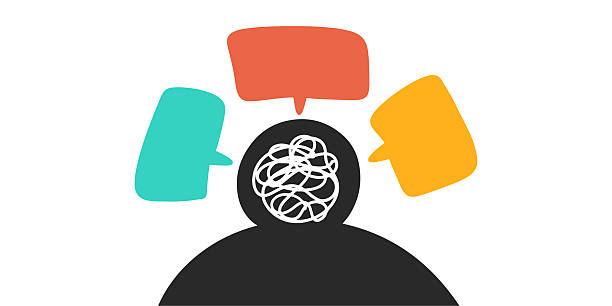
The weight of expectation is a curious thing. For those written off, overlooked, and underestimated, pressure does not arrive as a burden but as a gift. The underdog walks into the arena with nothing to lose and everything to prove. Yet the doubt that churns in the gut—the whisper that says you are not enough—remains the most relentless opponent. But what if that whisper is not a weakness? What if the very doubt that threatens to cripple you is the precise mechanism that sharpens your focus, fuels your preparation, and ignites your will? The truth is that doubt, when embraced rather than resisted, becomes the underdog’s secret weapon. And pressure, far from being an enemy, is the privilege of those who still have a chance to rise.
Consider the physiology of pressure. When the stakes climb, your heart rate accelerates, your senses sharpen, and your mind enters a state of hyper-awareness. Most people interpret this as fear. Underdogs, however, learn to reinterpret it as readiness. The identical bodily response that makes a favorite tighten up can make the challenger lock in. This is not mere semantics; it is neurological. Research on performance psychology shows that stress and excitement produce the same arousal pattern in the nervous system. The only variable is the cognitive label you attach to it. Those who say “I am excited” outperform those who say “I am nervous” every time. The underdog, free from the crushing weight of maintaining a reputation, can afford to translate that thumping heart into a battle drum. The favorite plays not to lose; the underdog plays to win.
Doubt, in particular, serves a function that confidence cannot. Confidence often leads to complacency, a quiet assumption that past success guarantees future results. Doubt keeps you hungry. It forces you to review the tape one more time, to drill the fundamentals, to ask the uncomfortable question: What if I am wrong about my preparation? This self-interrogation is not a sign of fragility but of adaptability. The underdog who doubts their readiness will close every gap, anticipate every counter, and prepare for the worst-case scenario. Meanwhile, the favored competitor, blinded by certainty, overlooks the tiny crack that later becomes a chasm. Doubt is not the opposite of confidence; it is the guardian of it. It ensures that your confidence is based on evidence, not arrogance.
Embracing pressure as a privilege reframes the entire narrative of competition. Pressure means that what you are doing matters. It means that people are watching, that the moment has weight, that the outcome will ripple beyond your own skin. For the underdog, this is not intimidation—it is validation. Every ounce of pressure is a reminder that you have climbed high enough to be tested. The team facing a dynasty is not burdened; they are honored to have the chance to dethrone a giant. The student facing a final exam they might fail is not cursed; they are privileged to be in a room where knowledge is still the gatekeeper. Pressure is the tax you pay for the opportunity to change your story.
The most powerful shift occurs when the underdog stops seeing their disadvantage as a deficit and starts seeing it as a filter. The doubters, the skeptics, the critics—they are not obstacles. They are fuel. Every “no” becomes a challenge to prove them wrong. Every raised eyebrow at your credentials becomes a reason to outwork everyone in the room. This is not about spite; it is about focus. When you have nothing to protect, you can swing with everything you have. The favorite plays the game; the underdog plays the moment. And in that single, razor-thin slice of time, the pressure itself becomes a collaborator.
But how do you actually practice this embrace? It begins with a simple reframe. The next time your hands tremble before a big moment, say to yourself: This is my body preparing me for greatness. The next time doubt whispers, answer it: Thank you for reminding me to be sharp. You do not silence the doubt; you recruit it. You let it stand in the corner of your mind, not as a master, but as a sentinel. You breathe through the pressure, acknowledging that you are alive, engaged, and present in a way that the comfortable never are. The underdog’s edge is not the absence of fear. It is the willingness to feel fear and move forward anyway.
History is littered with underdogs who turned doubt into dynamite. The boxer with the losing record who knocked out the champion. The start-up that challenged an industry giant with a fraction of the budget. The student who barely passed high school and then built a billion-dollar company. In each case, the pressure was not something they survived. It was something they used. They understood that pressure is the forge where character is tempered. Without the crushing weight, the steel remains soft. Without the doubt, the mind remains slow. Without the extraordinary privilege of being the one no one expects to win, they would never have discovered the extraordinary depth of their own resolve.
So the next time you find yourself in the underdog’s position, do not pray for the pressure to lift. Pray for the strength to carry it. Do not beg for the doubt to disappear. Thank it for keeping you honest. Because the moment you embrace pressure as a privilege, you stop being a victim of circumstance and become the author of your own improbable story. And in that story, the doubt that once haunted you becomes the very thing that set you free.