Skip to Content

All Articles

The Epistemic Value of Reading Detractor Arguments

The Epistemic Value of Reading Detractor Arguments

To curate a personal library of doubt resources is to engage in a deliberate act of intellectual autobiography: every book, article, or transcript you choose to include reflects a commitment to...

From Achievement to Anxiety: The Post-Success Imposter Drop

From Achievement to Anxiety: The Post-Success Imposter Drop

The moment should be euphoric.
The Art of Belonging Without Believing: Agnostic Faith Communities

The Art of Belonging Without Believing: Agnostic Faith Communities

In the landscape of modern spirituality, few experiences are more isolating than standing at the threshold of a faith tradition while clutching a handful of doubts.
The Spiritual Value of Uncertainty: Finding Stability in Faith’s Unstable Moments

The Spiritual Value of Uncertainty: Finding Stability in Faith’s Unstable Moments

Faith, by its very nature, is a journey into the unknown.

The Underdog’s Secret: Turning Setbacks into Stepping Stones

The Underdog’s Secret: Turning Setbacks into Stepping Stones

For the underdog, doubt is not an enemy to be vanquished but a constant companion that whispers failure before the race begins.
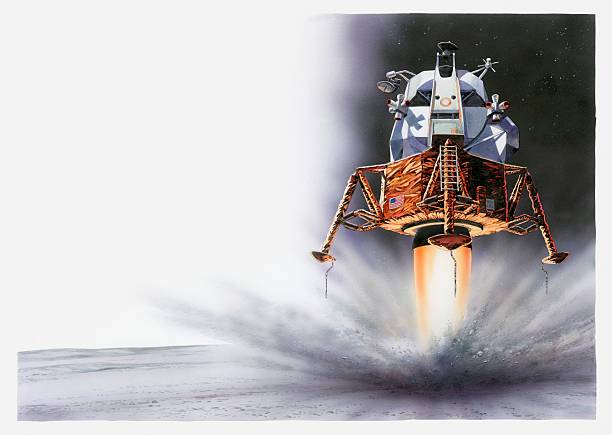
The Texas Sharpshooter Fallacy in Moon Landing Conspiracy Claims

The Texas Sharpshooter Fallacy in Moon Landing Conspiracy Claims

Among the most insidious logical traps that ensnare even intelligent minds is the Texas sharpshooter fallacy, a pattern of reasoning that perfectly illustrates how alternative narratives can...

The Ritual of Weekly Proof Harvesting: A Structured Approach to Cataloging Small Wins

The Ritual of Weekly Proof Harvesting: A Structured Approach to Cataloging Small Wins

The inner critic operates on a diet of selective memory.

How to Craft Affirmations That Rewire Your Inner Critic’s Neural Pathways

How to Craft Affirmations That Rewire Your Inner Critic’s Neural Pathways

The inner critic is not a character flaw; it is a survival mechanism gone rogue.

The Doubt That Toppled Monarchies: How Questioning Divine Right Fueled the Enlightenment

The Doubt That Toppled Monarchies: How Questioning Divine Right Fueled the Enlightenment

For centuries, the idea that kings ruled by divine appointment was accepted as an unshakable truth.

The Unseen Scaffold: Why Community Matters in Faith Deconstruction

The Unseen Scaffold: Why Community Matters in Faith Deconstruction

For those who have begun the slow, often painful process of unthreading their inherited beliefs, faith deconstruction can feel like a solitary excavation.

The Apophatic Path: Embracing Divine Mystery When Certainty Collapses

The Apophatic Path: Embracing Divine Mystery When Certainty Collapses

For the believer who has begun the arduous process of deconstruction, the first casualty is often the very framework that held their world together: theological certainty.

The Impostor Syndrome: When Success Feeds Self-Doubt

The Impostor Syndrome: When Success Feeds Self-Doubt

Imagine receiving a promotion, a glowing performance review, or an award from a respected organization.

The Doubt of Others: The Hidden Catalyst for Underdog Triumph

The Doubt of Others: The Hidden Catalyst for Underdog Triumph

External doubt is a peculiar form of friction.

Impostor Syndrome: The Questioner’s Secret Weapon

Impostor Syndrome: The Questioner’s Secret Weapon

The moment of quiet panic arrives in every questioner’s life.
Embracing the Void: How Experiencing a Faith Crisis Can Deepen Your Spirituality

Embracing the Void: How Experiencing a Faith Crisis Can Deepen Your Spirituality

There comes a moment in many spiritual journeys when the familiar landmarks of belief vanish into fog.
The Paradox of Admitting Uncertainty: How Acknowledging Doubt Builds Credibility

The Paradox of Admitting Uncertainty: How Acknowledging Doubt Builds Credibility

In professional environments where decisiveness is often equated with competence, the impulse to mask uncertainty can feel almost instinctive.
The Mindful Pause: A Daily Tool for Quieting Your Inner Critic

The Mindful Pause: A Daily Tool for Quieting Your Inner Critic

The voice of the inner critic often sounds urgent, definitive, and impossible to ignore.

The Paradox of Trust: How Healthy Doubt Strengthens Relationships

The Paradox of Trust: How Healthy Doubt Strengthens Relationships

Trust is often portrayed as the bedrock of any meaningful relationship, a golden ideal to be built and preserved at all costs.

The Underdog’s Crucible: Transforming Performance Pressure into Power

The Underdog’s Crucible: Transforming Performance Pressure into Power

In the quiet moments before a high-stakes competition, a job interview, or a championship game, the underdog feels the weight of the world pressing down.
The Exercise of Radical Skepticism: Using Doubt as a Tool for Self-Discovery

The Exercise of Radical Skepticism: Using Doubt as a Tool for Self-Discovery

To engage in radical self-inquiry is to take the sharpest knife of doubt and turn it inward, not to wound, but to dissect.

The Crucible of Progress: How the Doubt of Traditional Authority Forged Modern Democracy

The Crucible of Progress: How the Doubt of Traditional Authority Forged Modern Democracy

Throughout human history, the most transformative leaps in social organization have emerged not from unwavering faith in established systems, but from the corrosive, unsettling power of doubt.

From Hollow Words to Deep Belief: The Science of Crafting Affirmations That Rewire Your Inner Critic

From Hollow Words to Deep Belief: The Science of Crafting Affirmations That Rewire Your Inner Critic

The inner critic speaks in sharp, familiar fragments—“You’re not enough,“ “They’ll see through you,“ “You always mess this up.“ Its voice feels true because it arrives fast and dressed in repetition.

The Perfectionism Trap: How Unrealistic Standards Breed Self-Doubt

The Perfectionism Trap: How Unrealistic Standards Breed Self-Doubt

Perfectionism is often mistaken for a virtue.

Seeds of Doubt

Can this approach help with doubt in relationships or social settings?

Absolutely. Social doubts often stem from fears of judgment or rejection. Mindfulness helps you recognize these as internal narratives, not reality. By grounding yourself in the present conversation, you listen more deeply and respond authentically, rather than being hijacked by anxious “what if” scenarios. This builds genuine connection and confidence, as you learn to trust your social self without being overrun by speculative, doubting commentary from your own mind.

Why do people fall for conspiracy theories, and how can doubt help?

Conspiracy theories often fulfill needs for certainty, control, and belonging in a complex world. They provide simple, if sinister, narratives. Here, doubt is misapplied selectively—hyper-skeptical of official accounts yet uncritical of the alternative. To counter this, we redirect doubt equitably. Ask: “What evidence would disprove this theory? Does it require an impossibly vast, leak-proof conspiracy?“ Harnessing doubt systematically builds intellectual humility and resilience against manipulative narratives.

How can leaders use doubt to build stronger, more innovative teams?

Great leaders model “confident doubt.“ They openly say, “I don’t have all the answers; let’s figure this out together.“ This creates psychological safety, empowering team members to voice concerns and unconventional ideas without fear. By systematically doubting the status quo (“How can we improve this process?“), they foster a culture of continuous improvement and innovation. The leader’s role becomes curating the process of inquiry—channeling collective doubt into structured brainstorming, experimentation, and evidence-based decision-making, which builds team cohesion and drives superior results.

Who are some of history’s most famous doubters and what did they doubt?

Thinkers like Socrates, who doubted Athenian “knowledge,“ and Descartes, who doubted everything to find foundational truth, are iconic. Galileo doubted geocentric cosmology, while Marie Curie doubted limits placed on women in science. Their skepticism wasn’t nihilism; it was a rigorous tool to challenge accepted dogma, authority, and superficial evidence, paving the way for new paradigms in philosophy, science, and society.

How Can I Tell if It’s Fear or Intuition?

Fear is often loud, emotional, and projects catastrophic future outcomes. It screams “What if I fail?“ Intuition, in contrast, is a quiet, calm, and immediate knowing. It feels like a gentle pull or a deep sense of clarity without a lengthy narrative. Fear agitates; intuition guides. To differentiate, sit quietly with the feeling. Fear fuels anxiety in your body, while intuition brings a sense of peace or rightness, even if the decision is difficult. It’s the difference between a sinking feeling and a grounded one.