
What If My Inner Doubter Is Just Trying to Protect Me?
We are often taught to wage war against our self-doubt.

When to Question Your Own Doubts: The Wisdom of Intellectual Humility
Doubt is often celebrated as the engine of progress, the safeguard against dogma, and the hallmark of a critical mind.

Navigating the Storm: A Guide to Moving Through Overwhelming Doubt
Doubt, in its milder forms, can be a useful tool—a check against arrogance, a prompt for deeper inquiry.

How Documenting Competence Evidence Silences the Inner Imposter
Imposter syndrome, that pervasive feeling of intellectual fraudulence despite evident success, thrives in the shadows of memory.

Existentialism’s Bold Affirmation of Freedom in the Face of Doubt
The question of free will stands as one of humanity’s most persistent and troubling philosophical puzzles, challenged by scientific determinism, theological predestination, and the seeming influence of unconscious drives.

The Comfort of Certainty: How Conspiracy Theories Fulfill Psychological Needs
In an age of overwhelming information and complex global challenges, conspiratorial thinking offers a seductive alternative to the discomfort of uncertainty.

The Ebb and Flow of Confidence: Why Self-Doubt Is a Lifelong Companion
The journey to self-confidence is often envisioned as a linear path—a steady climb from the valleys of insecurity to the sunlit peaks of assuredness.
How Doubters Can Fuel Your Greatest Success
The sting of skepticism is a universal human experience.

Understanding Your Partner’s Doubts: Insecurities or Relationship Issues?
The landscape of a committed relationship is often punctuated by moments of doubt.

Why Changing Science Is a Sign of Trustworthiness, Not a Flaw
The experience is common: one day, coffee is a health risk, the next it is a source of antioxidants.

The Roots of Skepticism: Why People Doubt Established Science
In an age defined by unprecedented technological advancement and access to information, a curious and consequential phenomenon persists: the widespread doubt of established scientific consensus.

When Healthy Skepticism Turns Toxic: The Line Between Doubt and Harmful Obsession
Doubt is an essential thread in the fabric of human cognition, a necessary counterbalance to blind certainty.

The Critical Distinction: Healthy Skepticism vs. Cynical Doubt
In an age saturated with information and misinformation, the ability to question is more vital than ever.

Cultivating Curious and Respectful Minds: Teaching Children to Question Ideas Thoughtfully
In an age of information overload and polarized discourse, the ability to critically examine ideas is an indispensable skill.

How Embracing Doubt Dissolves Divisive Narratives
In an era defined by entrenched positions and digital echo chambers, the “us vs.
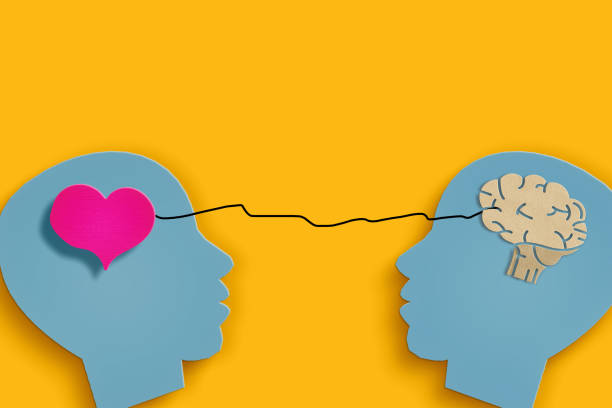
Navigating Difficult Conversations: How to Engage with a Loved One in a Conspiracy Theory
Watching a friend or family member become deeply entrenched in a conspiracy theory can be a profoundly disorienting and painful experience.

How to Cultivate Responsible Skepticism Towards Conspiracy Theories
In an age of information saturation, conspiracy theories proliferate with astonishing speed, often blurring the lines between legitimate inquiry and dangerous misinformation.

Turning Self-Doubt into a Driving Force for Growth
Self-doubt is a universal human experience, a whispering voice that questions our abilities, our worth, and our potential for success.

The Shared Anchor: How Community Grounds Us in Existential Uncertainty
Existential doubts—those profound questions about meaning, purpose, and our place in a seemingly indifferent universe—are fundamentally solitary experiences.

Navigating the Sea of Expert Disagreement
In an age of unprecedented access to information, we are paradoxically confronted with a persistent and unsettling challenge: what to do when the very experts we rely upon seem to be in direct conflict.
Navigating the Delicate Balance: Respectfully Questioning Cultural Traditions
Cultural traditions form the bedrock of societies, weaving together history, identity, and shared values.
Distinguishing Between Constructive Doubt and the Mask of Fear
The inner voice of doubt is a universal human experience, a whisper that can either protect us from folly or paralyze us into inaction.

The Compassionate Challenge: Responding to Doubt Fueled by Misinformation
In an age where sensational falsehoods often travel faster than verified facts, encountering doubt rooted in conspiracy theories or blatant misinformation is a common social and intellectual challenge.
Recognizing the Silent Pull of Groupthink in Your Decisions
The human desire for belonging and consensus is a powerful force, shaping our workplaces, social circles, and communities.