
Skip to Content

Building a Healthy Identity as a Questioner

The Importance of Including “Wrong” Books in Your Doubt Library

The Importance of Including “Wrong” Books in Your Doubt Library

A personal library of doubt resources is not a collection of easy answers, nor a shrine to correctness.

Cultivating a Questioning Mindset: Tools for Critical Thinking and Decision Making

Cultivating a Questioning Mindset: Tools for Critical Thinking and Decision Making

In an era saturated with information and diverse perspectives, the ability to critically evaluate what we encounter is paramount.

The Alchemy of Impostor Syndrome: How Self-Doubt Forges a Stronger You

The Alchemy of Impostor Syndrome: How Self-Doubt Forges a Stronger You

There exists a peculiar moment that nearly every high achiever knows intimately.
The Dance Between Doubt and Inner Knowing

The Dance Between Doubt and Inner Knowing

The skeptic and the intuitive live within each of us, often at odds, yet each holding a piece of the truth.

The Contrarian’s Bookshelf: Selecting Works That Nurture Healthy Doubt

The Contrarian’s Bookshelf: Selecting Works That Nurture Healthy Doubt

A personal library is often treated as a sanctuary of confirmation, a place where we shelve volumes that reaffirm what we already believe.
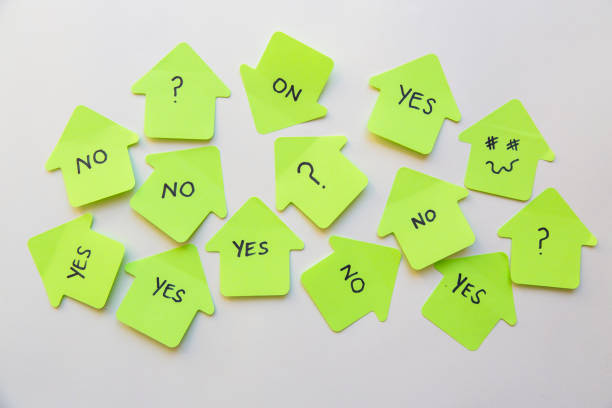
From Analysis Paralysis to Decisive Inquiry: Embracing the Provisional Yes

From Analysis Paralysis to Decisive Inquiry: Embracing the Provisional Yes

Doubt, when left unexamined, can become a cage.

The Power of Counterfactuals: A Cornerstone of Your Doubt Library

The Power of Counterfactuals: A Cornerstone of Your Doubt Library

To curate a personal library of doubt resources is to build a living archive of questions that refuse to settle for easy answers.
The Crucible of Curiosity: How Doubt Forges a Resilient Self

The Crucible of Curiosity: How Doubt Forges a Resilient Self

Doubt is often portrayed as an enemy of certainty, a gnawing whisper that undermines confidence and stalls decision-making.

Embracing the Unknown: How to Cultivate a Healthy Relationship with Uncertainty

Embracing the Unknown: How to Cultivate a Healthy Relationship with Uncertainty

Uncertainty is the quiet hum beneath every moment of our lives, the space between what we know and what we have yet to discover.

How to Question Ideas Respectfully: Transforming Doubt into a Bridge for Understanding

How to Question Ideas Respectfully: Transforming Doubt into a Bridge for Understanding

That knot in your stomach when you hear a claim that doesn’t sit right—the one that tightens because you want to push back but dread sounding aggressive or dismissive—is more common than you might think.

The Unlikely Ally: How Self-Doubt Can Fuel Growth and Confidence

The Unlikely Ally: How Self-Doubt Can Fuel Growth and Confidence

At first glance, self-doubt feels like an enemy to be vanquished.

The Leader’s Lever: How Doubt Forges Stronger and More Innovative Teams

The Leader’s Lever: How Doubt Forges Stronger and More Innovative Teams

In the traditional playbook of leadership, doubt is often cast as the antagonist—a weakness to be purged, a sign of indecision, or a toxic sentiment that erodes confidence.

Seeds of Doubt

What role does doubt play in creativity and innovation?

Doubt is essential to innovation; it is the question that challenges the status quo. “What if we did it differently? Is this truly the best way?“ Creative breakthroughs happen when we doubt existing solutions. It pushes you to iterate, prototype, and refine. However, you must doubt productively—questioning assumptions to generate new possibilities, not to instantly kill every idea. The creative process involves cycling between intuitive generation and skeptical refinement, with doubt ensuring the final creation is robust.

How can I find people who will challenge my ideas constructively?

Seek communities built around skills of discourse, not just shared beliefs. Look for groups focused on critical thinking, debate, philosophy, or specific fields of study. Online forums with strong moderation against personal attacks are good starting points. Express your desire for rigorous discussion. The best communities aren’t echo chambers; they are gardens where ideas are stress-tested with respect, helping you strengthen your own perspectives.

How Can I Find People Who Question Constructively Without Falling into Cynicism or Echo Chambers?

Seek communities that value evidence-based inquiry and intellectual humility. Look for groups, forums, or local clubs focused on critical thinking, philosophy, or specific sciences, where changing one’s mind based on new information is seen as a strength. Prioritize spaces with diverse perspectives and clear rules for respectful dialogue. The key is to connect with those who see doubt as a starting point for exploration, not an end point for nihilism. This transforms solitary skepticism into a collaborative, growth-oriented practice, building resilience against both blind faith and corrosive cynicism.

Why do I feel guilty for questioning authority or mainstream views?

This guilt often stems from early conditioning that equates questioning with disobedience or arrogance. Reframe it: responsible questioning is an act of care and engagement, not rejection. It holds ideas accountable, which is necessary for healthy systems. You are not obligated to accept information passively. Your ethical duty is to think critically. Honor that feeling of discomfort as the growing pain of developing your independent intellectual muscle.

Why do I feel isolated when I start questioning mainstream ideas?

Questioning can create a perceived gap between you and your existing social groups, triggering a primal fear of ostracism. This isolation often stems from challenging shared narratives that form group identity. It’s a normal part of the critical thinking journey. Recognizing this allows you to seek communities where inquiry is valued, transforming loneliness into a search for more aligned connections that support your growth and intellectual honesty.