
Skip to Content

Building a Healthy Identity as a Questioner

The Tyranny of the Inner Doubter: Why We Heed Criticism Over Encouragement

The Tyranny of the Inner Doubter: Why We Heed Criticism Over Encouragement

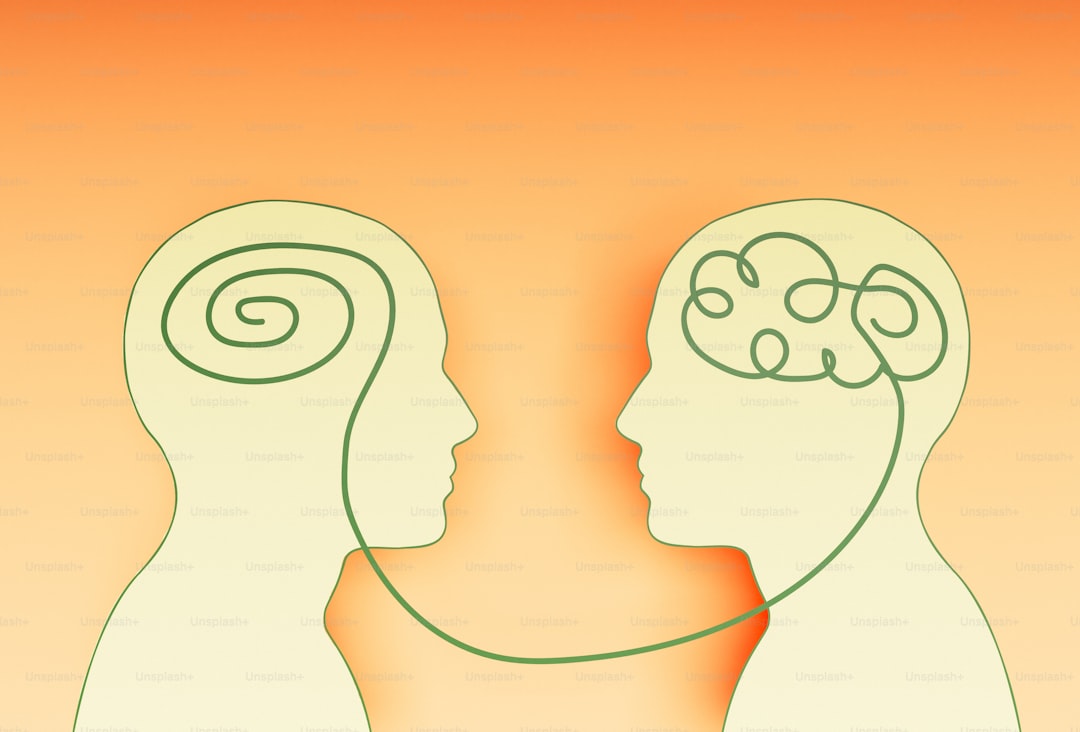
The human mind is a landscape of competing voices, a constant internal dialogue where hopes and fears, confidence and doubt, vie for dominance.
How Understanding Cognitive Biases Illuminates the Path Through Doubt

How Understanding Cognitive Biases Illuminates the Path Through Doubt

Doubt is an unsettling yet universal human experience, a fog that rolls into the mind, obscuring certainty and paralyzing action.

Reframing Self-Doubt: From Personal Weakness to Inner Guidance

Reframing Self-Doubt: From Personal Weakness to Inner Guidance

The voice of self-doubt is a familiar, if unwelcome, companion for many.

The First Step to Transforming Doubt into a Tool for Growth

The First Step to Transforming Doubt into a Tool for Growth

Doubt is often cast as the antagonist in our personal narratives, a shadowy figure that undermines confidence and paralyzes potential.

When to Question Authority and Expert Consensus

When to Question Authority and Expert Consensus

In an age defined by rapid scientific advancement and complex global challenges, society places immense trust in authority figures and expert consensus.

The Double-Edged Sword of Doubt: Can We Have Too Much?

The Double-Edged Sword of Doubt: Can We Have Too Much?

Doubt is an essential engine of human progress, the quiet voice that questions dogma, spurs scientific inquiry, and fosters intellectual humility.

The Roots of Our Reluctance: Understanding Guilt When Questioning Authority

The Roots of Our Reluctance: Understanding Guilt When Questioning Authority

The feeling of guilt that arises when we privately doubt a mainstream narrative or challenge an authoritative figure is a profound and nearly universal human experience.

The Art of Finding Constructive Critics: A Guide to Intellectual Growth

The Art of Finding Constructive Critics: A Guide to Intellectual Growth

In a world increasingly shaped by echo chambers and algorithmically curated agreement, the pursuit of people who will challenge your ideas constructively is not merely a social exercise—it is a...

How Doubt in Conspiracy Theories Unlocks the Power of Critical Thinking

How Doubt in Conspiracy Theories Unlocks the Power of Critical Thinking

In an age where sensational claims can circle the globe before facts have tied their shoes, conspiracy theories present a formidable challenge to public discourse.

Supporting a Loved One Who Struggles with Chronic Doubt

Supporting a Loved One Who Struggles with Chronic Doubt

Supporting a loved one who is a chronic doubter is a delicate endeavor that requires a blend of empathy, patience, and self-awareness.
Turning Doubt into Determination: A Guide to Maintaining Resolve

Turning Doubt into Determination: A Guide to Maintaining Resolve

The journey toward any meaningful goal is rarely a quiet path of solitary conviction.

Understanding Analysis Paralysis: The Crippling Cycle of Overthinking

Understanding Analysis Paralysis: The Crippling Cycle of Overthinking

In an age defined by an abundance of choice and information, a peculiar form of modern stagnation has emerged: analysis paralysis.

Seeds of Doubt

What is the role of doubt in scientific thinking?

Doubt is the engine of science. The scientific method is built on systematic skepticism: proposing ideas (hypotheses) and then rigorously trying to disprove them through experimentation. Healthy doubt prevents confirmation bias, drives peer review, and leads to self-correction. It is not a denial of truth but a disciplined process for approaching it. A scientist’s confidence lies not in absolute certainty, but in the resilient, doubt-tested nature of the evidence.

When should I stop questioning and simply trust?

Trust is the intelligent allocation of your questioning resources. Stop and trust when: 1) The source has a proven, reliable track record on the topic. 2) The cost of verification vastly outweighs the risk of being wrong. 3) In matters of deep personal relationships, where constant interrogation harms the bond. Choose to place trust consciously, not blindly, knowing you retain the right to re-evaluate should strong contrary evidence appear.

What is the core purpose of a doubter on this website?

The core purpose is to reframe doubt not as a weakness, but as a critical tool. Here, doubters are seen as individuals with an active, questioning mind. The goal is to help you channel that questioning energy away from paralysis and toward productive inquiry. By understanding your doubt’s origin and type, you can use it to strengthen your beliefs, make better decisions, and build resilience, transforming skepticism from a barrier into a catalyst for genuine, well-earned confidence.

How can I build confidence when doubt feels overwhelming?

Action is the antidote to paralyzing doubt. Break tasks into micro-actions so small that doubt can’t grab hold—just take the first tiny step. Create a “proof file” of past successes to counter the brain’s negativity bias. Practice self-compassion; talk to yourself as you would a struggling friend. Confidence is built through repeated evidence of competence, not by waiting for doubt to disappear. Each small action provides data that contradicts the doubt’s narrative.

How does doubt manifest in creative or entrepreneurial pursuits?

It often appears as perfectionism, procrastination, or the “imposter syndrome”—the fear of being exposed as a fraud. The doubt whispers, “It’s not ready,“ or “Who are you to do this?“ This is a natural response to venturing into the unknown. Successful creators learn to acknowledge the doubt as part of the process, then “ship” their work anyway. They separate the creative act from the critical voice, understanding that done is better than perfect.