
Skip to Content

Debating Free Will, Consciousness, and Identity

The Liberating Abyss: How Doubting Free Will Reclaims Your Identity

The Liberating Abyss: How Doubting Free Will Reclaims Your Identity

Most people assume that doubting free will is the first step toward despair.

The Paradox of Choice: How Doubting Free Will Can Liberate the Mind

The Paradox of Choice: How Doubting Free Will Can Liberate the Mind

The question of whether we possess free will has haunted philosophers for millennia, yet the most unsettling realization is not that we might lack it—but that doubting its existence can fundamentally reshape who we are.
The Illusion of the Self: How Doubting Personal Identity Can Unlock Radical Freedom

The Illusion of the Self: How Doubting Personal Identity Can Unlock Radical Freedom

The question “Who am I?” has haunted humanity for millennia, yet few of us pause to consider that the very act of asking it might be built on a fragile assumption.

The Hard Problem of Consciousness: Using Doubt to Reclaim Your Sense of Self

The Hard Problem of Consciousness: Using Doubt to Reclaim Your Sense of Self

The most intimate mystery you will ever face is the simple fact that you are aware.
The Paradox of Self-Awareness: Doubting the “I” That Chooses

The Paradox of Self-Awareness: Doubting the “I” That Chooses

At the heart of every existential tremor lies a quiet, unnerving question: who or what is the “I” that doubts? When we grapple with free will, consciousness, and identity, we are not simply examining...

The Illusion of Self: How Doubt in Personal Identity Opens the Door to Freedom

The Illusion of Self: How Doubt in Personal Identity Opens the Door to Freedom

You wake up every morning with the quiet assumption that you are the same person who went to sleep the night before.

The Illusion of the Self: How Buddhist Anatta Challenges Western Identity

The Illusion of the Self: How Buddhist Anatta Challenges Western Identity

The question of who we are lies at the heart of philosophical and existential doubt.

The Paradox of Free Will: How Doubting Your Autonomy Can Liberate Your Mind

The Paradox of Free Will: How Doubting Your Autonomy Can Liberate Your Mind

The question of free will has haunted humanity for millennia, a ghost that refuses to be exorcised by either philosophy or neuroscience.
The Paradox of Free Will: Embracing Determinism as a Catalyst for Agency

The Paradox of Free Will: Embracing Determinism as a Catalyst for Agency

The question of whether we possess free will has haunted philosophers, scientists, and ordinary individuals for millennia.

The Paradox of the Self: How Doubting Your Own Identity Can Lead to Greater Authenticity

The Paradox of the Self: How Doubting Your Own Identity Can Lead to Greater Authenticity

At the core of human existence lies a question so unsettling that most of us spend our lives avoiding it: Who, exactly, is the person experiencing this moment? The apparent stability of our...
The Narrative Self: Can We Truly Author Our Own Identity?

The Narrative Self: Can We Truly Author Our Own Identity?

The question of who we are has haunted philosophers for millennia, but perhaps no modern insight has destabilized our sense of self more than the discovery that identity is not a fixed essence but an ongoing narrative.
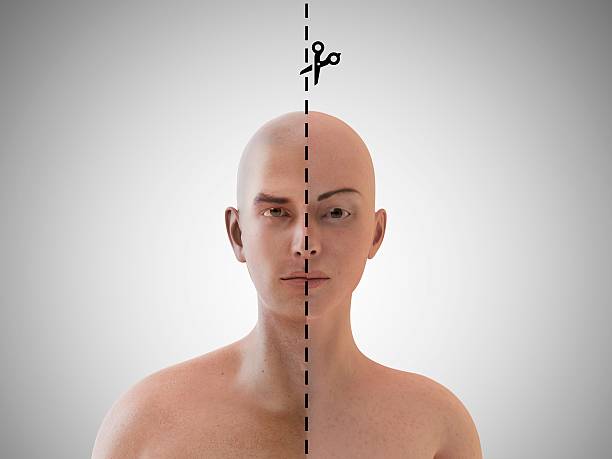
The Dilemma of Blame: Moral Responsibility Without Certain Free Will

The Dilemma of Blame: Moral Responsibility Without Certain Free Will

The question of whether we can hold people morally responsible if free will is doubtful strikes at the very heart of ethics, justice, and our understanding of the human condition.

Seeds of Doubt

What is the difference between determinism and fatalism?

Determinism states every event is causally necessitated by prior events, but your actions are still part of that causal chain—they matter. Fatalism is the belief that outcomes are preordained and your actions cannot change them. Determinism encourages engagement because your decisions are the necessary causes of future results. Fatalism breeds passivity. Confusing them is a common error; doubting free need not lead to fatalistic resignation.

Can we hold people morally responsible if free will is doubtful?

This is a major societal challenge. A pragmatic approach suggests we maintain responsibility as a useful social construct to regulate behavior and protect society, focusing on rehabilitation over retribution. If actions are caused, we seek to change the causes (through therapy, education, environment). Responsibility becomes forward-looking—about shaping future behavior—rather than backward-looking blame based on ultimate freedom. This leads to a more compassionate and effective justice system.

How can doubting free will be empowering rather than discouraging?

Understanding that your choices are shaped by prior causes can foster self-compassion and reduce harsh self-blame for past actions. It shifts focus from judging a mythical “free self” to understanding the causes (genes, environment, habits) that drive behavior. This empowers you to deliberately reshape those causes—changing your environment, building new habits—to become the person you want to be. Doubt becomes a tool for taking responsibility for your programming.

What is the “illusionist” position on consciousness?

Illusionists, like Daniel Dennett, argue that the hard problem is a mirage. They propose that consciousness exists but is not the mysterious inner theatre we assume. Our brain presents a simplified, user-friendly model of the world (and self) to itself. The “illusion” is that there’s an extra, non-physical quality; instead, conscious experience is just these complex cognitive processes. Doubting the intuitive picture dissolves the hard problem, reframing it as a challenge for cognitive science.

How can engaging with these doubts build unshakeable confidence?

Confronting these profound doubts builds intellectual resilience, freeing you from needing simplistic, absolute answers. You learn to hold complex ideas without collapsing into nihilism. Understanding that your “self” is fluid allows you to shed limiting identities. Seeing causes behind actions grants power to change them. This journey cultivates a confidence rooted not in dogma, but in the courageous, ongoing pursuit of understanding—a confidence that can withstand deep questioning and adapt to new evidence.