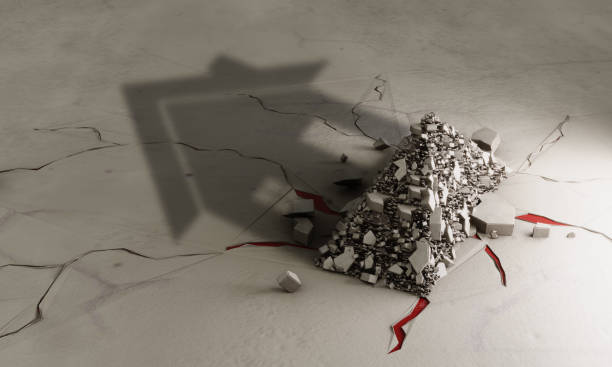
The sixteenth-century essayist Michel de Montaigne presents a radical alternative to the way we typically think about doubt. While most philosophical traditions treat doubt as a problem to be solved, a disease of the intellect that must be cured by certainty, Montaigne saw doubt as an essential ingredient for a well-lived life. His skepticism was not a destructive force that paralyzed action or eroded belief; rather, it was a gentle, probing tool for self-knowledge, humility, and intellectual freedom. In a world that often demands unwavering conviction, Montaigne’s embrace of doubt offers a surprisingly resilient path toward genuine confidence.
Montaigne’s skepticism is deeply indebted to the ancient Pyrrhonists, particularly Sextus Empiricus, who argued that for every argument there is an equally compelling counterargument, and that the wisest response is to suspend judgment. But Montaigne transforms this rigorous academic skepticism into something profoundly personal and existential. He does not use doubt to demolish all knowledge and retreat into nihilism. Instead, he uses it to deflate the arrogance of dogmatism. His famous motto, “Que sais-je?”—“What do I know?”—is not a cry of despair but an invitation to perpetual inquiry. By acknowledging the limits of human reason, Montaigne liberates himself from the tyranny of absolute claims. He can examine customs, religions, and philosophical systems without feeling compelled to defend them as universally true.
This approach is particularly relevant to the contemporary experience of doubt. Many people today feel torn between the pressure to have firm opinions on every issue and the overwhelming flood of contradictory information. The result is often a brittle confidence—loud but easily shattered when confronted with counterevidence. Montaigne offers a different model: a confidence that is soft, flexible, and rooted in the recognition that we are fallible. He writes, “There is no desire more natural than the desire for knowledge. We try all the ways that can lead us to it. When reason fails us, we use experience.” This is not the voice of a skeptic who has given up on truth; it is the voice of a skeptic who knows that the journey toward truth is endless, and that the journey itself is what matters.
One of Montaigne’s most important contributions is his insistence that doubt can coexist with commitment. He was a devout Catholic, yet he wrote extensively about the relativity of customs and the absurdity of many religious practices. He did not see this tension as hypocrisy. Instead, he saw it as the natural condition of a thoughtful human being. We can hold beliefs and act on them while simultaneously acknowledging that they might be wrong. This is what the philosopher Harry Frankfurt called “the willingness to live with uncertainty.” For Montaigne, doubt is not the enemy of faith; it is the guardian that keeps faith from becoming fanaticism.
Montaigne’s skepticism also has a deeply therapeutic dimension. He uses doubt to cure the most corrosive forms of self-deception—especially pride. By constantly reminding himself of his own ignorance, he protects himself from the illusion that he has mastered life. This is where the personal growth aspect of his philosophy emerges most clearly. Montaigne’s essays are a record of his own mind in motion, a patient dissection of his habits, prejudices, and fears. He does not aim to produce a system of thought that others can adopt wholesale. Rather, he models a process of self-examination that each person must undertake alone. The goal is not to eliminate doubt but to become comfortable with it, to make it a companion rather than an adversary.
For the modern reader, Montaigne’s approach offers a powerful antidote to the anxiety of uncertainty. We are often told that confidence means having no doubts—that a confident person knows exactly what they believe and never wavers. Montaigne shows that this is a caricature of true confidence. Real confidence comes from the ability to hold our beliefs loosely, to question them without self-loathing, and to change them when evidence demands. It comes from knowing that we are not omniscient, and that this is not a weakness but a fundamental fact of the human condition.
In an age of conspiracy theories and echo chambers, Montaigne’s skeptical humility is more urgent than ever. The person who is certain they have found the absolute truth is the person most susceptible to manipulation. The person who has learned to doubt, to hold multiple possibilities in mind, to listen to opposing views without fear—that person is genuinely free. Montaigne’s legacy is to remind us that doubt, when practiced with wisdom and good humor, is not the opposite of confidence. It is its most reliable foundation.