Skip to Content

Readings in Skeptical and Doubt-Based Philosophy

Doubt Without Paralysis: The Ancient Practice of Skeptical Inquiry

Doubt Without Paralysis: The Ancient Practice of Skeptical Inquiry

To the modern mind, doubt is often a symptom of weakness.
The Ancient Art of Suspending Judgment: Pyrrhonian Skepticism as a Tool for Modern Resilience

The Ancient Art of Suspending Judgment: Pyrrhonian Skepticism as a Tool for Modern Resilience

Pyrrhonian skepticism, originating with Pyrrho of Elis and systemized by Sextus Empiricus, offers a radically different relationship to doubt than most modern approaches.

The Practical Wisdom of Ancient Skepticism: How Suspending Judgment Cultivates Inner Peace

The Practical Wisdom of Ancient Skepticism: How Suspending Judgment Cultivates Inner Peace

The Western philosophical tradition has long wrestled with doubt as an obstacle to knowledge, yet an entire school of thought from antiquity embraced doubt not as a failure but as a deliberate, life-affirming practice.
The Paradox of Certainty: Why Embracing Doubt Strengthens Conviction

The Paradox of Certainty: Why Embracing Doubt Strengthens Conviction

To hold a conviction without ever questioning it is to hold a shadow, not a substance.

The Problem of the Criterion: Embracing Doubt as the Beginning of Knowledge

The Problem of the Criterion: Embracing Doubt as the Beginning of Knowledge

How do we know what we claim to know? This deceptively simple question lies at the heart of one of philosophy’s most enduring puzzles—the problem of the criterion.

The Aporetic Method: How Ancient Skepticism Turns Doubt into a Tool for Wisdom

The Aporetic Method: How Ancient Skepticism Turns Doubt into a Tool for Wisdom

In the quiet spaces between certainty and confusion lies a tradition that does not flee from doubt but embraces it as a crucible for deeper understanding.
The Pyrrhonian Way: Suspension of Judgment as a Path to Tranquility

The Pyrrhonian Way: Suspension of Judgment as a Path to Tranquility

In an age that demands certainty—from political allegiances to personal beliefs, from scientific consensus to self-identity—the ancient philosophy of Pyrrhonian skepticism offers a radically different approach to doubt.
Doubt as a Virtue: Lessons from Montaigne’s Skepticism

Doubt as a Virtue: Lessons from Montaigne’s Skepticism

The sixteenth-century essayist Michel de Montaigne presents a radical alternative to the way we typically think about doubt.

The Problem of the Criterion: How Ancient Skepticism Reveals the Trap of Certainty

The Problem of the Criterion: How Ancient Skepticism Reveals the Trap of Certainty

Every search for knowledge begins with a quiet, often unacknowledged question: How do I know that I know? This is not merely a pedantic exercise for cloistered philosophers.
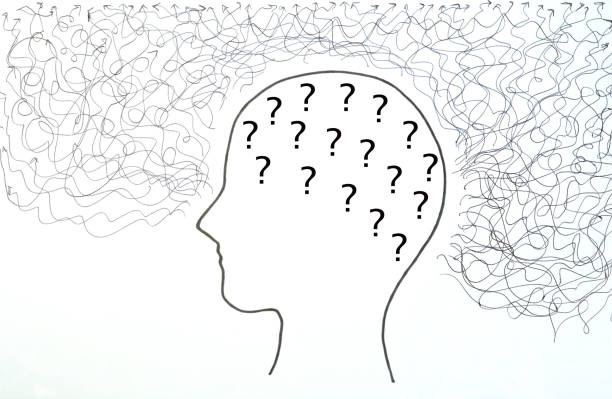
The Epistemological Foundation of Doubt: Descartes’ Meditations and the Birth of Modern Skepticism

The Epistemological Foundation of Doubt: Descartes’ Meditations and the Birth of Modern Skepticism

To doubt is to stand at the edge of certainty, peering into an abyss where everything we once believed might dissolve.

Pyrrhonian Skepticism: The Original Practice of Doubt as a Way of Life

Pyrrhonian Skepticism: The Original Practice of Doubt as a Way of Life

In an age saturated with absolute claims, algorithmic certainties, and the relentless pressure to have a fixed opinion on everything, the ancient philosophy of Pyrrhonian skepticism emerges as a radical antidote.

Skepticism and the Ethics of Belief: How Philosophical Doubt Informs Moral Responsibility

Skepticism and the Ethics of Belief: How Philosophical Doubt Informs Moral Responsibility

The relationship between doubt and moral action is a terrain that philosophers have navigated with caution, often treating the two as separate domains: epistemology on one side, ethics on the other.

Seeds of Doubt

What is the core value of philosophical skepticism?

Philosophical skepticism is not about cynical disbelief but about rigorous inquiry. It challenges us to examine the foundations of our knowledge, beliefs, and assumptions. By systematically doubting, we move beyond passive acceptance to active understanding. This process strengthens reasoning, exposes biases, and builds intellectual resilience. When harnessed, it becomes a powerful tool for personal growth, transforming uncertainty from a source of anxiety into a disciplined method for achieving more confident and justified convictions.

How Can I Distinguish Between Healthy Skepticism and Harmful Cynicism?

Healthy skepticism is a tool for inquiry, asking “What is the evidence?“ to seek a clearer understanding. It is open to updating beliefs with new information. Harmful cynicism is a conclusion of distrust, assuming “This is probably false or bad” without genuine inquiry. On this site, you’ll learn to use doubt as a disciplined method—questioning claims while remaining engaged—rather than as a defensive posture that isolates you from new ideas and undermines growth, turning potential insight into reflexive negativity.

How can doubt improve my critical thinking skills?

Doubt is the engine of critical thinking. It forces you to pause before accepting information, prompting essential questions: “What is the source?“ “What evidence supports this?“ “Are there alternative explanations?“ This practice develops analytical muscles, helping you distinguish fact from opinion, identify logical fallacies, and evaluate arguments. By routinely applying skeptical inquiry, you move from passive consumer to active evaluator of information, making your thinking more precise, independent, and reliable.

Is there a way to doubt without becoming paralyzed by indecision?

Yes, through probabilistic thinking. Instead of seeking absolute certainty (which is rare), evaluate beliefs and choices on a spectrum of confidence. Make decisions based on the best available evidence while acknowledging the degree of uncertainty. Set reasonable thresholds for action—“What is good enough to proceed?“ This harnesses doubt as a calibrating tool rather than a stopping mechanism. It allows you to act decisively while remaining open to updating your views with new information.

What is “intellectual humility” and why is it powerful?

Intellectual humility is the recognition that your knowledge is limited and you might be wrong. It is the conscious coupling of doubt with open-mindedness. This trait is powerful because it makes you a perpetual learner, receptive to new evidence and perspectives. It reduces defensive reactions, makes collaboration easier, and allows you to update your beliefs efficiently. It is not a lack of confidence, but the confidence to say, “I don’t know yet,“ and to seek better answers.