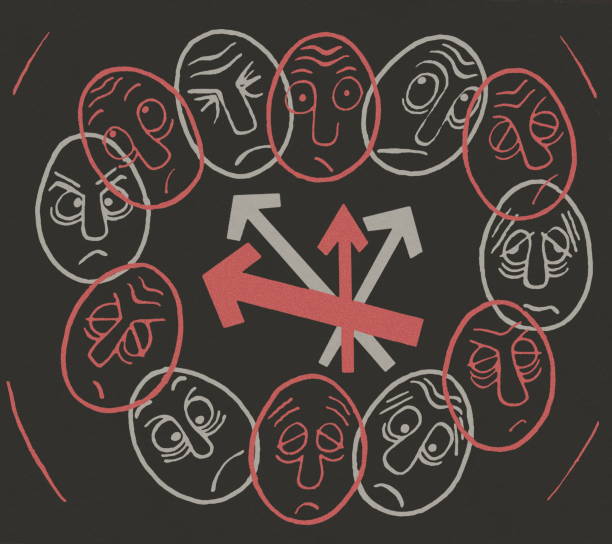
Pyrrhonian skepticism, originating with Pyrrho of Elis and systemized by Sextus Empiricus, offers a radically different relationship to doubt than most modern approaches. Where Cartesian doubt is a methodical tool to sweep away uncertainty to find an indubitable foundation, Pyrrhonism treats doubt not as a means to an end but as an end in itself—the suspension of judgment, or epoché, that leads to ataraxia, a state of unshakeable peace. For anyone seeking to understand and harness every form of doubt, this ancient philosophical tradition provides a surprising yet powerful model for navigating contemporary life, including the murky waters of conspiracy theories and self-doubt.
At the heart of Pyrrhonian skepticism is the observation that for every argument, there appears to be an equally persuasive counterargument. Sextus Empiricus catalogued these modes or tropes that demonstrate how appearances conflict, how perspectives vary, and how our senses and reasoning are limited. Rather than despairing over the impossibility of certainty, the Pyrrhonist embraces this condition. The realization that we cannot definitively settle questions about the nature of reality, the good, or the divine does not lead to paralysis. Instead, it frees the mind from the dogmatic anxiety that comes from clinging to fixed positions. When we recognize that certainty is unattainable, we cease to fight for it, and in that surrender we find a profound sense of relief.
This approach stands in stark contrast to the mainstream of Western philosophical doubt. Descartes, in his Meditations, used doubt as a hammer to smash all unreliable beliefs, hoping to find a single unbreakable brick of certainty in the cogito. That project, while intellectually heroic, ultimately reinforces the very anxiety it seeks to overcome. For if the entirety of knowledge rests on a fragile thread of self-awareness, then any crack in that reasoning threatens to collapse everything. The Pyrrhonist asks a different question: What if we never needed that brick in the first place? What if our desire for certainty is the actual source of our suffering?
Applying Pyrrhonian principles to modern life yields unexpected benefits. Consider the phenomenon of self-doubt. Typically, we view it as an obstacle to confidence, a voice that must be silenced or conquered. But Pyrrhonism suggests that self-doubt is not a problem to be solved but a signal that our self-concept may be overly rigid. The dogmatic belief that we must always be competent, or that we must never fail, creates anxiety. When these beliefs are challenged by reality, we feel threatened. However, if we learn to suspend judgment about our own worth, to hold our self-assessments lightly, we can act without the crushing weight of needing to be right about ourselves. Confidence, from a Pyrrhonian perspective, is not the absence of doubt but the acceptance of it as a permanent companion. We can move forward while simultaneously acknowledging that we do not know, with certainty, whether we are competent, worthy, or on the right path. This is a liberating form of confidence—one that is flexible, adaptive, and resilient.
Even more intriguing is the application to conspiracy theories. In an age of information overload and epistemic chaos, many people swing between credulous acceptance of outlandish claims and aggressive debunking that only entrenches believers. Pyrrhonism offers a third path: not belief, not disbelief, but a considerate suspension of judgment. This does not mean giving equal weight to all claims or refusing to act. Rather, it means recognizing that our epistemic faculties are limited, that evidence is always incomplete, and that the compulsion to have a definitive answer on every matter is itself a trap. For someone encountering a conspiracy theory, a Pyrrhonian response might be to acknowledge uncertainty, examine their own reactions, and decide how to act based on pragmatic concerns rather than absolute truth. This approach disarms the emotional charge that often accompanies such theories, reducing the anxiety that fuels them and opening space for more thoughtful engagement.
The ultimate lesson of Pyrrhonian skepticism is that doubt is not a deficiency but a gift. It is a reminder that the human mind is finite, that the world is complex, and that our beliefs are provisional. By embracing epoché, we become like a quiet pond that does not need to reflect every cloud perfectly but simply rests in its own stillness. This is the true empowerment that philosophical doubt can offer—not the power to control everything, but the power to cease fighting the uncertainty that defines the human condition. In that cessation lies an unshakeable confidence, one that does not depend on being right but on being at peace with not knowing.