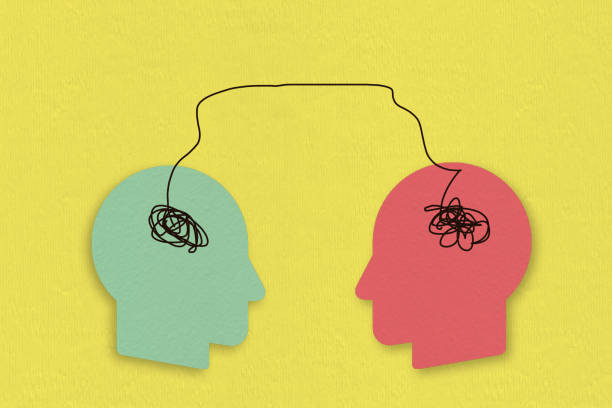
Doubt is rarely welcomed as a friend. It arrives unbidden, unsettling the ground beneath your convictions and whispering that perhaps nothing is as solid as it seems. Yet within the discipline of radical self-inquiry, doubt becomes not a weakness but the very chisel by which you carve away the false layers of inherited identity. The philosophical exercise begins with a single, terrifying act: you must be willing to suspend every assumption you hold about who you are, why you exist, and what is real. This is not a mental game played for amusement. It is a rigorous, often painful confrontation with the provisional nature of all knowledge, including self-knowledge. The goal is not to arrive at a final, unshakable truth—for that would be to replace one dogma with another—but rather to develop the capacity to live consciously within uncertainty, to forge a self that is chosen rather than merely absorbed.
The first movement of this exercise echoes the Cartesian method, but with a crucial existential twist. Descartes doubted the senses, the body, even the existence of an external world, only to land upon the famous cogito. Yet for radical self-inquiry, stopping at the thinking subject is merely the beginning. The question shifts from “What cannot be doubted?“ to “What kind of being am I when I do not know what I am?“ This is where the exercise turns from epistemology toward ontology. You are not seeking a logical foundation for knowledge; you are seeking the raw texture of existence before it has been shaped by culture, language, and habit. Imagine stripping away your name, your profession, your nationality, your family roles, your political loyalties, your religious or secular commitments. What remains? The answer is not a vacuum, but a pulsing, questioning presence that is more fundamental than any label. This presence is the true subject of philosophical inquiry.
The second movement involves turning doubt onto your most cherished narratives about yourself. Every person constructs a story that explains suffering, justifies choices, and projects a future. These stories are necessary for psychological coherence, but they are also prisons. To question them is not to declare them false, but to recognize their contingency. For example, you may believe you are a shy person, and this belief organizes your behavior in countless ways. But when you radicalize doubt, you ask: What if this belief is not a description but a hypothesis? What if it has been maintained by a thousand small decisions to avoid discomfort? The exercise demands that you hold this hypothesis lightly, observing how it shapes your actions without mistaking it for an eternal essence. This practice of meta-doubt—doubt about the very framework of your doubt—prevents the exercise from becoming a nihilistic spiral. Instead, it cultivates a playful, experimental stance toward the self. You become a scientist of your own existence, testing new ways of being without the demand for immediate certainty.
A third movement is the encounter with existential doubt as a lived experience, not an abstract problem. Questions like “Is there any meaning to my life?“ or “Does anything I do matter in the face of eventual death?“ are not puzzles to be solved. They are affective storms that must be weathered with full awareness. The radical self-inquiry here is to resist the easy answers—whether religious consolation, nihilistic resignation, or compulsive distraction—and instead remain present with the unbearable lightness of being. This is akin to what existentialists called the leap, not a leap of faith, but a leap into the uncertainty of being without guarantees. In that leap, you discover that meaning is not found but created, moment by moment, through your choices. Doubt about meaning becomes the very ground from which you can author your own values, not as absolute truths but as sincere commitments.
Finally, the exercise culminates in what might be called negative capability—the ability to rest in uncertainty without irritable reaching after fact and reason. This is the hardest skill to develop because the mind abhors ambiguity and will constantly generate false certainties to soothe itself. Radical self-inquiry trains you to watch this process without judgment. You see the mind constructing a comfortable narrative, and you gently release it, returning to the raw openness of questioning. Over time, this practice transforms doubt from a source of anxiety into a source of freedom. You no longer need to believe everything you think. You can hold contradictions, explore paradoxes, and face the unknown with equanimity. The unshakeable confidence that emerges is not the confidence of a person who has found the ultimate answer, but the confidence of a person who has learned to trust their own capacity to question, adapt, and grow. That is the true gift of philosophical doubt: it strips away the false self so that the authentic, vital, choosing self can breathe.