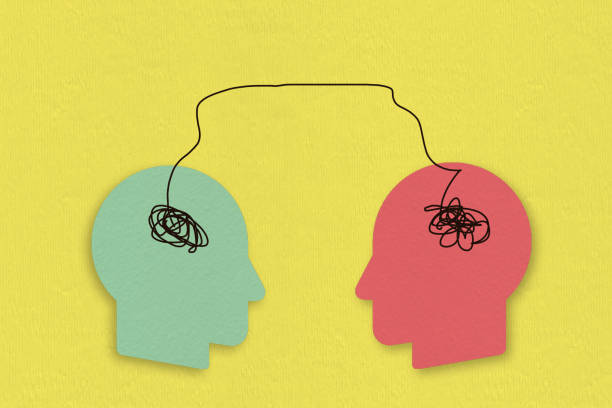
Doubt is the engine of science, yet most people misunderstand how it actually works. When we hear the phrase “scientific method,” we often picture a neat, linear sequence: observe, hypothesize, experiment, conclude. But the real power of science lies not in proving things right, but in systematically trying to prove them wrong. This principle—falsifiability—is the quiet hero of critical thinking, and learning to embrace it can transform the way you handle every form of doubt, from a nagging uncertainty about a health claim to the seductive whisper of a conspiracy theory.
The philosopher Karl Popper first crystallized the idea that a scientific theory must be testable and, crucially, must have the potential to be shown false. A theory that explains everything explains nothing. For example, consider the claim “All swans are white.” That statement is falsifiable because one black swan would overturn it. Now consider the claim “Invisible, undetectable dragons live in my garage.” That statement is not falsifiable: no possible observation can disprove it because the dragons are, by definition, undetectable. The first claim is scientific; the second is not. This distinction is more than a philosophical nicety—it is a daily tool for navigating information.
When you encounter a surprising piece of news or a bold assertion, your first instinct might be to ask, “How could this be true?” That is a natural impulse, but it is also a trap. Your brain, wired for pattern recognition, wants to confirm what it already suspects. The scientific method flips this around. Instead of asking how something could be true, ask: “What evidence would convincingly show this is false?” This shift is uncomfortable because it forces you to actively seek out your own ignorance. Yet that discomfort is precisely where growth happens.
Imagine you hear that a new supplement boosts your immune system by 300 percent. The initial feeling of hope or skepticism is doubt—but unfocused doubt leads nowhere. Apply falsifiability: What concrete, measurable outcome would disprove the claim? If the supplement truly works, then a controlled study should show that people taking it get sick less often than those on a placebo. But more importantly, the claim must specify what would count as a failure. If the manufacturer says “it works for some people, but not for others, and we can’t predict who,” the claim becomes unfalsifiable—and therefore scientifically empty. Recognizing this pattern arms you against pseudoscience and marketing hype.
Conspiracy theories thrive on the same logical error. They often become unfalsifiable because every piece of contrary evidence is reframed as part of the conspiracy. “The government is hiding the truth” is a claim that, by design, cannot be disproven—any attempt to disprove it is just more evidence of the cover-up. When you understand falsifiability, you see that such theories are not sophisticated; they are intellectually lazy. They never put themselves at risk of being wrong, and that is the hallmark of a weak belief. The strongest beliefs—the ones worth holding—are those that have survived repeated attempts to knock them down.
This mindset turns doubt from a paralyzing force into a productive one. Instead of feeling lost in a sea of uncertainty, you gain a clear, repeatable method: propose a test that could prove you wrong, then perform that test. This is not about being negative or cynical; it is about being honest. Every time you fail to disprove a hypothesis, you strengthen your confidence in it—not because you proved it true, but because it withstood a genuine challenge. That confidence is unshakeable because it is built on the ashes of your own doubts, not on wishful thinking.
In daily life, you can apply falsifiability to your own beliefs. Do you think you are bad at public speaking? That is a belief that can be tested. Define what “bad” looks like—forgetting lines, shaky voice, negative feedback. Then deliberately put yourself in a low-stakes speaking situation. If you perform worse than your definition, your belief holds. If you perform better, you have falsified a piece of self-doubt. Over time, this practice rewires your relationship with uncertainty. You stop fearing being wrong because you learn that being wrong is the only way to get closer to being right.
The scientific method, at its core, is not a cold, detached procedure. It is a deeply human strategy for harnessing the energy of doubt. Falsifiability gives you permission to question everything, including your own favorite ideas, without losing your footing. It teaches you that the goal is not to eliminate doubt—that is impossible—but to use it as a tool for sharpening your understanding. The next time you feel that familiar knot of uncertainty, stop and ask: What would have to be true for me to be wrong? Then go find out. That single question is the difference between being a victim of doubt and its master.