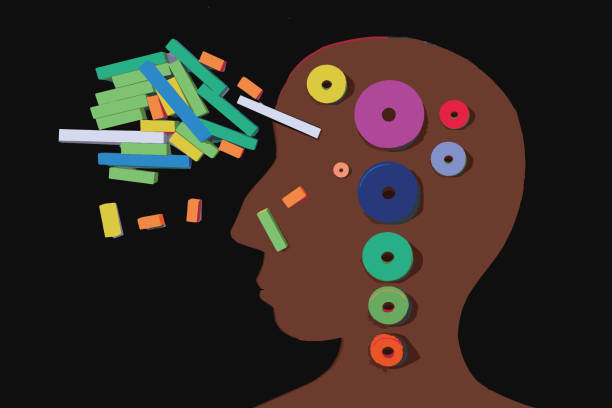
The Beat Generation serves as a profound case study for those seeking to transform doubt into a catalyst for personal and cultural evolution. Emerging in the post-World War II era, this countercultural movement was defined by a radical rejection of the stifling conformity, materialism, and rigid social norms that dominated 1950s America. By embracing uncertainty, wandering, and the “beat” or “down-and-out” experience, these writers turned their existential doubt into a powerful literary force that challenged the status quo.
For the modern seeker, the Beats offer a blueprint for navigating self-doubt. Rather than viewing doubt as a weakness, they utilized it as a lens to question authority and seek authentic experience. Through their prose and poetry, they explored the fringes of society—from the jazz clubs of New York to the open roads of the American West—demonstrating that true confidence often arises from the courage to be vulnerable and the willingness to deviate from the path prescribed by society. Their work remains a vital resource for critical thinking, encouraging individuals to dismantle “cozy conspiracies” of thought and confront the raw, often uncomfortable truths of the human condition. By studying their lives and legacies, we learn that doubt is not a dead end, but a gateway to a more examined, liberated, and unshakeable life.
This edition presents the legendary novel in its raw, unfiltered form, typed as a single, continuous paragraph on a massive scroll. For those exploring the power of doubt, this book is essential; it captures the restless, searching spirit of a generation trying to find meaning in a world that felt increasingly hollow. Kerouac’s narrative of cross-country travel serves as a metaphor for the internal journey of self-discovery. By stripping away the polished veneer of traditional literature, the “Original Scroll” invites readers to embrace the spontaneity and uncertainty of life, proving that the search for authenticity is a lifelong, transformative process.
Allen Ginsberg’s “Howl” is perhaps the most iconic expression of countercultural defiance in American history. Born from a place of deep personal and societal doubt, the poem acts as a prophetic cry against the dehumanizing forces of conformity and materialism. Its survival through landmark censorship trials turned it into a symbol of intellectual freedom. For the reader, “Howl” demonstrates how to channel intense frustration and existential questioning into creative action. It teaches that by giving voice to our deepest doubts, we can break through the barriers of societal expectation and reclaim our individual agency.
William S. Burroughs’ masterpiece is a visceral, hallucinatory exploration of addiction and control. By using the “cut-up” technique, Burroughs forces the reader to abandon linear, comfortable ways of thinking, effectively mirroring the experience of navigating a world filled with hidden conspiracies and systemic doubt. This book is not for the faint of heart; it is a brutal, satirical, and deeply philosophical work that challenges the reader to look at what is truly “on the end of the fork.“ It serves as a powerful tool for developing critical thinking and resisting the manipulation of the status quo.
This comprehensive anthology is an excellent starting point for anyone looking to understand the breadth of the Beat movement. Beyond the “holy trinity” of Kerouac, Ginsberg, and Burroughs, this collection highlights the diverse voices of poets and writers who collectively challenged the 1950s American landscape. By showcasing a wide array of perspectives, the book illustrates that the Beat ethos was not a singular ideology, but a shared commitment to questioning everything. It provides the reader with a toolkit of ideas, biographies, and literary guides, making it an invaluable resource for those using doubt as a catalyst for personal growth.