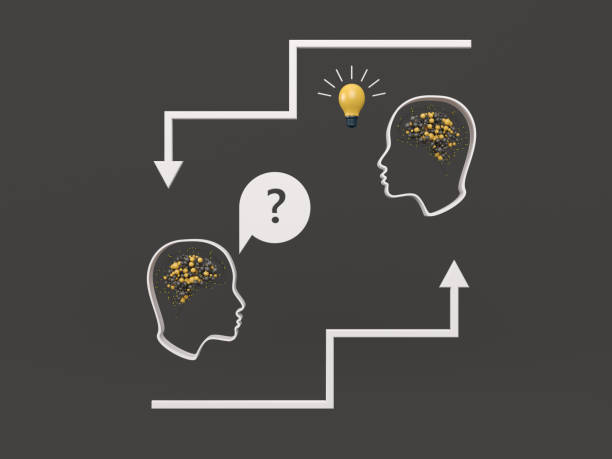
Doubt is often perceived as a weakness, a state of intellectual paralysis that hinders decisive action. Yet, when consciously and methodically engaged, doubt transforms from a stumbling block into the very cornerstone of rigorous critical thinking. It is the engine of inquiry, the safeguard against complacency, and the tool that allows us to build more resilient, evidence-based understandings of the world. To use doubt constructively is not to succumb to cynical disbelief but to adopt a disciplined stance of provisional curiosity, systematically strengthening one’s cognitive faculties in the process.
The journey begins with turning doubt inward, applying what philosophers call intellectual humility. This involves actively questioning our own assumptions, biases, and the origins of our beliefs. Strong critical thinkers understand that their first conclusion is rarely their best. By deliberately seeding doubt into our own positions—asking “How might I be wrong?” or “What evidence would change my mind?”—we initiate a powerful internal dialogue. This self-skepticism prevents the common pitfalls of confirmation bias, where we seek only information that supports our pre-existing views, and the backfire effect, where contradictory evidence only strengthens our original stance. Doubt, in this reflexive form, acts as a cognitive immune system, identifying and challenging weak or unsupported ideas before they solidify into dogma.
Furthermore, doubt is the catalyst that propels us beyond superficial understanding. When we encounter a persuasive argument or a widely accepted fact, a healthy dose of doubt prompts the essential questions of critical thinking: “What is the source of this information?” “What alternative explanations exist?” “Is the evidence presented logically sufficient to support the claim?” This transforms passive consumption of information into active interrogation. For instance, doubting a sensational headline leads one to investigate the primary study, scrutinize the methodology, and consider competing analyses. This process builds the analytical muscles necessary to deconstruct complex arguments, separate correlation from causation, and evaluate the credibility of evidence. Doubt, therefore, is not the end of thinking; it is the beginning of deeper, more thorough investigation.
The constructive use of doubt also fosters intellectual resilience and adaptability. A mindset that embraces doubt accepts that knowledge is provisional and that updating one’s beliefs in light of new evidence is a strength, not a failure. This stands in stark contrast to a brittle mindset that clings to certainty. By regularly practicing doubt, we become more comfortable with ambiguity and complexity. We learn to hold multiple perspectives in tension without rushing to a premature resolution. This ability is crucial in a world of nuanced problems that rarely have black-and-white solutions. The critical thinker built on doubt is not easily swayed by fallacies or emotional rhetoric because their beliefs are not fragile idols to be defended, but living hypotheses continually tested and refined.
Ultimately, the goal of using doubt is not perpetual skepticism but the attainment of justified, well-earned confidence. The conclusions that survive a rigorous gauntlet of our own doubts are inherently stronger. They are built on a foundation of examined evidence, anticipated counterarguments, and a clear awareness of their own limitations. This confidence is tempered and reliable, unlike the hollow certainty born of ignorance. In professional, academic, and personal realms, this disciplined approach leads to more innovative solutions, more sound judgments, and more effective communication, as one can clearly articulate not only what they believe but why, and under what conditions that belief might change.
In essence, doubt is the whetstone against which we sharpen our critical thinking. It is a deliberate practice of questioning—first ourselves, then the information we receive, and finally the conclusions we draw. By welcoming doubt as a partner in inquiry rather than an enemy of conviction, we cultivate the humility, depth, agility, and resilience that define truly powerful thinking. We move from being passive receivers of information to active architects of knowledge, building our understanding on a foundation that is both skeptical and sound.