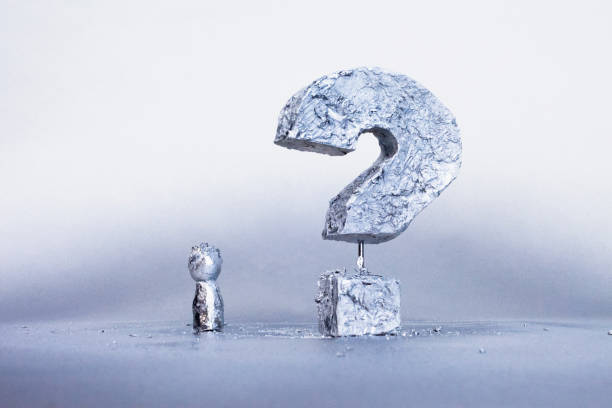
In a world that often prizes unwavering conviction and decisive certainty, doubt is frequently cast as a weakness—a corrosive force that undermines confidence and stalls progress. Yet, when examined through the lens of human connection, doubt reveals itself as a quiet but essential architect of empathy and a cornerstone of healthier relationships. Far from being an obstacle, thoughtful doubt acts as a necessary pause, a psychological space where assumptions are questioned, perspectives are broadened, and genuine understanding can take root. It is the fertile ground in which the seeds of true empathy are sown, ultimately leading to relationships built on authenticity rather than presumption.
At its core, empathy requires the capacity to step outside one’s own experience and imagine the inner world of another. Certainty, particularly about others’ motives, feelings, or experiences, is the antithesis of this endeavor. When we are certain we already know what another person thinks or why they acted as they did, we close the door to inquiry. Doubt, by contrast, opens that door. It begins with the humble admission, “I might be wrong.“ This simple internal shift is transformative. It prompts us to ask questions instead of issuing declarations, to listen actively instead of preparing our rebuttal. Doubt encourages curiosity about the other person’s narrative, creating a bridge of inquiry that leads from our own isolated shore to the complex continent of another’s reality.
Furthermore, doubt serves as a crucial check against the fundamental attribution error—a common cognitive bias where we attribute our own actions to situational factors but others’ actions to their inherent character. When a friend disappoints us, certainty might hastily conclude, “They are selfish.“ Doubt, however, introduces a mitigating whisper: “Perhaps there is more to this story. Maybe they are overwhelmed, misunderstood, or acting from a pain I cannot see.“ This skeptical interrogation of our own judgment is the very mechanism of empathy. It forces us to consider contexts beyond our own, to entertain possibilities that complicate our initial, often self-centered, interpretation. In romantic partnerships, familial ties, and professional collaborations, this form of doubt prevents the swift, corrosive judgments that erode trust and replaces them with a willingness to seek understanding.
The role of doubt extends inward as well, fostering the self-awareness necessary for mature relationships. Doubting our own emotional reactions—questioning whether our anger is truly about a present slight or a past wound, or whether our criticism is constructive or a projection of our own insecurities—is an act of emotional intelligence. This introspective doubt prevents us from outsourcing blame and allows us to approach conflicts with greater responsibility. It acknowledges that our own perspective is a lens, not an objective truth. When we bring this self-aware humility into a relationship, we communicate that we value the connection more than our need to be right. This creates a safer environment where both parties feel seen and less defensive, paving the way for vulnerability and authentic resolution.
Ultimately, relationships nurtured by constructive doubt are more resilient and adaptive. They are built not on the fragile foundation of presumed agreement, but on the sturdy bedrock of negotiated understanding. Partners who regularly doubt their assumptions make space for each other’s growth and change. They understand that to know someone is not to have a fixed dossier on them, but to engage in a continuous, curious dialogue. This does not advocate for a life of paralyzing indecision or a lack of core values. Rather, it champions a specific kind of doubt: a social and emotional doubt directed at our own biases and the opacity of others’ inner lives.
In the end, the courage to doubt is the courage to connect on a deeper level. It is the acknowledgment that every person is a universe of complexities we can never fully map. By embracing doubt, we choose the path of the explorer over that of the cartographer, forever interested, forever asking, forever willing to be surprised by the humanity of another. This open-handed approach, born of a humble uncertainty, is what allows empathy to flourish and transforms simple interactions into profound, enduring bonds.