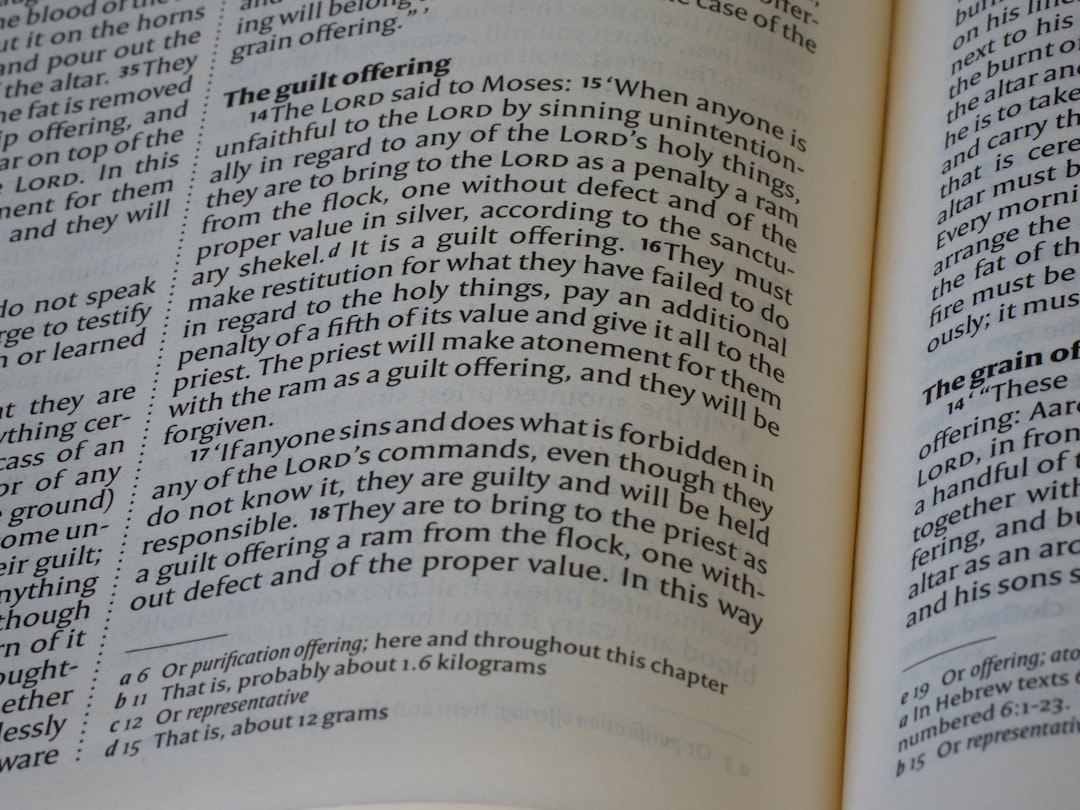
When a believer first encounters the scholarly conclusion that Moses almost certainly did not write the first five books of the Bible, the ground beneath their faith can feel like it is crumbling. This is the moment when historical and philosophical religious criticism ceases to be an abstract academic exercise and becomes a deeply personal crisis. Yet for those who are willing to lean into this discomfort rather than retreat from it, the study of how Scripture came to be written, edited, and canonized offers a unique pathway toward a more resilient and intellectually honest spirituality. The historical-critical method, far from being an enemy of faith, can serve as one of the most powerful tools for transforming fragile certainty into grounded confidence.
At its core, historical criticism treats religious texts as human documents that emerged from specific cultural, political, and social contexts. The Documentary Hypothesis, which identifies at least four distinct authorial strands woven together to form the Torah, does not necessarily destroy the revelatory nature of these texts. Instead, it invites the reader to ask a more profound question: what does it mean for God to speak through a messy, layered, and contested process of human composition? The existence of multiple creation accounts in Genesis, with their differing details and theological emphases, suggests that the ancient Israelites themselves understood truth not as a single factual report, but as a tapestry of perspectives held together by a shared conviction about who God was and what God required of humanity.
This approach challenges the modern reader who has been shaped by Enlightenment assumptions about truth as verifiable fact. The philosophical shift demanded by historical criticism is not the abandonment of truth, but the expansion of what truth can mean. When the Gospel accounts disagree on the details of the resurrection, the historically informed reader does not need to harmonize them into a single seamless narrative. They can instead recognize that the early Christian communities preserved their experience of the risen Christ through distinct theological lenses, each emphasizing different aspects of what that event meant for their particular community. The disagreement becomes not a weakness to be explained away, but a witness to the overwhelming impact of an event that could only be captured through multiple, partial perspectives.
The doubt that arises from recognizing these contradictions and historical developments is not the end of faith, but its purification. A person who has wrestled with the complexities of how the canon was formed, how some books were included while others were excluded, and how doctrinal controversies shaped the final form of the New Testament, can no longer hold a naïve faith that equates Scripture with divine dictation. Yet what they gain in the process is something more valuable than certainty: they gain an appreciation for the human side of revelation, and with it, a deeper humility about what they can and cannot claim to know about God.
Philosophical critics from Spinoza to Nietzsche have pushed this questioning further, challenging not just the historicity of biblical events but the very structure of religious belief itself. Spinoza’s argument that Scripture should be interpreted like any other book, subject to the same rules of textual analysis, was revolutionary in its time precisely because it treated the Bible as a human artifact. Nietzsche’s more scathing critique of Christian morality as a slave morality born from resentment forces the believer to confront uncomfortable questions about the psychological and social functions of their faith. Engaging with these critiques honestly requires a kind of spiritual courage that is rare in communities that prioritize doctrinal conformity.
Yet the payoff for this courage is substantial. A faith that has passed through the fire of historical and philosophical criticism is a faith that cannot be shaken by the next scholarly discovery or the next cynical critique. It is a faith that has learned to distinguish between the essential and the accidental, between the message and the particular cultural form in which that message was first delivered. The believer who has studied why the book of Daniel was written during the Maccabean crisis rather than during the Babylonian exile understands that apocalyptic literature is not a blueprint for the end of time but a genre of resistance theology written for people under oppression. This understanding changes how one reads Revelation, how one engages with end-times speculation, and ultimately how one holds hope in a world that often seems to be falling apart.
The unshakeable confidence that emerges from this process is not the brittle confidence of someone who has never doubted, but the supple confidence of someone who has doubted deeply and found that something held. It is the confidence of a person who knows that their faith can survive scrutiny because it has already survived it. Historical and philosophical religious criticism does not hand the believer a finished product; it hands them a practice, a way of asking better questions, and a recognition that doubt itself is one of the most faithful responses a thinking person can offer to the mystery of the divine.