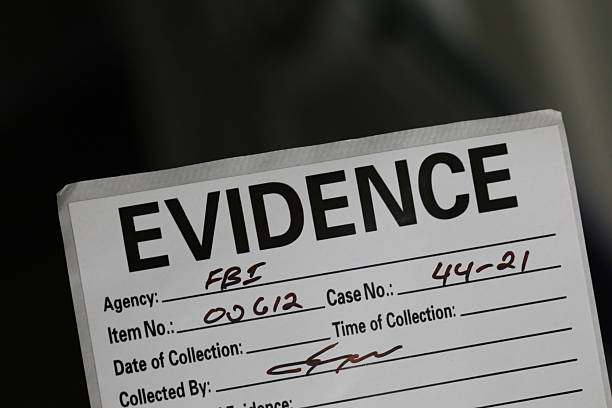
Your inner critic is a relentless prosecutor. It hands you a dossier of imagined failures, cherry-picked missteps, and half-forgotten embarrassments, then demands you plead guilty to incompetence. You sit in the defendant’s chair, feeling the weight of a case built on nothing but vague suspicion. But what if you had your own evidence file—a meticulously curated collection of concrete accomplishments, irrefutable wins, and moments when you rose above the noise? That file, known as a Proof File, is not a scrapbook of nostalgia. It is a living courtroom exhibit that forces your inner critic to cross-examine reality rather than emotion.
The first step in constructing this weapon against doubt is to understand why your brain systematically undervalues past triumphs. Psychologists call this the “negativity bias,” a survival mechanism that made our ancestors hyper-vigilant to threats. A single mistake carries more neural weight than a dozen successes. When you recall your career or personal life, the memory of that botched presentation or rejected proposal often overshadows the twenty times you delivered under pressure. Your Proof File counteracts this asymmetry by making success tangible. It transforms fleeting feelings of accomplishment into physical, verifiable objects: a thank-you note from a colleague, a screenshot of positive feedback, a certificate from a course you completed, an email where a client praised your problem-solving. Each item acts as a witness that cannot be swayed by your critic’s dramatic rhetoric.
But gathering these artifacts is only half the practice. The real power lies in the habit of reviewing them with a specific, interrogative mindset. Instead of passively flipping through old awards, you must engage in what can be called an evidence-based self-interview. Sit down with your Proof File—whether a physical binder, a digital folder, or a dedicated notebook—and pose a direct question to your inner critic. For example, “You claim I am incapable of handling complex projects. Let’s check the exhibit: the project I led last quarter received a 95% satisfaction rating. Explain that discrepancy.” The critic will sputter, deflect, or try to minimize the evidence (“That was just luck” or “They were being nice”). That is when you press harder. Luck? Then why did you prepare ten hours of research? Nice? Then why did the same client hire you again? By treating your past successes as independent testimonies, you shift from feeling like a victim of doubt to being the architect of your own defense.
This process also reveals a hidden pattern: the inner critic is not always wrong. Sometimes the Proof File shows a genuine gap. Perhaps you have no evidence of a particular skill because you have never attempted it. That discovery is not a failure; it is a roadmap. Doubt, when confronted with honest documentation, transforms from a paralyzing fog into a specific challenge. You no longer think, “I’m a fraud.” You think, “I lack evidence for X, so I will create it.” The Proof File becomes a dynamic record of growth rather than a static trophy case. Every new success you add—a difficult conversation you handled well, a small risk you took, a moment you showed patience—expands the archive of your capability. Over time, the file grows thicker, and the critic’s voice grows thinner.
One common mistake is to only include major, obvious victories: promotions, awards, public recognition. But the most potent entries are often the quiet ones. Did you choose to get up early and exercise when every cell in your body wanted to stay in bed? That is a success of discipline. Did you apologize sincerely after a conflict? That is a success of emotional intelligence. Did you speak up in a meeting despite your heart racing? That is a success of courage. These micro-wins cumulatively build a counter-narrative to the critic’s blanket condemnation. They prove that you are not defined by your worst moments but by your consistent, if imperfect, efforts.
To make the Proof File a living tool, schedule a weekly “evidence review.” Spend ten minutes adding at least one new item, no matter how small. Then read three entries from the previous month. As you read, notice the emotional shift. The critic’s voice may still whisper, but it will sound less authoritative. You will feel a quiet, grounded confidence that is not based on positive thinking or affirmations—it is based on data. Data does not argue. Data simply exists. And when your inner critic tries to construct a case against you, you can calmly pull out your Proof File and say, “Objection. Here is the reality.”
The deepest benefit goes beyond silencing doubt. It reshapes your identity. You begin to see yourself not as someone who occasionally succeeds despite being flawed, but as someone who consistently builds evidence of competence, resilience, and growth. Doubt no longer feels like a personal defect; it feels like a lazy opponent that you have out-evidenced. Every time you add a victory to the file, you are not just recording history—you are rewriting your brain’s default narrative. And that is a defense no critic can overcome.