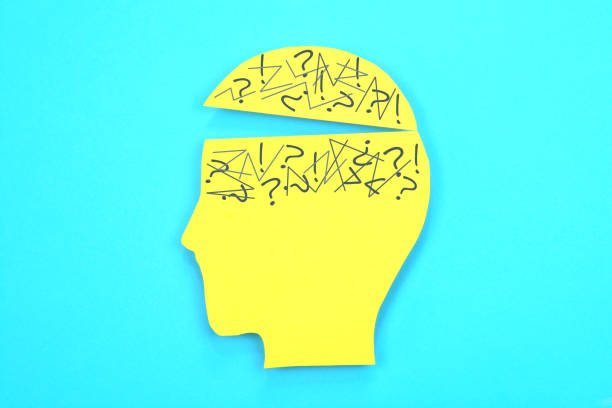
The advancement of human knowledge is not a straight path from question to answer, but a rugged terrain navigated through persistent doubt. In the scientific and academic realms, this doubt is not an obstacle but a fundamental tool, and the process of peer review serves as its essential manager. Peer review does not eliminate doubt; rather, it systematically harnesses, interrogates, and channels it to strengthen scholarly work, transforming raw claims into credible contributions. It manages doubt through a structured framework of expert scrutiny, communal verification, and iterative refinement, ultimately converting private uncertainty into public confidence.
At its core, peer review institutionalizes skepticism. When a researcher submits a manuscript, they present a claim that naturally invites doubt: Are the methods sound? Is the data interpreted correctly? Are the conclusions justified? The process assigns this doubt to qualified peers—experts who are predisposed to skeptical scrutiny precisely because they understand the field’s nuances. This moves doubt from an abstract, public concern to a concrete, private duty. Reviewers act as proxies for the broader academic community, actively seeking flaws, biases, or leaps in logic that the authors, immersed in their own work, may have missed. This formalized skepticism prevents the uncritical acceptance of new ideas, ensuring that doubt is thoroughly exercised before any claim is endorsed for publication.
Furthermore, peer review transforms subjective doubt into objective critique. A vague sense of uncertainty about a study’s findings is unproductive. The review process demands that doubt be articulated, justified, and evidenced. Reviewers must pinpoint specific issues—perhaps a control group is inadequate, a statistical test is misapplied, or a key piece of literature is overlooked. This specificity converts a feeling into actionable feedback. The author then engages with this crystallized doubt, either by strengthening their argument, conducting additional analyses, or clarifying their language. This dialectic between author and reviewer is a collaborative management of doubt, where challenges are addressed directly, strengthening the manuscript’s resilience against future criticism from the wider readership.
Crucially, peer review shifts the burden of doubt from the consumer to the producer. A reader encountering a non-peer-reviewed claim must shoulder the entire weight of evaluation, a task for which they may lack time or expertise. A published peer-reviewed article, however, carries a badge of having survived expert interrogation. The reader’s doubt is not removed—healthy skepticism remains—but it is alleviated by the knowledge that knowledgeable others have already posed tough questions. The process builds a scaffold of credibility, allowing the community to build upon published work without restarting from first principles with every new paper. It manages societal doubt by creating a filtered, though not infallible, record of vetted knowledge.
However, the system’s management of doubt is not without its own tensions. The process can be slow, sometimes suppressing novel ideas that challenge entrenched paradigms, as reviewers’ doubts may be rooted in conventional wisdom. Anonymity can sometimes foster overly harsh criticism, while a lack of anonymity can lead to timid reviews. Furthermore, it does not guarantee truth; retractions of peer-reviewed work prove that doubt is perpetually deferred, not permanently resolved. Yet, this imperfection is intrinsic to its function. Peer review is a quality-control mechanism, not a truth-validating oracle. It manages doubt to a reasonable standard, not to absolute certainty.
In essence, peer review is the disciplined conversation through which science and scholarship negotiate doubt. It provides a structured arena where skepticism is mandatory, critique must be justified, and claims are stress-tested before entering the archive of public knowledge. By making doubt an explicit, integral, and constructive part of the scholarly workflow, it transforms a potentially paralyzing force into an engine of rigor and reliability. The result is not a doubt-free literature, but a more trustworthy one—a body of work where confidence is earned through the very process of having survived managed, expert doubt.