Skip to Content

Practical Tools for Quieting Your Inner Critic

Why Your Affirmations Feel Like Lies: Rewiring the Brain to Silence the Inner Critic

Why Your Affirmations Feel Like Lies: Rewiring the Brain to Silence the Inner Critic

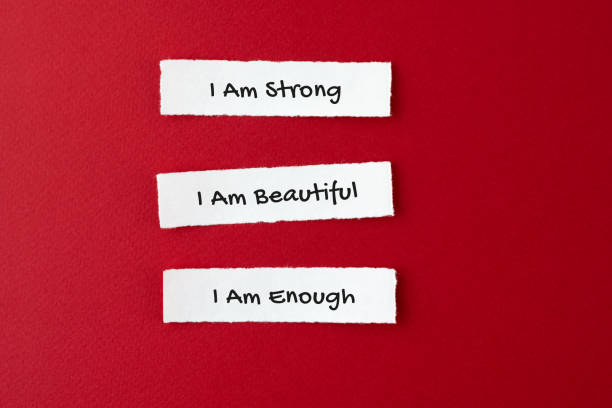
When you stare into the mirror and recite “I am confident, I am worthy, I am enough,” and the voice inside your head retorts with a snort of disbelief, you are not broken.

Mindful Noting: A Practice to Disarm Your Inner Critic

Mindful Noting: A Practice to Disarm Your Inner Critic

The inner critic is not a villain; it is a frightened guardian.
Mastering the Art of Mindful Journaling to Silence Self-Doubt

Mastering the Art of Mindful Journaling to Silence Self-Doubt

The inner critic is a persistent, often harsh, internal voice that evaluates, judges, and undermines our sense of self-worth.

The Five-Minute Courage Rule: Your Secret Weapon Against Analysis Paralysis

The Five-Minute Courage Rule: Your Secret Weapon Against Analysis Paralysis

The voice of your inner critic is never louder than when you stand at the precipice of action.

The Science of Self-Talk: Building Affirmations That Rewire Your Brain

The Science of Self-Talk: Building Affirmations That Rewire Your Brain

Every morning, millions of people stand before a mirror and recite phrases they hope will transform their lives.

Embracing Imperfection: The Art of Self-Compassionate Reflection

Embracing Imperfection: The Art of Self-Compassionate Reflection

The inner critic is a master of precision.

The Art of Labeling Your Inner Critic: A Mindfulness Technique for Anxious Thoughts

The Art of Labeling Your Inner Critic: A Mindfulness Technique for Anxious Thoughts

Your inner critic is a master of disguise.
The Five-Minute Courage Rule: How a Tiny Commitment Defeats Your Inner Critic

The Five-Minute Courage Rule: How a Tiny Commitment Defeats Your Inner Critic

The inner critic thrives on one thing: the illusion of endless time.

The Art of Noticing: How Mindfulness Diffuses the Inner Critic’s Power

The Art of Noticing: How Mindfulness Diffuses the Inner Critic’s Power

When the inner critic speaks, it rarely announces itself with a gentle tap on the shoulder.
The Architecture of Attention: How Mindfulness Rebuilds Your Relationship with Self-Doubt

The Architecture of Attention: How Mindfulness Rebuilds Your Relationship with Self-Doubt

The inner critic rarely announces itself with a fanfare.

Seeds of Doubt

How can self-compassion help me deal with my inner critic?

Self-compassion directly counteracts the harshness of your inner critic by replacing judgment with kindness. Instead of fighting the critical voice, you acknowledge your struggle with understanding. This creates psychological safety, allowing you to see “failures” as human experiences shared by all. This gentle approach disarms the critic’s power, reduces shame, and frees up mental energy for constructive growth rather than destructive self-punishment.

How should I handle doubt about large, long-term goals?

Break the affirmation down to match your next immediate, believable step. An affirmation for a huge goal like “I am a best-selling author” can feel absurd. Instead, anchor in the present process: “I am a writer who honors my daily practice,“ or “Today, I am crafting one clear paragraph.“ This focuses your mind on the controllable action, building confidence cumulatively. Each small, completed action serves as a brick in the foundation of your larger belief.

How can I use this method for doubts about others (e.g., conspiracy theories)?

Apply the same evidential framework. Identify the core claim (e.g., “The event was entirely staged”). Gather evidence for: What sources support this? Assess their credibility and primary evidence. Gather evidence against: What is the consensus explanation and its evidence? Are there logical fallacies? Look for probabilistic thinking—is the claim the simplest explanation? This shifts the focus from “Who to believe?“ to “What does the preponderance of verifiable evidence suggest?“

How can I distinguish between healthy skepticism and harmful doubt?

Healthy skepticism is open-minded, evidence-seeking, and willing to update beliefs with new information. It asks, “What is the evidence?“ Harmful doubt is often closed, fear-based, and resistant to contrary evidence, asking, “What if I’m right?“ The key difference is flexibility. Healthy skepticism is a tool for discovery; harmful doubt is a rigid filter that distorts reality to confirm pre-existing fears or biases, ultimately hindering growth and decision-making. It often persists despite overwhelming counter-evidence.

Why is self-compassion crucial for dealing with doubt?

Self-criticism amplifies doubt into a cycle of shame. Self-compassion interrupts this by offering kindness, as you would to a friend. It acknowledges, “This is hard, and it’s okay to feel unsure,“ without judgment. This creates psychological safety to examine the doubt without fear of self-flagellation. From this safe space, you can problem-solve effectively. We build self-compassion through specific mantras and practices, making it your first response to stumble, transforming fragility into resilient self-support.