
Skip to Content

Resources for the "Deconstructing" Believer

The Art of Unknowing: A Spiritual Resource for the Deconstructing Believer

The Art of Unknowing: A Spiritual Resource for the Deconstructing Believer

For many who begin to question the faith they inherited, the first loss is not belief itself but the sensation of being anchored.

Doubt as the Gateway to Authentic Belief

Doubt as the Gateway to Authentic Belief

For the believer who has begun the quiet unraveling, the phrase “deconstruction” often arrives like a storm warning written in familiar scripture.
The Transformative Power of Unanswered Questions

The Transformative Power of Unanswered Questions

For many who have begun deconstructing their faith, the most terrifying moment is not the absence of belief but the abundance of questions.

Doubt as a Sacred Gateway: Rethinking Certainty in the Deconstruction Journey

Doubt as a Sacred Gateway: Rethinking Certainty in the Deconstruction Journey

When the pillars of a lifelong faith begin to tremble, the experience can feel like a death.

Doubt as a Doorway: Finding God in the Midst of Deconstruction

Doubt as a Doorway: Finding God in the Midst of Deconstruction

For believers who enter the often frightening process of deconstruction, doubt frequently feels like an enemy.

The Grief of Losing a Universe

The Grief of Losing a Universe

When a believer begins the process of deconstruction, they often expect an intellectual shift—a changing of minds about inerrancy, historicity, or moral positions.
Finding Your People When the Old Church No Longer Fits

Finding Your People When the Old Church No Longer Fits

The moment you begin questioning foundational beliefs, a silence often descends.
The Gift of Uncertainty: How Deconstructing Believers Can Find God in the Questions

The Gift of Uncertainty: How Deconstructing Believers Can Find God in the Questions

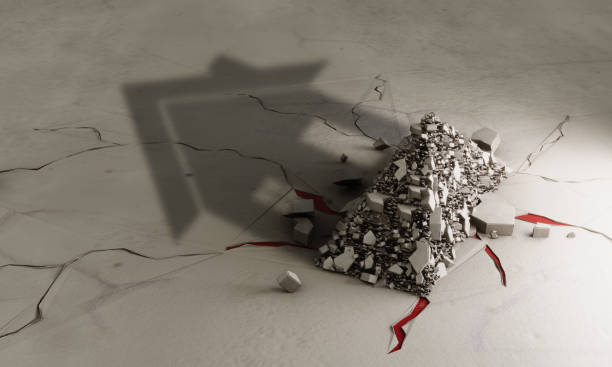
For many who have walked the path of faith for years, deconstruction arrives not as a choice but as an earthquake.

The Gift of Holy Uncertainty: Embracing Doubt as Spiritual Practice

The Gift of Holy Uncertainty: Embracing Doubt as Spiritual Practice

For the believer engaged in the slow, often painful work of deconstruction, doubt can feel like a betrayal.
Embracing the Liminal Space: Doubt as a Sacred Threshold

Embracing the Liminal Space: Doubt as a Sacred Threshold

For the believer who has begun the arduous process of deconstruction, the landscape can feel like a vast, featureless desert.

Reclaiming Mystery: Embracing Uncertainty as a Spiritual Practice

Reclaiming Mystery: Embracing Uncertainty as a Spiritual Practice

For the believer who has begun the arduous journey of deconstruction, the most disorienting discovery is often not the interrogation of doctrine but the sudden silence where certainty used to live.

The Unseen Scaffold: Why Community Matters in Faith Deconstruction

The Unseen Scaffold: Why Community Matters in Faith Deconstruction

For those who have begun the slow, often painful process of unthreading their inherited beliefs, faith deconstruction can feel like a solitary excavation.

Seeds of Doubt

How did ancient philosophers contribute to religious doubt?

Ancient philosophers like Socrates, Epicurus, and Lucretius laid foundational critiques by questioning the nature of the gods, divine intervention, and the problem of evil. They advocated for reason and natural explanations over myth, challenging traditional religious narratives. Their inquiries established doubt as a legitimate intellectual stance, emphasizing empirical observation and logical consistency. Studying their arguments shows that questioning religious claims is a long-standing human tradition, essential for developing a reasoned worldview and separating philosophical inquiry from dogma.

Can doubt strengthen personal faith?

Absolutely. Theological traditions like “faith seeking understanding” (Augustine, Anselm) and modern apologetics view doubt as an integral part of a dynamic, examined faith. Engaging with criticism forces believers to move beyond superficial belief, confront hard questions, and develop a more nuanced, personal theology. This process, often called “deconstruction and reconstruction,“ can lead to a more resilient, authentic, and defensible faith. Thus, doubt is not the enemy of belief but a necessary catalyst for spiritual and intellectual maturity, transforming fragile certainty into unshakeable confidence.

What if my inquiry leads me away from my original tradition?

Personal growth sometimes requires transformation. If your sincere inquiry leads elsewhere, it is not a failure but an evolution. The goal is authentic integration, not forced conformity. Honor the foundation your original tradition provided, as it shaped your starting point. Move forward with integrity, carrying forward the wisdom that remains true for you.

What’s the difference between healthy doubt and corrosive cynicism?

Healthy doubt is open-ended, curious, and seeks understanding. It asks, “Is this true, and what evidence supports it?“ Corrosive cynicism is closed, assumes negative intent, and dismisses ideas without examination. It says, “Nothing is true.“ Communities help you maintain this distinction by fostering a mindset of skeptical inquiry paired with openness. The goal is to question productively, not to dismantle everything into nihilism.

What role does emotional self-doubt play in spiritual questioning?

Emotional self-doubt (“Am I good enough?“) often masquerades as intellectual doubt (“Is this true?“). It’s crucial to discern the source. Spiritual inquiry should address the intellectual questions, but personal growth requires also healing the emotional wound. Confidence built on self-worth allows for clearer, less fearful questioning.