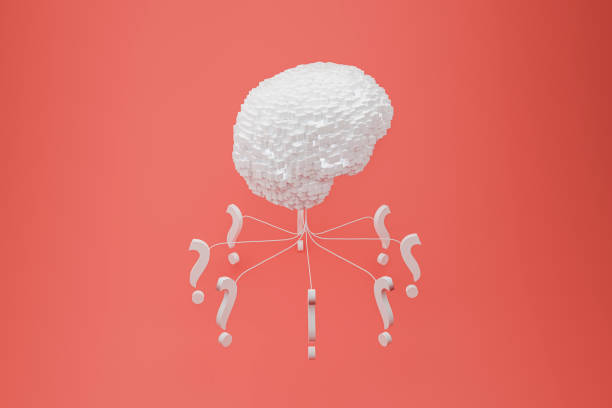
For many who begin to question the faith they inherited, the first loss is not belief itself but the sensation of being anchored. Doubt arrives not as a quiet visitor but as a demolition crew, dismantling the scaffolding of certainty that once held prayer, scripture, and community in place. The deconstructing believer often searches desperately for a replacement foundation—a new theology, a better apologetic, a more inclusive church. Yet the most transformative resource available is not a set of answers but a practice: the art of unknowing. This is not the abandonment of thinking, but the deliberate cultivation of a posture that holds questions open long enough for something authentic to breathe.
When a person begins to deconstruct, they typically reach for books that deconstruct further. Critical scholarship on the Bible, histories of the church, philosophical critiques of theism—these are essential tools. But they can also become a trap, replacing one kind of certainty with another. The former believer who now confidently asserts that “Paul didn’t write half his letters” or “the resurrection was a political myth” has merely swapped dogmas. Genuine deconstruction is not a new intellectual system but a relational stance toward mystery. The most underappreciated resource for this journey is the ancient spiritual practice of apophasis—what Christian mystics called the via negativa, the way of negation. Instead of asserting what God is, one begins by saying what God is not. This discipline does not produce a neat concept of the divine; it clears space for an experience that transcends concept.
Consider how this works concretely. The deconstructing believer often loses the ability to pray, because the image of a personal, interventionist God no longer feels honest. Rather than silencing that prayer, the art of unknowing invites a different kind of prayer: one of pure attention, of sitting in silence without a recipient. This is not atheism pretending to be spirituality. It is a radical trust that the deepest reality—even if unnamed—can be encountered beyond the projections of religious language. Resources like the writings of Pseudo-Dionysius, Meister Eckhart, or the Zen koan tradition become invaluable here, not because they answer doubts but because they validate the very liminal space where doubt lives. They show that the void left by deconstruction is not a failure but a doorway.
Another crucial resource is the practice of rereading scripture as literature rather than as divine dictation. This is not a hermeneutic of suspicion that reduces the Bible to a historical artifact, but a way of honoring its power as a human library of encounter. The deconstructing believer can reclaim the Psalms as raw emotional prayers, Job as a protest against cheap theodicy, Ecclesiastes as a meditation on meaninglessness, and the parables of Jesus as deliberately subversive riddles. When the demand for literal facticity falls away, the texts become more alive, not less. The resource here is a shift in genre awareness: a psalm is not a scientific claim, but it can still be true in the way music is true. This allows the former believer to keep scripture without choking on it.
Community also functions as a resource, but not in the conventional sense of a congregation with agreed doctrines. The deconstructing believer needs a community of practice—people who gather around shared rituals of questioning, storytelling, and silence. This might look like a secular meditation group that honors spiritual language, or a progressive church that explicitly embraces doubt as a faithful posture. The resource is not the institution but the mutual permission to be unfinished. In such spaces, one can voice a half-formed doubt without being rushed to resolution. This is rare and precious. Instead of an answer, one receives companionship in the unknowing.
Finally, the most personal resource is a journal dedicated to documenting the deconstruction journey. Not as a record of arguments but as a map of inner movement. Writing down what you no longer believe, and then asking what remains, often reveals a quiet bedrock of values—compassion, justice, wonder, honesty—that were always there but were obscured by doctrine. This journal becomes a mirror. Over time, the deconstructing believer sees that they are not losing faith but transferring it from propositional claims to lived ethics and openness. The art of unknowing ultimately teaches that confidence does not require certainty. One can stand firmly in one’s actions while remaining radically open in one’s intellect.
The path of deconstruction is not a descent into nihilism. It is a purgation of idols, including the idol of a manageable God. The resources that serve this path are those that help the seeker endure ambiguity without collapsing into a new fixed system. By embracing the art of unknowing, the deconstructing believer discovers that doubt is not the opposite of faith—it is the forge in which a more honest, more resilient form of trust is shaped. That trust rests not on having all the answers, but on the paradoxical assurance that the questions themselves are sacred ground.