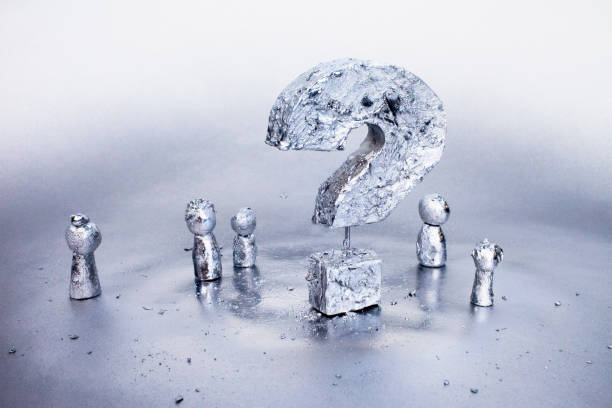
Imagine a prisoner, bound from birth in a subterranean chamber, facing a blank wall. Behind him, a fire casts shadows of puppets and objects, and he takes these flickering silhouettes for the whole of reality. One day he is freed, dragged up a steep ascent into the sunlight, blinded and bewildered. Gradually his eyes adjust; he sees the actual objects, then reflections in water, then the moon and stars, and finally the sun itself—the source of all light and visibility. Plato’s allegory of the cave is not merely a parable about enlightenment; it is a profound meditation on the nature of doubt. The prisoner’s journey is one of radical epistemic disorientation, a struggle to abandon a comfortable, familiar illusion for a truth that initially seems painful and uncertain. In this sense, the cave offers a timeless framework for understanding how doubt about the nature of knowledge and reality can become the very engine of growth.
The cave represents the default condition of human cognition: we are born into a world of received ideas, cultural narratives, and sensory appearances that feel self-evident. The shadows on the wall are the “facts” we inherit—the news headlines, the social norms, the scientific paradigms we accept without question. The chains are not made of iron but of habit, language, and the fear of being wrong. To doubt these shadows is to risk everything. Yet the allegory insists that such doubt is not a weakness but the first necessary step toward genuine knowing. When the prisoner is forced to turn his head, he experiences vertigo. His old certainties dissolve, and he has no new ones to replace them. This is the raw state of philosophical doubt: not a lazy skepticism that denies all truth, but an active, painful questioning that clears the ground.
The ascent out of the cave mirrors the process of critical thinking. At each stage, the freed prisoner must doubt what he previously believed. The reflections in water are not the real objects; they are models, theories, approximations. The stars are not the sun; they are partial truths. Each successive revelation forces him to revise his understanding of what is real. This is precisely the work of epistemology—the branch of philosophy that asks, “What can we know, and how do we know it?” The prisoner’s doubt is not nihilistic; it is constructive. He learns that reality is layered, that knowledge requires effort, and that certainty is a rare and hard-won prize. In our own lives, this translates into the humility to question our most cherished assumptions: that our senses report the world accurately, that our memories are reliable, that the science of today will not be overturned tomorrow.
The final vision of the sun is often interpreted as the form of the Good, but for those of us concerned with doubt as a catalyst, it represents an ideal of clarity that is never fully possessed. The freed prisoner does not return to the cave as a guru with all answers; he returns as one who has seen how much he does not know. When he tries to explain the sun to the still-chained prisoners, they mock him as a fool. His doubt now extends even to his own ability to communicate truth. This is the existential dimension of the allegory: doubt is not merely intellectual but deeply personal. It separates us from the comfort of collective belief. To embrace it is to risk loneliness and misunderstanding. Yet it is precisely this embrace that builds unshakeable confidence—not the confidence of possessing absolute truth, but the confidence of being willing to follow inquiry wherever it leads.
The allegory also illuminates the descent into conspiracy thinking. The prisoners who refuse to leave the cave are not simply ignorant; they are willfully blind. Their doubt is directed only at the liberator’s words, not at their own shadows. A conspiracy theorist, in this framework, is a prisoner who has become angry at the idea of the sun. He builds elaborate explanations for why the shadows are actually more real than the light. His doubt is a defense mechanism, not a tool for growth. True philosophical doubt, by contrast, is humble and self-correcting. It turns inward before it turns outward. It asks: “What if my own perception of reality is the distorted one? What if the chain that binds me is my own attachment to being right?” This kind of doubt is uncomfortable precisely because it offers no easy enemies. It forces us to examine our own minds as part of the problem.
Ultimately, the cave is a metaphor for the lifelong practice of questioning the nature of knowledge and reality. The journey never ends. Each time we think we have reached the sunlight, we discover that it is only another cave—a broader one, perhaps, but still a cave. The philosopher’s task is not to escape doubt but to befriend it, to see it not as an obstacle but as the very substance of learning. The prisoner who has once felt the sun on his face will never again be satisfied with shadows. He carries his doubt like a compass, always pointing toward the horizon of deeper understanding. For anyone seeking to harness doubt as a catalyst for growth, Plato’s ancient story remains the most vivid blueprint: break the chains, climb the rough ascent, trust the blindness that comes with new light, and never stop asking what is real.