
Skip to Content

Questioning the Nature of Knowledge and Reality

The Brain in a Vat: How Radical Doubt Forges Unshakeable Confidence

The Brain in a Vat: How Radical Doubt Forges Unshakeable Confidence

Imagine, for a moment, that you are not reading these words on a screen.

The Brain in a Vat: How Radical Doubt Refines Your Relationship with Reality

The Brain in a Vat: How Radical Doubt Refines Your Relationship with Reality

Imagine for a moment that every sensation you have ever experienced—the warmth of the sun on your skin, the weight of a coffee cup in your hand, the sound of a friend’s laughter—is nothing more than...

The Problem of Skepticism: Can We Know Anything at All?

The Problem of Skepticism: Can We Know Anything at All?

The moment you begin to question whether the world around you is real, you have stepped into one of the oldest and most unsettling territories of human thought: radical skepticism.
The Brain in a Vat: A Philosophical Crucible for Radical Doubt

The Brain in a Vat: A Philosophical Crucible for Radical Doubt

Consider for a moment the most unsettling possibility imaginable: that every sensation, every memory, every relationship, and every truth you hold dear is nothing more than electrical signals...

The Allegory of the Cave: A Framework for Epistemic Doubt

The Allegory of the Cave: A Framework for Epistemic Doubt

Imagine a prisoner, bound from birth in a subterranean chamber, facing a blank wall.
The Illusion of Certainty: How the Problem of Induction Unravels Our Knowledge of Reality

The Illusion of Certainty: How the Problem of Induction Unravels Our Knowledge of Reality

Every morning you wake up, you expect the sun to rise.

The Brain in a Vat Hypothesis: Embracing Radical Skepticism to Forge Certainty

The Brain in a Vat Hypothesis: Embracing Radical Skepticism to Forge Certainty

Imagine you are nothing more than a brain floating in a vat of nutrients, connected to a supercomputer that feeds you every sensation, thought, and memory you have ever experienced.
The Brain in a Vat: How Doubting Reality Becomes the Crucible of Certainty

The Brain in a Vat: How Doubting Reality Becomes the Crucible of Certainty

Imagine for a moment that you are not sitting where you are reading these words.
The Unseen Wall: How Doubting Other Minds Forges Unshakeable Confidence

The Unseen Wall: How Doubting Other Minds Forges Unshakeable Confidence

The most profound doubts are not those that shake our belief in facts, but those that shake our belief in other people.
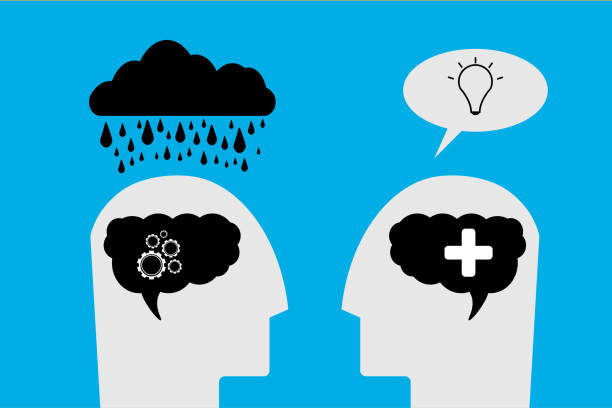
Navigating Doubt: Exploring the Simulation Hypothesis and Enhancing Critical Thinking

Navigating Doubt: Exploring the Simulation Hypothesis and Enhancing Critical Thinking

The human experience is often characterized by doubt, a pervasive force that can range from personal uncertainty to profound existential questions about the nature of reality.
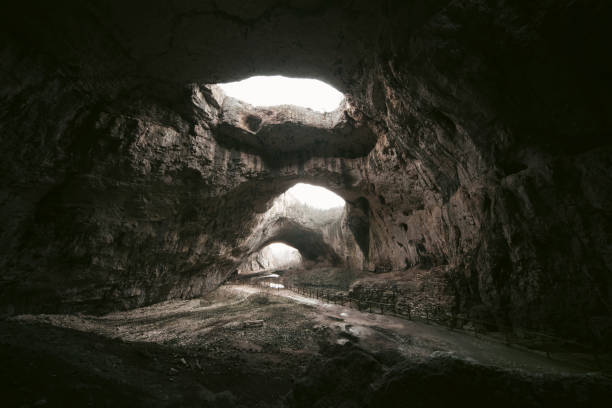
The Allegory of the Cave: Liberating the Mind from Shadows of Ignorance

The Allegory of the Cave: Liberating the Mind from Shadows of Ignorance

Imagine a lifetime spent staring at a wall.
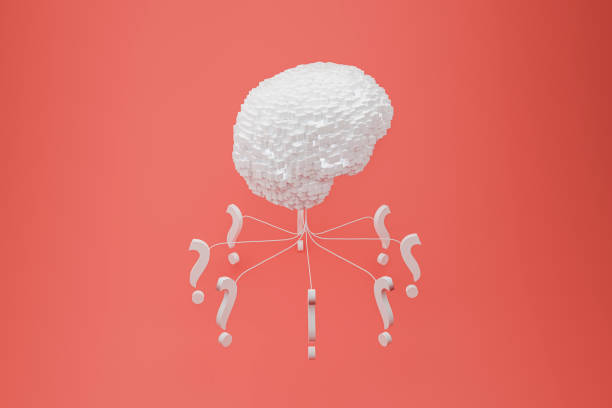
The Brain in a Vat: Questioning the Very Fabric of Certainty

The Brain in a Vat: Questioning the Very Fabric of Certainty

Imagine for a moment that everything you have ever known is a lie.

Seeds of Doubt

How does doubt relate to intellectual humility and arrogance?

Healthy doubt is an expression of intellectual humility—the recognition that your knowledge is limited and fallible. It prompts learning. Intellectual arrogance, however, often manifests as the certainty of doubt; the doubter is supremely confident that everyone else is wrong. This arrogant doubt dismisses expertise without due diligence. True growth lies in doubting productively: questioning your own assumptions as rigorously as you question others’, and valuing the collective knowledge built over time.

What role does personal identity play in resistant doubt?

Our beliefs are often woven into our sense of self, community, and moral values. When a fact challenges a belief core to our identity, we perceive it as a personal attack. Admitting error can feel like a betrayal of our tribe or a collapse of our worldview. Thus, resistant doubt is a defense mechanism. To protect the self, the individual disputes the fact, the source, or the methodology, creating a “backfire effect” where contradictory evidence actually strengthens the original belief.

How can doubting reality actually lead to greater confidence?

Paradoxically, questioning reality’s solidity—like pondering if we’re in a simulation—can build unshakeable confidence. This process shifts your foundation from seeking external, absolute truths to trusting your internal capacity to navigate uncertainty. By consciously engaging with radical doubts, you exercise and strengthen your critical thinking “muscles.“ You become confident not because you have all the answers, but because you are resilient and adaptable in the face of questions. This embodies the site’s goal: turning doubt from a source of anxiety into a catalyst for empowered thinking.

Why do some people doubt established scientific consensus, like climate change or vaccine efficacy?

Doubt often stems from a complex mix of cognitive biases, tribal identity, and mistrust in institutions, not just a lack of information. When scientific findings conflict with deeply held worldviews or perceived personal freedom, individuals may engage in “motivated reasoning,“ seeking out fringe sources to confirm pre-existing beliefs. The scale and complexity of modern science can also feel alienating, making simplified, contrarian narratives more psychologically comforting than nuanced, consensus reality.

What is the “Dunning-Kruger effect” and how does it relate to doubt?

The Dunning-Kruger effect is a cognitive bias where people with low ability in a domain overestimate their competence, while experts may underestimate theirs. Relating to doubt, it explains why some individuals with minimal knowledge are supremely confident in dismissing expert consensus. They lack the metacognitive skill to recognize what they don’t know. Their doubt is not born of deep understanding but of an inability to gauge the complexity of the field they’re doubting, leading to unwarranted certainty in their skepticism.