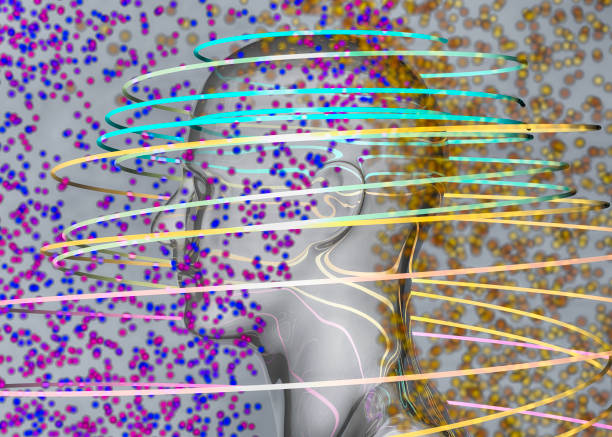
Imagine for a moment that every sensation you have ever experienced—the warmth of the sun on your skin, the weight of a coffee cup in your hand, the sound of a friend’s laughter—is nothing more than electrical signals fed directly into a brain suspended in a nutrient bath. You are not walking through a world; you are a disembodied organ floating in a laboratory, and a supercomputer is generating the illusion of a life you believe you own. This thought experiment, known as the brain‑in‑a‑vat scenario, is not a mere science‑fiction trope. It is a razor‑sharp tool for dismantling our most cherished assumptions about knowledge and reality. To confront it is to step into a crucible of philosophical doubt from which one can emerge with a more honest, resilient, and flexible understanding of what it means to know anything at all.
The brain‑in‑a‑vat scenario is a modern descendant of René Descartes’s famous evil demon hypothesis. Descartes worried that an all‑powerful deceiver could be systematically tricking him into believing that two plus two equals four, that his body existed, or that an external world was present. The contemporary version replaces the demon with a neural‑interface machine, but the core challenge remains the same: how can you prove that your perceptions correspond to an objective reality? You cannot step outside your own consciousness to compare your experiences with the world “as it is.” Every test you perform—every experiment, every conversation, every pinch—is itself a perception, potentially part of the simulation. The doubt is airtight, and for many people that feels terrifying. But terror is not the only possible reaction.
When you sit with this doubt long enough, a surprising shift occurs. The question “Is this real?” begins to lose its grip because you realize that the word “real” is not a fixed anchor. What you care about, moment to moment, is not some abstract correspondence between mind and universe but the coherence, reliability, and richness of your experience. If the brain in a vat is fed a consistent set of inputs—if the coffee tastes the same every morning and gravity continues to pull objects downward—then that inner world possesses its own kind of reality. The matrix is real in the only sense that matters to a conscious being: it is the stage upon which your life unfolds. Doubt about the ultimate nature of reality does not invalidate the patterns you perceive; it simply reminds you that those patterns are mediated. You are not seeing the world; you are seeing the interface between your nervous system and whatever lies behind the veil.
This realization is liberating rather than paralyzing. It frees you from the demand for absolute certainty, a demand that is both impossible to satisfy and unnecessary for living well. When you embrace the possibility that you might be a brain in a vat, you stop demanding that your knowledge be indubitable and start evaluating it by more humane criteria: Is it useful? Does it help you navigate your experience? Does it allow you to connect with others, to create meaning, to adapt when new information arises? The ancient skeptics understood this. They argued that suspending judgment about ultimate reality (epochē) could lead to tranquility (ataraxia) because you no longer expend energy on unresolvable puzzles. Instead, you attend to the appearances that present themselves, and you act according to the most plausible of those appearances without clinging to them as final truths.
Applying this to everyday life, the brain‑in‑a‑vat doubt becomes a muscle for critical thinking. When you encounter a conspiracy theory, a political claim, or even a heartfelt belief you hold about yourself, you can ask: What evidence would change my mind? If no possible evidence would, then your belief is not based on knowledge but on something else—identity, comfort, or fear. The doubt forces you to acknowledge that your epistemic position is always provisional. That is not a weakness; it is the engine of growth. Every time you question whether what you see is “really there,” you train yourself to distinguish between raw sensory data and the interpretations you layer upon it. You become less susceptible to manipulation because you understand that the story you tell yourself about reality is just one of many possible stories, and you can choose to revise it.
The hardest part of this practice is that it requires you to sit with discomfort. Our minds evolved to seek certainty—it is efficient for survival. But certainty is often a trap. The person who is absolutely sure they know the truth is the person who cannot learn. The brain‑in‑a‑vat thought experiment does not ask you to believe that you are actually in a simulation. It asks you to hold that possibility as a live hypothesis so that you never become complacent about your own knowledge. It is a philosophical yoga for the intellect, stretching your capacity to tolerate ambiguity without collapsing into nihilism. Nihilism says “nothing matters because nothing is real.” The wise response is different: “Everything matters because my experience is the only reality I will ever have, and I can shape it with intention.”
In the end, radical doubt about the nature of knowledge and reality is not a dead end. It is a threshold. On the other side lies a more humble, more curious, and more courageous way of being. You stop looking for a foundation that cannot be shaken and start building a life upon the shifting sands of experience, willing to rebuild as the sand shifts. The brain in the vat is not a reason to despair. It is a mirror held up to the mind, asking you to see the act of knowing itself—fragile, tentative, and yet astonishingly powerful. Accept the doubt. Let it hollow out your false certainties. What fills that hollow is not emptiness but a deeper capacity for wonder.