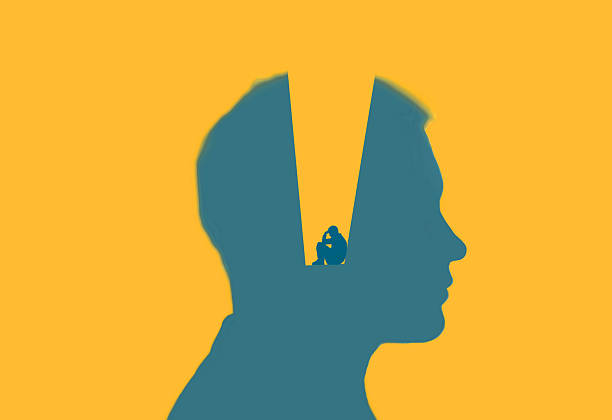
Imagine for a moment that you are not sitting where you are reading these words. Instead, your brain floats in a nutrient-rich tank, connected by wires to a supercomputer that feeds you every sensation, thought, and memory you have ever experienced. The chair beneath you, the warm glow of your screen, the sound of your own breathing—all of it is an elaborate illusion. This is the brain-in-a-vat scenario, a modern thought experiment that distills the oldest and most unsettling form of philosophical doubt: the possibility that everything you know about the world could be systematically false. At first glance, such a doubt seems paralyzing, a doorway to nihilism. But examined closely, this radical uncertainty about the nature of knowledge and reality becomes not an intellectual dead end, but a rigorous tool for sharpening the mind and forging unshakeable confidence.
The brain-in-a-vat hypothesis inherits its epistemological power from Descartes’ seventeenth-century Meditations, in which the philosopher imagined a malicious demon whose sole purpose was to deceive him about the external world. Descartes realized that if such a demon existed, he could not trust his senses, his memories, or even the simplest mathematical truths. Centuries later, technology has updated the demon into a computer, but the fundamental doubt remains unchanged: how can we be certain that our perceptions correspond to an objective reality? This question is not merely academic. Every time you doubt a news story, question a scientific claim, or wonder whether a friend’s intention is genuine, you are engaging in a microcosm of the same epistemic crisis. The brain-in-a-vat scenario forces us to confront the gap between experience and truth—a gap that is the birthplace of all critical thinking.
To sit inside this doubt is to recognize that we have no direct access to reality. Every piece of evidence we might offer to prove we are not in a vat—poking our own skin, asking another person, running a scientific experiment—is itself a sensory experience that could be simulated. The doubt becomes self-referential and seemingly unbreakable. Many people, upon encountering this argument, feel a vertigo of meaninglessness. If we cannot rule out the simulation, they reason, then knowledge is impossible and confidence is a delusion. But this reaction misunderstands the purpose of the doubt. The brain-in-a-vat does not prove that knowledge is unattainable; it proves that knowledge cannot be based on certainty alone. The philosopher Hilary Putnam famously argued that the statement “I am a brain in a vat” is self-refuting because the meaning of “brain” and “vat” depends on causal contact with real brains and vats, but this logical move, while elegant, does not dissolve the experiential power of the doubt.
What the doubt does is reveal the structure of our belief systems. When we realize that even our most cherished convictions rest on a foundation of assumption—that there is a physical world, that our senses are generally reliable, that we are not being radically deceived—we are forced to become conscious of those assumptions. This consciousness is the first step toward intellectual strength. Instead of clinging to beliefs as if they were unassailable truths, we learn to hold them as hypotheses, always open to revision. This is not weakness; it is the hallmark of a flexible, resilient mind. The person who has wrestled with the brain-in-a-vat and emerged on the other side no longer panics when a long-held belief is challenged. They have already faced the worst-case scenario for truth and found a way to live with it.
That way is pragmatic coherence. Faced with the impossibility of absolute certainty, we turn to the consistency and utility of our experiences. The world we perceive, even if a simulation, obeys regular laws. Fire burns, gravity pulls, love hurts, and kindness nurtures. Whether these phenomena are “real” in some metaphysical sense is irrelevant to the fact that they function as if they were real. Our knowledge becomes not a mirror of external reality but a map of our experience. And a good map, even one drawn from a simulation, is still useful for navigation. This is the core of what epistemologists call “internalism”—the view that justification comes from within our web of beliefs, not from a God’s-eye view of reality. By embracing this, you transform doubt from a poison into a vaccination. You become immune to the paralysis of skepticism because you no longer require the impossible guarantee.
Moreover, the very act of doubting the nature of reality strengthens the muscles of metacognition. To question whether your perceptions are trustworthy, you must step back and observe your own cognitive processes. This meta-awareness is the foundation of emotional regulation, rational decision-making, and genuine intellectual humility. It allows you to say, “I might be wrong,” without collapsing into indecision. It also creates space for curiosity: if the world could be an illusion, then the mechanisms of that illusion are themselves a fascinating subject of study. Science, after all, proceeds by doubting its own conclusions. Every experiment is a structured attempt to prove that a hypothesis is wrong. The brain-in-a-vat simply extends this scientific attitude to the most fundamental level.
Ultimately, the doubt that seems so menacing is the very thing that liberates us from the tyranny of fixed beliefs. To question whether we know anything at all is to realize that we are free to choose what we trust, how we act, and what meaning we create. The confidence that arises from this realization is not the brittle confidence of someone who has never been challenged. It is the quiet, unshakeable confidence of someone who has looked into the abyss of uncertainty and decided to build a life anyway. The brain in a vat is not a nightmare; it is a mirror. When you stare into it, you see the only thing you can ever truly know: your own capacity to doubt, to think, and to choose.