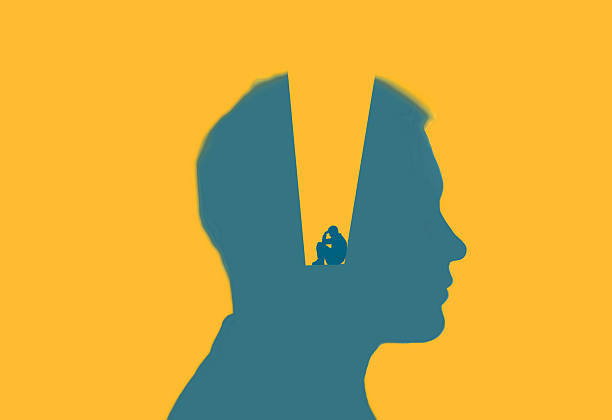
Doubt is a double‑edged sword. When wielded with care, it sharpens our critical thinking, protects us from deception, and spurs intellectual growth. Yet the same impulse that leads a scientist to question a flawed study can also draw a person into a web of unfounded conspiracy theories. Understanding where healthy skepticism ends and harmful belief begins requires a deep look at the psychological mechanisms that govern how we process uncertainty, evidence, and threat. By examining these mechanisms, we can learn to navigate the treacherous waters between legitimate questioning and the rigid certainty of conspiracy.
At its core, healthy skepticism is a method, not a conclusion. It is the willingness to hold beliefs provisionally, to test them against evidence, and to revise them when new information arises. A healthy skeptic asks questions like “What is the source of this claim?”, “What evidence would prove it wrong?”, and “Are there alternative explanations?” This mindset is inherently open‑ended and humble. It acknowledges that human knowledge is incomplete and that certainty is often a trap. In contrast, harmful beliefs—particularly those central to conspiracy theories—tend to be closed loops. They resist falsification by framing any contradictory evidence as part of the conspiracy itself. For example, a healthy skeptic might question a government report on a historical event, seek out multiple sources, and remain open to changing their mind. A person trapped in a harmful belief, however, will treat the same report as proof that the cover‑up is working, thereby strengthening their original conviction.
One of the key psychological drivers that transforms healthy skepticism into harmful belief is the need for certainty and control. Humans are inherently pattern‑seeking creatures. When faced with random or chaotic events—a pandemic, an economic crash, a political scandal—our brains instinctively look for hidden causes. Healthy skepticism channels this need into systematic inquiry: gathering data, consulting experts, and testing hypotheses. But when anxiety is high and trust in institutions is low, the same pattern‑seeking can latch onto simple, dramatic explanations that promise a return to order. Conspiracy theories often provide exactly that: a clear villain, a secret plan, and a sense that someone is in control, even if that someone is malevolent. The emotional payoff of such beliefs can be powerful enough to override the rational weighing of evidence.
Another critical factor is the role of cognitive biases. Confirmation bias makes us favor information that supports our preexisting views, while the availability heuristic leads us to overestimate the likelihood of events that are vivid or emotionally charged. A healthy skeptic is aware of these biases and actively works to counteract them—for instance, by deliberately seeking out opposing viewpoints or by demanding rigorous evidence before drawing conclusions. A person whose skepticism has curdled into harmful belief, by contrast, will use those same cognitive shortcuts to build an ever‑stronger case for their theory. They may spend hours watching videos that confirm their suspicions, join online communities that reinforce each other’s certainty, and dismiss mainstream sources as untrustworthy. This creates an epistemic bubble where doubt is directed outward at the establishment but never inward at one’s own worldview.
Social identity also plays a pivotal role. Healthy skepticism is an individual intellectual practice, but it can flourish in communities that value debate, peer review, and intellectual humility. Harmful conspiracy beliefs, on the other hand, often thrive in groups that define themselves against mainstream society. Identifying as a “truth‑seeker” or a “sheeple‑awakened” person can provide a strong sense of belonging and purpose. The very act of questioning everything becomes a marker of in‑group loyalty, and anyone who challenges the group’s core narrative is seen as a threat or a shill. This social dynamic can turn healthy questioning into a rigid ideology, where the goal is no longer to find truth but to defend the identity.
So how can we distinguish healthy from harmful skepticism in practice? One useful test is the principle of proportionality. Healthy skepticism matches the intensity of its doubt to the quality and quantity of available evidence. It asks for extraordinary evidence only when faced with extraordinary claims, but it does not demand absolute proof for ordinary ones. Harmful skepticism, by contrast, applies an impossible standard to mainstream explanations while accepting flimsy evidence for alternative ones. Another marker is openness to correction. A healthy skeptic will say, “I could be wrong; here’s what would change my mind.” A person entrenched in harmful belief will say, “No evidence can ever disprove this, because the system is rigged.” Finally, consider the emotional tone. Healthy skepticism is curious and cautious; harmful belief is often angry, righteous, and paranoid.
Navigating this landscape requires not just knowledge of logical fallacies but also self‑awareness. We all have the potential to fall into harmful patterns of doubt, especially when we feel powerless or betrayed. The goal is not to eliminate doubt—it is to cultivate a form of skepticism that remains humble, evidence‑based, and open to change. By understanding the psychological forces that pull us toward rigid conspiracy thinking, we can strengthen our ability to hold doubt as a tool for growth rather than a prison of certainty.