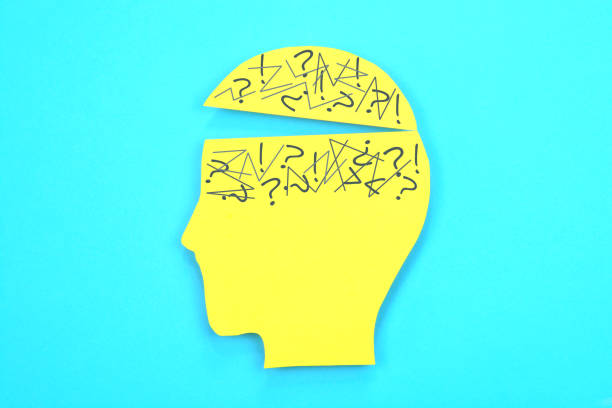
Every child is born a natural doubter. The toddler who insists on pulling the spoon from your hand to test gravity herself, the preschooler who asks “but why is the sky blue?“ until you admit you do not fully know, the ten-year-old who challenges a rule with “that doesn’t make sense” — these are not signs of defiance or confusion. They are signs of a mind that refuses to accept the world at face value. Yet somewhere along the path to adulthood, most of us learn to suppress that doubt. We are told that questioning is rude, that authority knows best, that uncertainty is a weakness. The result is a generation of children who can recite facts but struggle to evaluate them, who can follow instructions but freeze when faced with ambiguity. If we want to raise critical thinkers, we must first reclaim doubt as a gift rather than a threat.
The most powerful shift a parent or teacher can make is to change the default response to a child’s question. Instead of providing an immediate answer, try answering with a question of your own: “What do you think?“ or “How could we find out?“ This simple act transforms the child’s doubt from a passive state of confusion into an active process of exploration. When a six-year-old asks why some people believe the Earth is flat, do not simply dismiss the belief as silly. Instead, ask what evidence would convince her that the Earth is round, then work backward to see why flat-Earth claims might seem persuasive to someone who has not examined that evidence. This models the essence of critical thinking: not knowing what to think, but knowing how to think about what others claim.
Crucially, children must see the adults in their lives model doubt as well. A parent who says “I’m not sure that’s true, let’s check” or “I used to believe that, but then I learned something new” shows that uncertainty is not a weakness but a doorway. Many adults fear that admitting ignorance will undermine their authority in a child’s eyes, yet the opposite is true. Children recognize when an adult is bluffing. When you acknowledge the limits of your knowledge, you demonstrate intellectual honesty — the very foundation of trust. From that trust, a child can build confidence not in having all the answers, but in the process of seeking them.
However, doubt without guidance can curdle into cynicism. A child who learns to question everything may also learn to trust nothing, including her own reasoning. The difference between a healthy skeptic and a chronic doubter lies in the attitude toward evidence. Skeptics ask “what is the best available reason to believe this?“ while cynics ask “what is the hidden agenda behind this?“ Parents and teachers can steer children toward the former by celebrating the act of verification. When a child doubts a friend’s claim that a particular video game is the best, encourage her to look up reviews, compare gameplay footage, and articulate her own criteria. Doubt becomes a research tool, not a wall. The goal is not to prove everyone wrong but to build a more reliable map of reality.
One of the most effective ways to practice this is through everyday media — commercials, news headlines, social media posts, and even picture books. Ask a child to spot the difference between a fact and an opinion in a commercial for cereal. Ask why a news article might choose a particular photo. Ask what a character in a story assumes to be true without checking. These micro-exercises train the brain to notice gaps between assertion and evidence. Over time, the child internalizes a reflexive pause: “Wait, do I actually know this, or am I just hearing it?“ That pause is the beginning of all critical thought.
Another powerful practice is to make space for the phrase “I don’t know” in the classroom or home. When a child encounters a question that has no easy answer — why do bad things happen, how will robots change jobs, what happens after we die — resist the urge to provide comfort through false certainty. Instead, sit with the uncertainty. Ask the child what she thinks, and genuinely consider her answer. Children are capable of deep reasoning when we treat their doubts as legitimate starting points rather than problems to be solved. In that space, they learn that doubt is not a sign of failure but a sign of engagement. The child who says “I don’t know, but I want to find out” is already more confident than the child who parrots an answer to avoid embarrassment.
Finally, doubt must be tied to action. A child who doubts that a recycling program actually works could be encouraged to interview the coordinator, measure participation, or propose a better system. Doubt that leads to investigation, conversation, and creative problem-solving becomes a catalyst for agency. The child learns that her questions can change the world, or at least her corner of it. This is the ultimate confidence: not the confidence of knowing everything, but the confidence of knowing that you can always learn, adapt, and improve.
In an age of information overload and manufactured certainty, the most valuable gift we can give young minds is permission to doubt well. Not to doubt for its own sake, but to doubt in the service of understanding. When we teach children to embrace uncertainty, we teach them to think. And when we teach them to think, we empower them to face every challenge with the calm assurance that they can figure it out — because they have done it before. That is the unshakeable confidence that doubt, properly nurtured, can build.