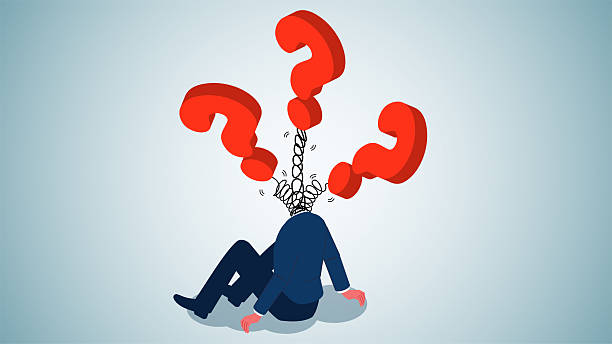
You scroll through your feed and see a former classmate’s promotion announcement, a friend’s vacation photos, or a colleague’s award. A familiar knot tightens in your stomach. Suddenly, your own accomplishments feel small, your trajectory slow, your worth shaky. This is the moment self-doubt is born, not from any objective failure, but from the silent, automatic act of measuring yourself against another person’s highlight reel. Understanding how social comparison triggers self-doubt is essential to recognizing the earliest warning signs of your own insecurity.
Social comparison is not inherently destructive. Psychologist Leon Festinger argued in the 1950s that humans have an innate drive to evaluate themselves, and when objective standards are unavailable, we compare with others. This process can be informative, helping us gauge our skills or set realistic goals. However, when comparison becomes chronic, involuntary, or directed upward toward people who seem superior, it morphs into a primary trigger for self-doubt. The key is that the trigger often operates beneath conscious awareness. You do not decide to feel inadequate; the feeling arrives before you can stop it, rooted in an ancient brain region that scans for social rank.
Your personal self-doubt triggers related to social comparison are highly individualized. For some, the trigger is a specific type of comparison, such as professional achievements. Seeing a peer’s career milestone may flood you with questions like, “Why haven’t I advanced that far?” or “Am I not working hard enough?” For others, the trigger is physical appearance, or relationship status, or intellectual ability. The common thread is that the comparison activates a narrative of lack. You compare what you have, or who you are, to a curated version of someone else’s life, and the gap becomes a chasm of self-judgment.
To identify your own triggers, you must first notice the physical and emotional signals that precede the spiral of self-doubt. Does your chest tighten when you scroll past a certain type of post? Do you feel a flash of anger, envy, or sadness when a family member talks about a success? These are clues. The trigger is not the person or the event; it is the meaning you attach to it. For instance, a friend’s new car may trigger self-doubt only if you have internalized a belief that financial success equals personal worth. The trigger is less the car and more the unconscious equation you have made between external markers and internal value.
Another dimension of this trigger is the context in which comparison occurs. Many people find that self-doubt surges after specific social interactions, such as networking events, family gatherings, or even casual conversations with confident peers. The environment matters. A high-pressure work meeting where others articulate ideas smoothly may activate your own voice of doubt. The trigger is not the meeting itself, but the immediate comparison of your performance to an ideal standard you assume others meet. Recognizing these contextual patterns allows you to anticipate and prepare.
Social media amplifies this trigger exponentially. Platforms are designed to present an endless stream of positive, polished snapshots. The contrast between your own unfiltered daily reality and these curated highlights creates a persistent source of upward comparison. Research shows that heavy social media use correlates with increased self-doubt and decreased well-being, especially among those who engage in passive scrolling. The trigger here is not just comparison, but comparison without context. You compare your behind-the-scenes struggles to everyone else’s highlight reel, and the imbalance feeds doubt.
The most insidious aspect of social comparison as a self-doubt trigger is its ability to disguise itself as self-improvement. You may tell yourself you are simply “gathering inspiration” or “motivating yourself” by looking at others’ successes. And sometimes that is true. But when the feeling that follows is shrinking shame or a hollow sense of inadequacy, you have crossed the line into triggering self-doubt. The distinction lies in your emotional response. If you feel energized and curious, the comparison is probably constructive. If you feel deflated or anxious, it is likely activating your inner critic.
Becoming aware of your personal comparison triggers is a step toward reclaiming your confidence. You do not need to eliminate comparison entirely, but you can learn to notice when it begins. Ask yourself: What exactly am I comparing? Am I comparing my whole reality to a partial story? What unmet need in myself is this comparison highlighting? Often, the trigger points to a deeper area of vulnerability, such as fear of inadequacy, need for validation, or unfulfilled potential. By naming the trigger, you strip it of its automatic power. You shift from being a passive victim of self-doubt to an active observer of your own mind. And that observation is the first seed of unshakeable trust in yourself.