The foundation of a confident self is not built on constant praise or unchecked freedom, but often within the safe, predictable structure of healthy boundaries. When a child grows up in an environment where boundaries are absent, inconsistent, or routinely violated, the resulting landscape is not one of liberation but of a confusing void. This lack of necessary limits becomes a powerful, albeit invisible, architect of profound self-doubt, shaping an individual’s internal world in ways that echo into adulthood. Understanding this connection is not about assigning blame, but about illuminating a core mechanism through which doubt takes root, empowering us to trace its origins and begin the work of reconstruction.
At its heart, a boundary is a definition. It tells a child where they end and the world begins, what is acceptable and what is not, what is their responsibility and what belongs to others. Clear, consistent boundaries act as a mirror, helping a child form a coherent sense of self. When this mirror is absent—through permissive neglect, enmeshment, or chaotic unpredictability—the reflection becomes distorted. The child is deprived of the essential feedback needed to calibrate their own emotions, actions, and worth. Without the gentle containment of a “no” or the reassurance of a predictable “because,“ the child is left to navigate an overwhelming world with an underdeveloped internal compass. They learn that their needs, feelings, and personal space are not important or reliable guides, planting the first seed of doubt in their own internal authority.
This dynamic manifests in several key ways that directly fuel self-doubt. In permissive or neglectful environments, where few limits are set, a child misses the opportunity to develop frustration tolerance and a realistic sense of their own capabilities. They may interpret the lack of guidance as evidence that their caregivers are indifferent to their choices, which translates internally to a belief that their choices do not matter. Conversely, they may develop an inflated, fragile sense of self that crumbles upon first contact with the real world’s inevitable limits, leading to intense doubt in their own specialness. The message absorbed is that they are either not worthy of being guided or so perfect as to be beyond guidance—both isolating and untrue premises that fracture self-trust.
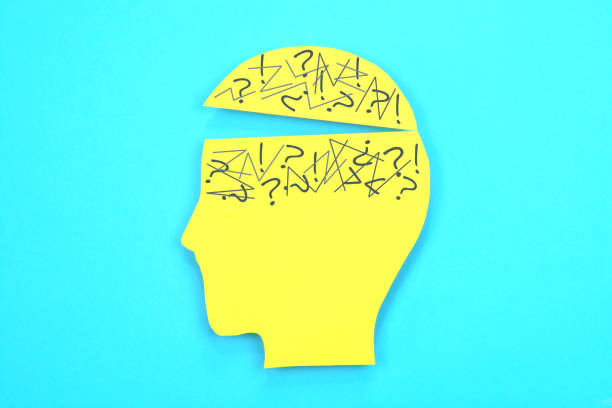
More insidiously, in enmeshed or emotionally chaotic households, boundaries are violated. A child’s feelings may be dismissed (“you’re not really angry”), their privacy ignored, or they may be burdened with adult problems. Here, the child learns to distrust their own emotional reality. If a parent consistently tells them their hurt is not real, they begin to doubt their own perceptions. They become hyper-vigilant to the moods and needs of others as a survival strategy, outsourcing their sense of safety and self-worth. The core doubt becomes: “If I cannot trust my own feelings and perceptions, what can I trust?“ This creates a lifelong pattern of seeking external validation, as their internal gauge has been systematically invalidated.
Furthermore, without boundaries, a child cannot develop a healthy understanding of cause and effect or personal agency. If consequences are arbitrary or non-existent, they cannot learn that their actions have reliable outcomes. This breeds a sense of helplessness and a belief that they are powerless to influence their own life. Why make a decision if the result is unpredictable? This learned helplessness is a fertile ground for self-doubt, as the individual approaches every choice with the underlying fear that their agency is an illusion. They may become paralyzed at decision points, anticipating failure or chaos regardless of their effort.
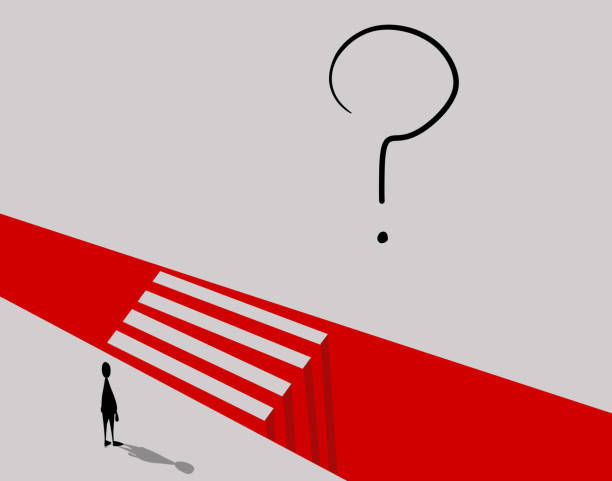
Ultimately, the legacy of boundary-less childhood is an internal world without secure walls. The individual stands in a vast, undefined space, unsure of where they belong, what they feel, or what they can control. Every external challenge or internal crossroad can trigger that foundational uncertainty. The doubt is not merely about a specific skill or outcome, but about the very validity of the self observing the situation. It is a doubt of essence.
Yet, in the spirit of harnessing doubt as a catalyst, this understanding is profoundly empowering. Recognizing that self-doubt may be a learned response to a structureless past, rather than a truth about one’s inherent inadequacy, is the first step toward dismantling it. It allows us to re-frame that persistent doubt not as a damning verdict, but as a signal—a signal pointing back to those early missing pieces. From this place of awareness, we can consciously begin the work we were once denied: building our own boundaries, learning to trust our validated perceptions, and practicing agency in small, consistent ways. We can become the architect our inner child needed, constructing the secure boundaries that transform doubt from a cage into a mere shadow, fading in the light of a self-defined, self-trusted life.