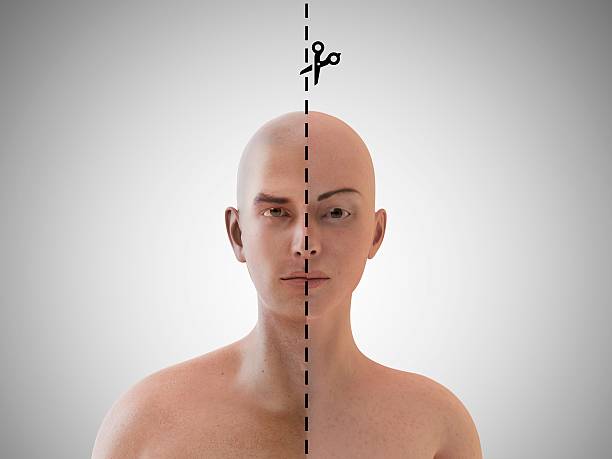
In an era that venerates decisiveness and unwavering conviction, a subtle but profound cultural shift is underway: the tendency to conflate all doubt as a form of weakness, a psychological flaw, or even a moral failing. This reflexive pathologizing of uncertainty, while often well-intentioned in its pursuit of confidence and mental well-being, carries significant societal dangers. When we fail to distinguish between paralyzing self-doubt and the essential, generative doubt that fuels inquiry, we risk cultivating a brittle populace, eroding the foundations of democracy, and stifling the very progress we seek. Understanding doubt not as a monolithic enemy but as a spectrum of cognitive and emotional states is crucial for a healthy, resilient society.
The most immediate danger lies in the impoverishment of the individual intellect. Doubt is the engine of critical thinking; it is the internal mechanism that prompts us to ask “How do I know this is true?“ and “What evidence contradicts my view?“ By branding such questioning as inherently unhealthy—something to be overcome with affirmations rather than investigation—we discourage deep intellectual engagement. We promote a model of confidence that is unshakeable because it is unexamined, a confidence built on sand. This creates individuals susceptible to manipulation, as they lack the practiced skill of interrogating information and their own assumptions. True, unshakeable confidence is not the absence of doubt, but the secure knowledge that one can navigate and think through uncertainty. When we teach people to suppress doubt rather than harness it, we leave them ill-equipped for a complex world.
This erosion of critical capacity scales catastrophically to the societal level, posing a direct threat to democratic discourse. A functioning democracy relies on a citizenry capable of productive skepticism—toward political leaders, corporate power, and media narratives. If all doubt is framed as cynical or unhealthy distrust, the vital line between critical engagement and reflexive contrarianism blurs. Citizens may retreat into a passive, unquestioning acceptance of authority, deeming any skepticism as negative. Conversely, those with legitimate questions can be unfairly dismissed as mere “naysayers” or “saboteurs,“ shutting down necessary debate. A society that cannot collectively entertain doubt cannot correct its course; it mistakes consensus for truth and confuses loyalty with wisdom. The necessary checks and balances, in government and in public thought, atrophy when questioning is stigmatized.
Furthermore, the conflation stifles scientific and moral progress. The scientific method is institutionalized doubt. It proceeds by challenging hypotheses, seeking disconfirming evidence, and welcoming peer scrutiny. To frame the scientist’s doubt as a lack of conviction or a personal deficit would halt advancement. Similarly, moral progress in society has always been propelled by individuals who doubted the righteousness of prevailing norms—from slavery to gender inequality. These doubters were often pathologized or vilified in their time as troublemakers or mentally unsound. By treating doubt as solely an internal psychological problem to be solved, we risk silencing the very voices that call us to be better, anchoring us to outdated and potentially unjust status quos.
On a personal emotional level, this conflation breeds intolerance for the natural human experience of ambiguity. Life is replete with legitimate uncertainties—about career paths, relationships, values, and meaning. To insist that all such doubt is unhealthy creates a cruel paradox: individuals feel anxious not only about their original uncertainty but also about the fact they are experiencing it at all. This meta-doubt compounds suffering and can drive people to prematurely adopt rigid beliefs or identities simply to escape the discomfort of not knowing. It shortcuts the fertile process of exploration, reflection, and growth that doubt can initiate. Resilience is born from navigating uncertainty, not from pretending it does not exist.
Ultimately, the societal danger of pathologizing all doubt is the cultivation of a fundamentalist mindset, whether in religion, politics, science, or personal identity. It trades the dynamic, challenging, and sometimes uncomfortable process of discovery for the false comfort of absolute certainty. A healthy society, like a healthy mind, requires a balanced ecosystem of thought. It needs conviction to act, faith to persevere, and confidence to lead. But it equally needs doubt to question, skepticism to verify, and curiosity to explore. By learning to understand, navigate, and harness doubt—to differentiate the corrosive from the catalytic—we empower individuals and communities not with brittle certainty, but with the agile strength to think, adapt, and thrive in an ever-changing world. The goal is not a life without doubt, but a life in which doubt is a trusted guide, not a feared adversary.