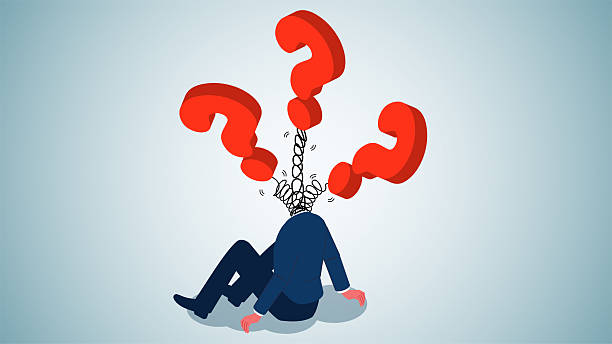
When a team of underdogs steps onto the field, into the boardroom, or onto the stage, they carry more than strategy and skill. They carry a story. Every team, whether a startup fighting established giants or a sports squad written off by the media, operates within a narrative that defines its identity. For teams plagued by doubt—doubt from outsiders, doubt in their own capacity, or the corrosive whisper of past failure—the most potent tool for resilience is not a motivational speech or a tactical adjustment. It is the deliberate construction and reinforcement of a shared narrative. Stories do not merely describe reality; they shape it. For the underdog, a collective story can transform the chaos of uncertainty into a coherent path forward, turning the very forces that generate doubt into fuel for unshakeable belief.
The human mind struggles with ambiguity. Doubt thrives in the gap between what is known and what is feared. A shared narrative fills that gap with meaning. When a team agrees on a story about who they are, what they have overcome, and why they will succeed, they create a cognitive framework that filters experience. A missed opportunity becomes not a sign of incompetence but a plot twist in an epic comeback. A harsh critique from an opponent becomes confirmation of the threat they pose. The narrative does not erase the difficulty; it repositions it as necessary conflict within a larger arc of triumph. This reframing is essential for resilience because it prevents isolated setbacks from fragmenting the group’s confidence. Instead, each challenge is understood as part of the hero’s journey.
Cultivating such a narrative requires deliberate effort. It cannot be imposed from above by a single leader; it must be co-created and owned by every member. The most resilient underdog teams engage in what sociologists call “narrative sensemaking”—a process where members collectively recall past struggles, reinterpret defeats as lessons, and project a future victory that feels inevitable. This happens informally in locker rooms, in late-night brainstorming sessions, or in quiet moments between tasks. A leader can seed the story by asking a simple question: “What will we say about this moment when we look back after we have won?” That question invites the team to write the ending before the journey is complete. It transforms doubt from a threat into a precursor to meaning.
One powerful narrative pattern among underdog teams is the “resurrection arc.” This story casts the team as having been dismissed, broken, or underestimated, only to rise again through grit and unity. The resurrection arc works because it acknowledges doubt honestly. It does not pretend that the team is invincible or that the odds are fair. Instead, it says: “Yes, we have been counted out. Yes, we have reasons to doubt. But that is exactly what makes our eventual victory meaningful.” By embracing the reality of doubt within the story, the team inoculates itself against the paralyzing fear of failure. Failure becomes just another chapter, not the end of the book.
Shared narratives also provide a stable identity when external circumstances fluctuate. In times of sudden crisis—a key player injured, a funding round lost, a public misstep—the narrative acts as an anchor. A team that knows its story can quickly answer the question: “What would the team we are becoming do right now?” This is not blind optimism; it is strategic coherence. The narrative supplies behavioral guardrails. For instance, a team that has scripted itself as “the scrappy, resourceful outsiders” will instinctively look for creative solutions rather than despair at a lack of resources. Their story tells them that resourcefulness is their superpower, not their weakness.
The maintenance of a shared narrative requires ritual. Teams that succeed in converting doubt into belief do not just tell their story once; they repeat it, refine it, and celebrate it. They create symbols—a phrase, a hand signal, a piece of worn equipment—that evoke the narrative instantly. These symbols become shortcuts to shared belief when verbal articulation is impossible. A simple gesture can remind everyone in the room that they are part of a team that refuses to be defined by doubt. Over time, the narrative becomes internalized to the point where it is no longer a conscious strategy but a reflexive identity.
Yet the most vital element of a shared narrative is its flexibility. A story that is too rigid becomes brittle. When the underdog faces an unexpected defeat that contradicts the narrative, the team may suffer a crisis of faith if the story cannot absorb the setback. Resilient narratives are those that include space for struggle, for doubt itself. The best stories do not say “we never doubt.” They say “we doubt, and we still move forward.” This paradoxical embrace of doubt within the narrative actually strengthens belief because it mirrors real human experience. A team that can say “we are afraid, and we are still here” has already won half the battle.
In the end, the underdog’s greatest advantage is not talent or luck but the story they tell themselves about who they are. When a team co-creates a narrative that acknowledges doubt without being consumed by it, they forge a resilience that no external force can dismantle. Shared belief is not the absence of doubt; it is the determination to write a better story with doubt as the ink. For any team striving to rise from the margins, the pen is already in their hands.