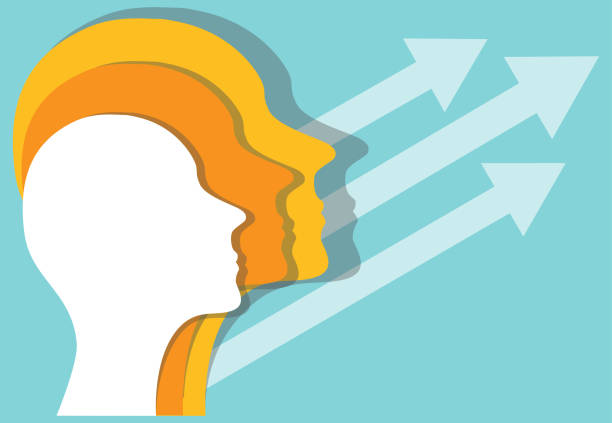
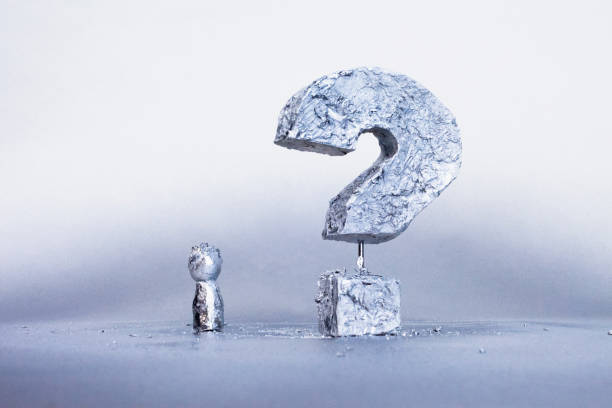
You have spent hours, maybe years, refining the art of questioning. You see the gaps in every argument, the hidden assumptions behind every claim, the infinite branches of possibility that others ignore. This is a gift. But it comes with a shadow: the paralysis of infinite inquiry. When every decision opens a portal to ten more questions, how do you ever move? The answer is not to stop questioning—it is to recognize that action does not require certainty. It requires a willingness to step forward with incomplete knowledge and the courage to revise as you go.
The questioner’s trap is a seductive one. It whispers that you must understand everything before you can do anything. You must weigh every risk, every counterargument, every potential regret. You must be absolutely sure that your path is the right one, because to act incorrectly feels like a betrayal of your own rigorous mind. This mindset treats doubt as a stop sign rather than a compass. The result is a kind of intellectual paralysis: you become a spectator to your own life, analyzing choices but never making them.
But consider the nature of doubt itself. Doubt is not a wall; it is a signal. It tells you that the terrain is complex, that your map is incomplete, that there are factors you have not yet considered. These are useful pieces of information. They are not commands to freeze. In fact, the healthiest relationship with doubt involves treating it as a prompt for provisional action. You say to yourself: “I do not know everything, but I know enough to take the next step. I will gather more information as I go.”
This is the difference between paralysis and purposeful action. Purposeful action is not reckless action. It is action taken with full awareness of uncertainty, but with a clear intention. You do not need to resolve every doubt before you act; you need only to identify which doubts are genuinely actionable now and which are infinite loops designed to keep you safe. The infinite loop questions—What if I fail? What if there is a better option I haven’t discovered? What if I change my mind later?—are not questions that can be answered by thinking alone. They can only be answered by living.
Think of the questioner’s identity not as that of a permanent skeptic, but as that of a scientist running experiments on your own life. A scientist does not wait until every variable is controlled before running a test. They hypothesize, act, observe, and adjust. You can do the same. Instead of asking “Is this the perfect choice?” ask “What will I learn from this choice?” Instead of demanding certainty before starting, demand only that you have a clear enough hypothesis to test. The action itself becomes a form of inquiry.
There is a subtle trap within this trap, however. Some questioners convince themselves that the act of questioning is itself a form of progress. They read, debate, journal, and reflect, mistaking thought for movement. But thought without application is like a map never unfolded. The map is useful only when you are willing to walk. To move from paralysis to purposeful action, you must set a threshold. Decide: “I will research until I have three plausible options, then I will choose one and commit for a limited time.” Or: “I will gather input from two trusted sources, then I will act within twenty-four hours.” These thresholds honor your questioning nature while forcing the decision.
The identity of a healthy questioner is not one who resolves every doubt, but one who learns to coexist with doubt while still moving forward. You are not abandoning your critical mind; you are training it to serve your life rather than imprison it. Every time you act in the face of uncertainty, you build confidence—not the brittle confidence of someone who never doubts, but the resilient confidence of someone who has learned that doubt is a companion, not a master.
So the next time you feel the familiar paralysis creeping in—the endless loop of pros and cons, the what-ifs and the but-what-abouts—pause. Recognize it as a sign that you are clinging to an illusion of control. Then ask a different question: “What is the smallest possible step I can take right now that will generate real data about my path?” Then take it. You will find that action, even imperfect action, clarifies more than thought ever could. Doubt will still be there, but it will no longer be a cage. It will be a garden in which your choices grow.