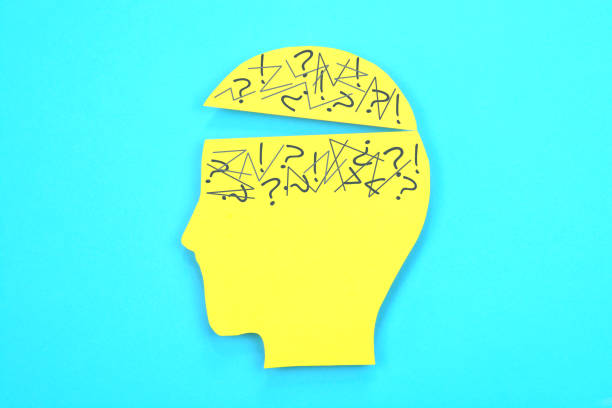
Among the dusty ruins of ancient Athens, a man walked the agoras asking questions that made the powerful squirm and the wise confess their ignorance. Socrates never wrote a single book, never founded a school in any formal sense, and yet his legacy has shaped Western thought for two and a half millennia. His method, now called the Socratic method, was not merely a teaching technique but a profound engagement with doubt itself. Socrates understood something that many still resist: that the most productive relationship with doubt is not to flee from it, but to follow it into the heart of every assumption, every belief, and every claim to certainty. In doing so, he transformed doubt from a paralyzing force into the engine of genuine understanding.
The Socratic paradox lies at the center of his approach. He famously declared that the only thing he knew was that he knew nothing. This confession was not false modesty or self-deprecating humility. It was a radical epistemological stance. By admitting his own ignorance, Socrates positioned himself as a perpetual learner, someone who could approach any conversation not as a teacher but as a fellow seeker. This posture is incredibly difficult to replicate in modern life, where confidence is often mistaken for competence and where admitting uncertainty is seen as weakness. Yet Socrates showed that the willingness to doubt one’s own knowledge is the starting point for any genuine inquiry. True wisdom begins when we acknowledge the limits of what we think we know.
The method Socrates employed was deceptively simple. He would engage someone in dialogue, usually a person who claimed expertise in some area such as justice, piety, or courage. Then, through a series of carefully crafted questions, he would expose the inconsistencies and contradictions in that person’s beliefs. The target was not the person but the belief itself. Socrates did not offer his own answers; he helped the interlocutor discover that their supposed knowledge rested on shaky ground. This process, known as elenchus, was a kind of intellectual purification. By systematically dismantling false certainty, Socrates forced individuals to confront the gaps in their understanding. The discomfort this caused was not incidental; it was essential. Doubt, in the Socratic framework, is not comfortable, but it is honest.
Why does this matter for us today? We live in an age of information overload, where opinions fly faster than facts and where certainty is often manufactured by algorithms and echo chambers. Conspiracy theories thrive precisely because they offer tidy, all-encompassing explanations that eliminate doubt. But the Socratic approach suggests a different path. Instead of trying to eliminate doubt by grasping at the nearest comfortable belief, we can learn to sit with doubt, to question it, and to use it as a guide. When we encounter a claim that feels too neat or a conviction that seems unshakeable, we might ask ourselves: What do I truly know? What assumptions am I making? Could I be wrong? These are Socratic questions that turn doubt from a threat into a tool.
Learning from historical skeptics like Socrates also reveals something crucial about the relationship between doubt and confidence. It is a common misconception that confidence and doubt are opposites. In reality, genuine confidence arises only after doubt has been properly engaged. The person who has never questioned their beliefs possesses a brittle, fragile confidence that shatters at the first serious challenge. The person who has stared into the abyss of their own ignorance and emerged still willing to act possesses an unshakeable confidence born of humility. Socrates’ own life exemplified this. He questioned every authority, yet he faced his own death with serene composure. His confidence did not come from certainty about the afterlife or the gods; it came from the integrity of his commitment to questioning itself.
The relevance of this for personal growth is profound. Each of us carries within us unresolved doubts about our abilities, our relationships, our place in the world. These can be paralyzing. But if we treat them not as enemies to be crushed but as invitations to inquiry, they become catalysts. Self-doubt, channeled through Socratic self-examination, becomes a tool for honest self-assessment. We can ask: What evidence do I have that I am incapable? Is that evidence solid, or is it based on a single failure or someone else’s opinion? By applying the Socratic method to our own inner narratives, we can dismantle the false certainties of our self-limiting beliefs.
In the end, the historical legacy of Socrates teaches us that doubt is not an obstacle to knowledge but its precondition. The most courageous intellectual act is not to assert what one believes but to question what one thinks one knows. By embracing this paradox, we can harness every form of doubt—from the trivial to the existential—as fuel for deeper understanding and more resilient confidence. Socrates walked the streets of Athens two thousand years ago, but his question still echoes: What do you truly know? The answer, if we are honest, begins with a humble confession of ignorance. And from that humility, everything else grows.