Doubt is often framed as an enemy of progress, a quicksand that swallows momentum and leaves the mind spinning in endless loops. Yet for those committed to building a healthy identity as a questioner, doubt is not the problem—indecision is. The real skill lies not in eliminating doubt, but in recognizing when the quality of your questioning has reached a critical mass: the threshold of sufficient doubt, beyond which further inquiry becomes a delay tactic rather than a search for truth. Knowing when to doubt and when to decide requires an intimate understanding of your own cognitive rhythms, the stakes of the situation, and the distinction between productive skepticism and avoidance dressed up as rigor.
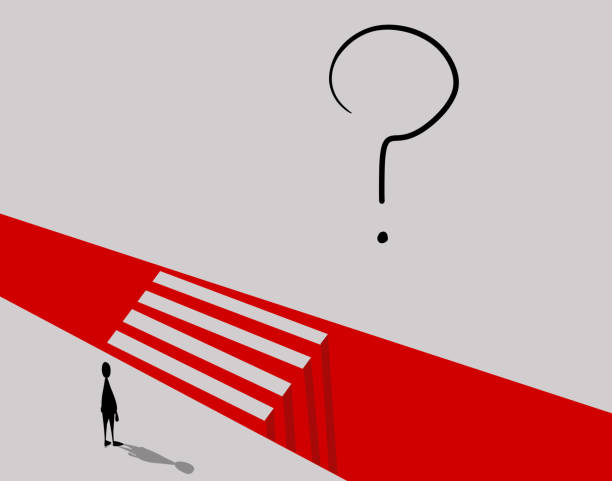
Every questioner faces a fork in the road. On one path, you continue digging, convinced that just one more article, one more conversation, one more analysis will unlock the certainty you crave. On the other, you stop, synthesize what you have, and make a choice with full awareness that your knowledge remains incomplete. The healthiest questioners learn to take the second path not despite the lingering doubt, but precisely because they understand that doubt is a permanent resident of the human mind. It never fully leaves. The goal is not to silence it but to calibrate its volume relative to the decision at hand.
Consider the difference between curiosity and rumination. Curiosity opens doors; it asks questions that lead to new territory and enriches your understanding. Rumination, by contrast, circles the same ground, repeating the same doubts with diminishing returns. When you find yourself asking the same question for the third time—“But what if I’m wrong?“—without any new evidence entering your consideration, you have likely crossed from inquiry into paralysis. The healthy questioner recognizes this pattern and uses it as a signal. The signal says: you have enough information to form a provisional answer. Now act, and let the consequences teach you what more you need to know.
This is not an argument for reckless action. Quite the opposite. It is an argument for strategic decisiveness rooted in intellectual humility. Deciding does not mean you stop doubting; it means you temporarily suspend the doubt to allow for movement. In physics, there is a concept called critical mass, the smallest amount of fissile material needed to sustain a nuclear chain reaction. Similarly, there is a cognitive critical mass: the minimum amount of evidence, reasoning, and self-awareness required to make a reasonable choice. Below that threshold, you are shooting in the dark. Above it, additional doubt does not improve the quality of your decision; it only increases the cost of delay. The art is learning to sense that threshold in real time.
Three practical markers can help. First, notice your emotional state. If doubt is accompanied by a tight chest, a sense of urgency, or a creeping anxiety that you might miss something, you are likely in a freeze response, not a genuine inquiry. Genuine inquiry is expansive and curious; it opens up possibilities. Fear-based doubt closes them. When you feel your breathing shallow and your thoughts race in tight circles, that is the moment to name the emotion and decide anyway. Second, check the stakes. For high-stakes decisions—choosing a career, ending a relationship, making a significant financial commitment—a longer inquiry period is justified. But for low-stakes choices, such as which book to read first or whether to speak up in a meeting, the threshold is much lower. Many questioners apply the same high standard to trivial choices as to life-altering ones, creating unnecessary paralysis. Third, examine the source of your doubt. Is it coming from a genuine gap in knowledge, or from a fear of being wrong? If the latter, you are not doubting to learn; you are doubting to protect yourself from judgment. That kind of doubt is a shield, not a tool.
Deciding with doubt intact requires a shift in identity. You stop seeing yourself as someone who must be certain before acting and start seeing yourself as someone who acts in the face of uncertainty, then learns from the outcome. This is the essence of building a healthy identity as a questioner: you do not abandon questioning when you choose; you simply redirect it toward the results of your choice. The decision itself becomes the next question in your ongoing investigation of reality. “I chose this path. Now I ask: what is happening? Is it working? What am I learning?” In this frame, there is no failure, only data.
Ultimately, knowing when to doubt and when to decide is a practice of self-trust. It is the trust that you have done enough work, that you are capable of handling the consequences, and that your identity is not fragile enough to be shattered by a wrong turn. The world does not reward perfect knowledge; it rewards timely action informed by good-enough understanding. The healthiest questioners are those who know that the most important question is not “Am I absolutely sure?” but rather “Have I reached the threshold where action will teach me more than continued thought?” Answer that question honestly, and you will find that doubt becomes not a wall, but a doorway.