
Skip to Content

Knowing When to Doubt and When to Decide

The Decision Point: Recognizing When Doubt Has Done Its Job

The Decision Point: Recognizing When Doubt Has Done Its Job

Doubt is often painted as the enemy of progress, a fog that rolls in and obscures the path that once seemed clear.

Knowing When Enough Is Enough: The Discipline of Decisive Doubt

Knowing When Enough Is Enough: The Discipline of Decisive Doubt

The healthy questioner does not doubt for the sake of doubting.

The Decision Threshold: When to Stop Questioning and Start Acting

The Decision Threshold: When to Stop Questioning and Start Acting

Doubt is not the enemy of decision.

The Threshold of Certainty: When Doubt Serves and When It Stalls

The Threshold of Certainty: When Doubt Serves and When It Stalls

The life of a questioner is a delicate dance between open inquiry and decisive action.

The Threshold of Sufficient Doubt: Knowing When Inquiry Must Yield to Action

The Threshold of Sufficient Doubt: Knowing When Inquiry Must Yield to Action

Doubt is often framed as an enemy of progress, a quicksand that swallows momentum and leaves the mind spinning in endless loops.

The Decisive Questioner: Knowing When to Act

The Decisive Questioner: Knowing When to Act

Doubt is the engine of inquiry, the force that pushes us beyond comfortable assumptions into deeper understanding.

The Tyranny of Perfect Knowledge: Why Decisiveness Requires Embracing Uncertainty

The Tyranny of Perfect Knowledge: Why Decisiveness Requires Embracing Uncertainty

The questioner’s identity is a double-edged sword.

The Threshold of Enough: How to Know When Doubt Has Done Its Work

The Threshold of Enough: How to Know When Doubt Has Done Its Work

Doubt is a muscle that can either strengthen or exhaust the mind.
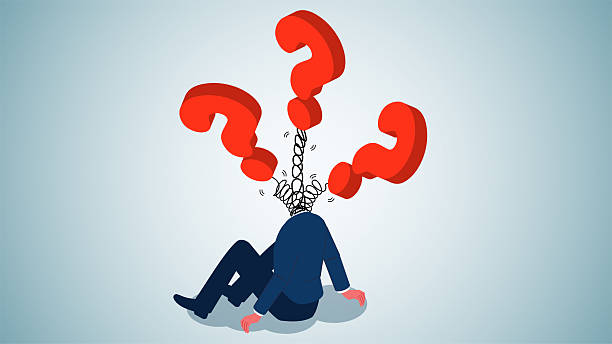
The Threshold of Sufficient Evidence: Knowing When to Act

The Threshold of Sufficient Evidence: Knowing When to Act

Doubt, by its very nature, insists on more.

The Principle of Sufficient Reason: When to Stop Questioning and Act

The Principle of Sufficient Reason: When to Stop Questioning and Act

Doubt is the engine of intellectual growth, but an engine idling forever never moves the vehicle.
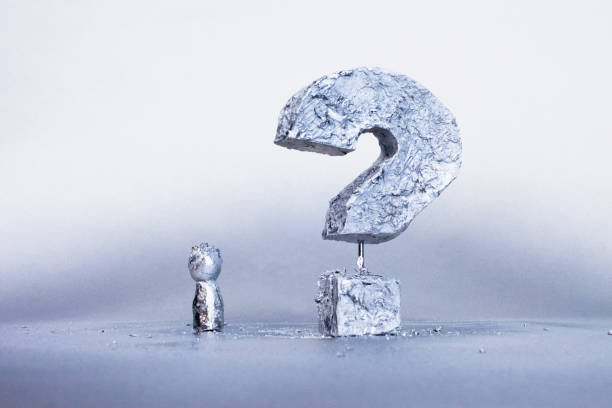
The Art of Decisive Doubt: Navigating the Threshold Between Inquiry and Action

The Art of Decisive Doubt: Navigating the Threshold Between Inquiry and Action

Every questioner eventually faces a silent crisis: the moment when inquiry, once a nourishing habit, becomes a barrier to forward motion.

Cultivating a Questioning Mindset: Tools for Critical Thinking and Decision Making

Cultivating a Questioning Mindset: Tools for Critical Thinking and Decision Making

In an era saturated with information and diverse perspectives, the ability to critically evaluate what we encounter is paramount.

Seeds of Doubt

Is it possible to be too open-minded?

Yes, excessive open-mindedness can become intellectual indecision, where you give equal weight to all ideas regardless of their merit. This is sometimes called “criticism paralysis.“ The key is provisional openness: be open to considering new evidence and perspectives, but use discernment to evaluate them against facts and logic. A strong mind is open to exploration but decisive in conclusion. Truth is not a midpoint between all claims; some ideas are simply better supported.

When is it important to doubt authority or expert consensus?

Doubt authority when it demands obedience without explanation, suppresses questions, or has a clear conflict of interest. Doubt expert consensus when it is monolithic without healthy debate, or when new, reproducible evidence emerges that challenges old models. However, distinguish this from rejecting expertise you dislike. Valid doubt involves engaging with the complexity of the evidence, not dismissing it because it’s complicated or inconvenient. The scientific method itself is built on structured, evidence-based doubt.

How Do I Handle External Doubters While Staying True to My Decision?

Acknowledge their perspective without internalizing it as truth. Thank them for their concern, then critically assess if their doubt reveals a genuine blind spot you missed. If it does, integrate that insight. If it doesn’t, confidently proceed. Your mission isn’t to convince every doubter but to make informed, resilient decisions. Establish clear boundaries—“I’ve considered that angle and am moving forward.“ External doubt becomes fuel when you use it to stress-test your plan, strengthening your resolve and preparation rather than derailing your confidence.

Why do I doubt my own decisions even after extensive research?

This is often the “paradox of choice” and perfectionism at work. With infinite information available, you can always find one more contradictory data point, creating an illusion that a perfect, risk-free decision exists. It’s also a defense against responsibility—if you never fully commit, you can’t be fully blamed. At some point, you must trust the process and your judgment, accepting that some uncertainty is inherent in any meaningful choice.

How can I build resilience against the doubts of others?

Cultivate a strong internal locus of evaluation. This means you assess your worth and choices based on your own values and standards, not external approval. Clarify your core principles—they become your anchor. Practice discernment: whose opinion is informed and caring? Whose is projecting? Develop a “board of directors” in your mind—trusted mentors, real or historical—whose counsel you value over casual critics. Finally, focus on action and results; proven competence is the most powerful antidote to external doubt.