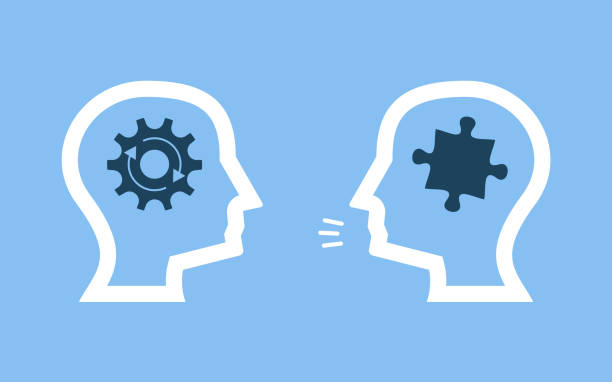
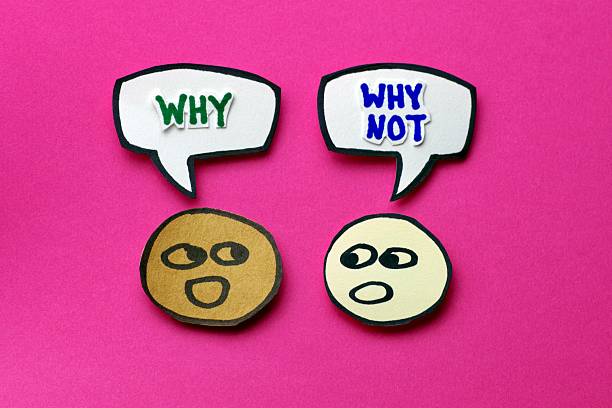
Doubt, by its very nature, insists on more. More information, more perspectives, more time. It is the engine of inquiry, the guard against gullibility, and the foundation of critical thought. Yet the same force that refines our understanding can also trap us in an endless loop of hesitation. The question, then, is not whether to doubt—but when to stop. Knowing when you have reached the threshold of sufficient evidence for a decision is perhaps the most essential skill for anyone who values both rigor and action. It is the art of balancing the open mind with the decisive will.
Every decision we make exists on a spectrum of uncertainty. At one end lie trivial choices, where the cost of being wrong is negligible—which brand of toothpaste to buy, which route to take to work. At the other end lie life-altering commitments: a career change, a medical procedure, a relationship. In between, most of our daily judgments fall, each carrying some risk. The healthy questioner recognizes that complete certainty is a myth. No amount of evidence can erase all doubt because the future is fundamentally unknown and any dataset can be interpreted in multiple ways. The goal is not to eliminate doubt but to reach a point where the remaining uncertainty is outweighed by the cost of further delay.
This is the principle of satisficing, a concept introduced by Nobel laureate Herbert Simon. Instead of exhausting every possible option to find the perfect choice—what he called “maximizing”—satisficers set a clear standard of adequacy and stop once that standard is met. For the person building a healthy identity as a questioner, that standard must be consciously defined. What does “good enough” look like for this particular decision? In medical contexts, it might be a second opinion from a respected specialist. In financial investments, it might be a consensus of independent analysts. In personal relationships, it might be a pattern of behavior observed over several months. The key is to articulate the threshold before you begin searching, so that doubt does not keep expanding the goalposts.
Yet even with a threshold, doubt can feel like a virtuous refusal to settle. We have been taught that questioning is smart, that skepticism is sophisticated, and that quick decisions are for the reckless. This cultural bias toward prolonged analysis often disguises fear. Fear of making a mistake, fear of regret, fear of looking foolish. The doubter who never decides can preserve an illusion of perpetual correctness—after all, if you never commit, you never have to face being wrong. But this is a hollow victory. The cost of indecision is not zero; it is the opportunity lost, the action not taken, the growth not experienced. The person who waits for perfect clarity before making a choice will wait forever.
Consider the famous “Buridan’s ass” paradox: a donkey placed exactly midway between two equally appealing bales of hay, unable to choose, starves to death. The fable is a warning against the paralysis of analysis when options are roughly equivalent. In such cases, the best decision is simply to pick one. Doubt, in this scenario, becomes a liability. The healthy questioner must distinguish between productive doubt—which seeks genuinely missing information that could change the outcome—and wasteful doubt—which merely recycles the same evidence looking for a guarantee that will never come.
One practical technique for recognizing the threshold is the “regret test.” Ask yourself: If I act now and the outcome is unfavorable, will I regret the process that led to my decision, or only the result? If the process was reasonable—if you gathered the most salient facts, considered the main risks, and gave yourself time for reflection—then regret is less about your method and more about inevitable uncertainty. Conversely, if you would regret not having looked for more information, then you have not yet reached the threshold. This distinction shifts the focus from outcome to process, which is something you can control.
Another signal is the point of diminishing returns. When new information ceases to change your confidence level significantly, when each additional source adds only nuance rather than new direction, you have likely reached saturation. At that moment, doubt becomes an exercise in procrastination disguised as diligence. The decisive questioner recognizes this and makes the call—not because the answer is certain, but because further delay will cost more than a potential mistake.
Ultimately, building a healthy identity as a questioner means embracing doubt as a tool, not a crutch. Doubt is the spark for learning, the engine of curiosity, and the shield against deception. But it must be wielded with intentionality. Knowing when to decide is as much a part of critical thinking as knowing what to doubt. It is a discipline that requires self-awareness, a willingness to risk error, and the courage to act without a guarantee. The most empowered individuals are not those who never doubt, but those who doubt wisely—and then decide bravely.