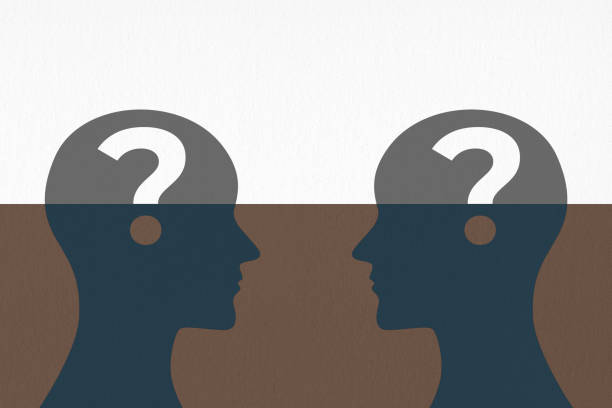
Social pressure to conform is one of the most powerful forces in human relationships. From the moment we join a friendship circle, a family unit, or a workplace team, an invisible current pulls us toward agreement. We laugh at jokes we do not find funny, nod at opinions we privately question, and suppress the small voice that whispers, “This doesn’t feel right.” That whisper is doubt, and in the context of group dynamics, it is often treated as a liability—a sign of weakness, disloyalty, or awkwardness. But the opposite is true. The willingness to doubt the group is not a flaw in our social wiring; it is the very mechanism that allows us to build relationships that are real, resilient, and deeply connected.
Groupthink, the psychological phenomenon where the desire for harmony overrides critical thinking, thrives on the silence of doubt. When everyone in a social circle agrees, the pressure to maintain that agreement becomes suffocating. The group develops an unspoken code: we do not question, we do not challenge, we do not risk making waves. The cost of breaking the code is high—exclusion, judgment, the loss of belonging. Yet the cost of never breaking it is higher. Relationships built on unexamined consensus are hollow. They are held together not by genuine intimacy but by a fragile fear of dissent. Doubt, when voiced with care, does not destroy these bonds; it reveals which bonds are worth keeping.
Consider a close friendship where one person begins to feel uneasy about a recurring dynamic—perhaps a pattern of one-sided support, or a subtle pressure to adopt certain political views. The doubting friend faces a choice. Silence preserves the surface peace but erodes self-trust. Speaking up risks conflict but opens the door to deeper honesty. The doubt itself is a signal, a compass pointing toward an authentic need. By honoring that signal, the individual takes a stand not against the friend but against the illusion of perfect agreement. True friends do not flee from doubt; they meet it with curiosity. The friendship that can withstand a respectful disagreement is far more durable than one that demands constant consensus.
Navigating social pressure requires a specific kind of courage: the courage to be temporarily uncomfortable. When a group leans toward a decision that feels ethically or emotionally off, doubt acts as a brake. It asks, “Are we doing this because it is right, or because it is easy?” In romantic partnerships, doubt about the group’s expectations—for instance, pressure to marry according to a certain timeline or to follow a conventional lifestyle—can be the catalyst for a more intentional relationship. Couples who question societal scripts often end up designing a partnership that fits their actual values rather than a borrowed blueprint.
The key is to distinguish between doubt that stems from fear and doubt that stems from discernment. Fear-based doubt whispers about being rejected, being wrong, being alone. Discerning doubt asks, “What am I truly agreeing to here?” The former paralyzes; the latter liberates. To harness doubt as a tool, one must first become comfortable sitting in the question without immediately resolving it. This means tolerating the awkward silence when you say, “I’m not sure I agree,” and watching the group’s reaction. Some groups will tighten, pushing you to fall back in line. Those groups are not safe for authentic connection. Others will expand, inviting you to explain your perspective. Those groups are where genuine belonging lives.
There is a profound paradox at the heart of this dynamic: the loneliest moment—the instant you stand apart from the crowd—is often the gateway to the most meaningful relationships. When you express doubt, you filter out connections that depend on your silence and attract connections that thrive on your honesty. You also model for others the permission they need to doubt. One person’s courageous question can break the spell of groupthink for an entire circle. Suddenly, others admit they felt the same but were afraid to say so. The doubt that once isolated you becomes the bridge to collective authenticity.
Ultimately, doubting the group is not an act of rebellion against community; it is an act of love toward your own integrity and toward the people around you. It says, “I value this relationship too much to let it be based on a lie.” It says, “I trust you enough to show you my uncertainty.” And it says, “I am willing to trade the comfort of false agreement for the messiness of real growth.” Social pressure will never disappear, but it loses its power the moment you recognize that your doubt is not your enemy. It is the quiet, persistent guide leading you out of the noise of consensus and into the quiet clarity of authentic connection.