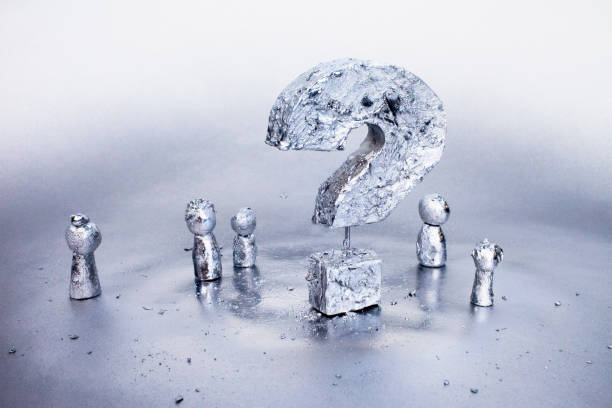
The edifice of modern science, built upon peer review, empirical evidence, and self-correction, stands as humanity’s most reliable method for understanding the natural world. Mainstream scientific consensus—on climate change, vaccine efficacy, or the shape of our planet—represents the collective judgment of experts based on the preponderance of available data. To automatically reject such consensus is often misguided and can be dangerous. Yet, a historical perspective reveals that the very engine of scientific progress is fueled by constructive doubt. Therefore, doubting mainstream science can be valid, but only under specific, rigorous conditions that distinguish healthy skepticism from baseless denial.
The validity of doubt hinges, first and foremost, on its foundation. Valid skepticism is rooted in a genuine understanding of the existing science, a recognition of its strengths, and a specific, evidence-based critique of its potential weaknesses or gaps. It is not a blanket rejection of expertise but an engagement with it. For instance, a geologist questioning the timing of a particular evolutionary event based on new fossil findings is operating within the scientific framework. This contrasts fundamentally with denying evolution outright based on ideological grounds, which ignores mountains of corroborating evidence from multiple independent fields. Valid doubt is methodological and precise, not ideological and wholesale.
Furthermore, the motive behind the doubt is a critical differentiator. Is the aim to refine understanding, to explore anomalies, and to ultimately strengthen the scientific model? Or is it to dismiss findings for political, financial, or dogmatic reasons? The former has historically been essential. The transitions from Newtonian to Einsteinian physics, or from the geocentric to heliocentric solar system, were propelled by individuals who respectfully yet persistently questioned the mainstream models of their day. They did so not by ignoring evidence but by presenting better, more comprehensive evidence and more powerful explanatory theories. Their doubt was a tool for discovery, not an end in itself.
The context of the consensus also matters. Science deals in degrees of certainty. Doubting a well-established theory with over a century of corroborating evidence—like germ theory or plate tectonics—requires an extraordinary burden of proof. Conversely, questioning a newer model, or one based on emerging or complex data, can be a more natural part of the scientific process. For example, early consensus on the causes of stomach ulcers was overturned because researchers like Barry Marshall presented compelling new evidence for bacterial causation. His valid doubt was met not with immediate acceptance but with rigorous testing, which ultimately validated his challenge. The system worked because his skepticism was coupled with a superior explanatory alternative that could be tested.
Ultimately, the demarcation between valid and invalid doubt lies in the commitment to the scientific method itself. Valid doubt proposes pathways for resolution—new experiments, alternative hypotheses, or re-examination of data. It invites scrutiny and is willing to be disproven. Invalid doubt, often seen in science denialism, typically rejects methodological scrutiny, cherry-picks data, appeals to conspiracy, and remains unchanged in the face of overwhelming contrary evidence. It operates outside the self-correcting mechanism of science.
In conclusion, doubting mainstream science is not inherently invalid; in fact, it is a necessary component of intellectual rigor and progress. However, its validity is conditional. It requires a foundation in evidence, a motive of truth-seeking, an understanding of the strength of the existing consensus, and a steadfast commitment to the very rules of evidence and reason that define science. When doubt meets these criteria, it is not a threat to science but its essential lifeblood, ensuring that our understanding of the world remains dynamic, humble, and ever-evolving. When it does not, it devolves into mere denial, which undermines both the authority of science and our collective capacity to navigate a complex world.