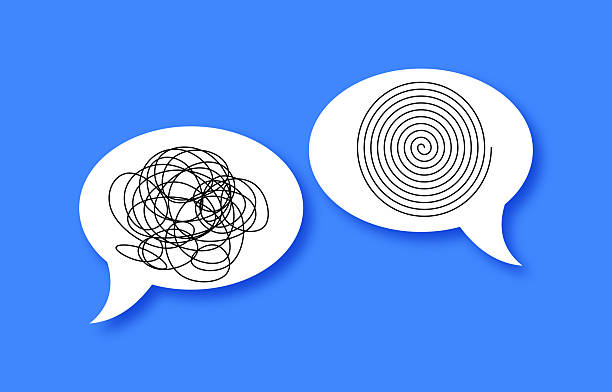
From the ancient philosopher Socrates, forced to drink hemlock for “corrupting the youth,“ to the modern scientist challenging a consensus and facing a career-ending backlash, the figure of the doubter occupies a perilous space in human history. Societies, by their very nature, tend to marginalize or vilify those who question foundational beliefs, prevailing narratives, or established power structures. This reaction is not merely a historical curiosity but a deeply ingrained psychological and sociological mechanism, one that reveals much about our collective need for cohesion, certainty, and control. Understanding this dynamic is the first step in reclaiming doubt not as a weakness or a threat, but as the essential engine of critical thinking and genuine growth.
At its core, a functioning society relies on a shared set of assumptions—a consensus reality. This consensus, woven from cultural norms, religious beliefs, scientific understandings, and national myths, provides the social glue that enables cooperation, predicts behavior, and maintains order. The doubter, by publicly questioning these tenets, is perceived as pulling at a loose thread that could unravel the entire tapestry. Their skepticism is not seen as an intellectual exercise but as a direct assault on social stability. When a citizen questions a wartime narrative, they can be branded unpatriotic, not because their questions lack merit, but because they are seen as undermining the unity required for collective action. The vilification, therefore, serves as a powerful deterrent, a public ritual that reinforces the boundaries of acceptable thought and warns others of the cost of dissent.
This process is profoundly psychological. Human cognition is fraught with biases that favor certainty over ambiguity. The “confirmation bias” leads us to seek information that reinforces our existing beliefs, while “cognitive dissonance” creates profound discomfort when we encounter contradictory evidence. The doubter, by introducing dissonance, becomes the avatar of that discomfort. It is psychologically easier to dismiss or attack the messenger—labeling them a cynic, a heretic, or a conspiracy theorist—than to endure the arduous mental work of re-evaluating deeply held convictions. Societies, as aggregates of individuals, amplify this tendency, creating echo chambers where doubt is filtered out and the doubter is ostracized as a means of preserving collective psychological comfort.
Furthermore, doubt is inherently threatening to established hierarchies of power and authority. Whether religious, political, or intellectual, authority derives its legitimacy from claimed access to truth—divine revelation, expert knowledge, or historical necessity. The doubter challenges the very source of that legitimacy. A theologian questioning dogma undermines clerical authority. A journalist investigating official accounts challenges state power. An innovator proposing a paradigm shift threatens the reputations and livelihoods of those invested in the old model. Vilification becomes a tool for power preservation, a way to discredit the questioner personally so that their questions need not be addressed substantively. By marginalizing the doubter, the authority figure seeks to reaffirm their own epistemic monopoly.
The digital age has complicated, yet also intensified, these dynamics. Online, doubt can scale instantly, giving rise to powerful counter-narratives and communities of skepticism. However, this has led to a reactive hardening of positions. In the noisy marketplace of ideas, nuanced doubt is often drowned out or deliberately conflated with malicious disinformation. The term “conspiracy theorist,“ once a niche label, is now broadly applied to dismiss a wide spectrum of questioning, from the rigorous to the absurd. This conflation is a potent new form of marginalization, allowing societies to sideline uncomfortable inquiries by associating them with the most extreme and irrational examples. The result is a polarized environment where healthy skepticism is stifled, and trust in all institutions, including those that deserve scrutiny, erodes.
Yet, it is precisely this adversarial relationship between society and the doubter that we must seek to transform. History’s greatest leaps in knowledge, justice, and social progress were not made by unwavering assent but by courageous doubt. The scientific method is institutionalized doubt. Social justice movements begin with doubting the fairness of the status quo. Personal growth is impossible without the self-doubt that prompts introspection and change. To harness doubt as a catalyst, we must recognize the societal reflexes that suppress it. We must cultivate the intellectual resilience to sit with uncertainty, the courage to question respectfully yet persistently, and the wisdom to distinguish between destructive contrarianism and constructive critical thinking. By doing so, we shift doubt from a social liability to the most vital personal and collective asset—the very mechanism that propels us from complacency toward a more adaptable, thoughtful, and confident understanding of our world and ourselves.