
Skip to Content

Understanding the Psychology Behind Conspiracy Belief

The Hidden Driver of Conspiracy Belief: Uncertainty and the Need for Control

The Hidden Driver of Conspiracy Belief: Uncertainty and the Need for Control

When the world feels chaotic, the mind reaches for order.

The Anxiety of Ambiguity: How Intolerance of Uncertainty Drives Conspiracy Belief

The Anxiety of Ambiguity: How Intolerance of Uncertainty Drives Conspiracy Belief

Human beings are pattern-seeking creatures, and in the absence of clear explanations, the mind does not simply wait patiently for evidence.

The Paradox of Certainty: Why Doubt Drives Conspiracy Belief

The Paradox of Certainty: Why Doubt Drives Conspiracy Belief

At the heart of every conspiracy theory lies a surprising engine: not ignorance, but an intense, often unbearable form of doubt.

The Psychology of Pattern Recognition in Conspiracy Belief

The Psychology of Pattern Recognition in Conspiracy Belief

Human beings are pattern-seeking creatures.

The Psychology of Pattern Recognition and Its Link to Conspiracy Theories

The Psychology of Pattern Recognition and Its Link to Conspiracy Theories

The human mind is an extraordinary pattern-detection machine.

Why Our Brains Seek Patterns in Chaos: The Psychology of Conspiracy Belief

Why Our Brains Seek Patterns in Chaos: The Psychology of Conspiracy Belief

The human mind is a meaning-making machine.

The Illusory Pattern Perception: How Our Brain Sees Conspiracies Where None Exist

The Illusory Pattern Perception: How Our Brain Sees Conspiracies Where None Exist

The human brain is an extraordinary pattern-recognition machine, evolved over millennia to detect threats, find food, and make sense of a chaotic world.

The Need for Certainty: How Cognitive Closure Drives Conspiracy Belief

The Need for Certainty: How Cognitive Closure Drives Conspiracy Belief

Human beings are wired to seek meaning.

The Psychology of Confirmation Bias and Its Role in Conspiracy Belief

The Psychology of Confirmation Bias and Its Role in Conspiracy Belief

The human mind is a masterful storyteller, constantly weaving narratives to make sense of the world.

The Illusion of Pattern Recognition and Its Role in Conspiracy Thinking

The Illusion of Pattern Recognition and Its Role in Conspiracy Thinking

Human beings are born pattern seekers.
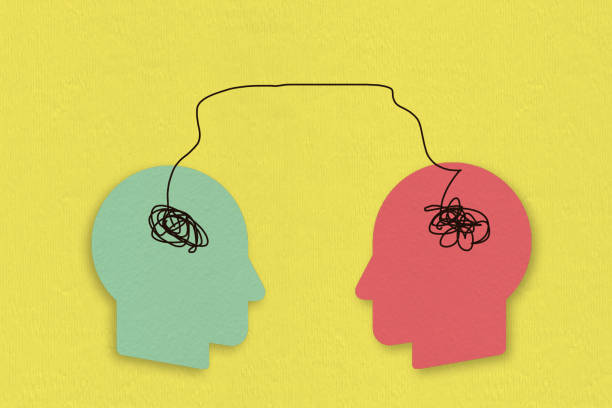
How to Talk to a Loved One Who Holds a Conspiracy Belief: Turning Doubt into a Bridge

How to Talk to a Loved One Who Holds a Conspiracy Belief: Turning Doubt into a Bridge

The moment a loved one shares a belief in a shadowy cabal or a hidden plot, the urge to argue with facts can feel irresistible.

The Role of Motivated Reasoning in Fueling Conspiracy Theories

The Role of Motivated Reasoning in Fueling Conspiracy Theories

Conspiracy theories, from claims about clandestine global elites to suspicions about public events being staged, are a persistent feature of the modern information landscape.

Seeds of Doubt

What is “motivated reasoning” in the context of conspiracy thinking?

Motivated reasoning is the subconscious tendency to process information in a way that leads to a preferred conclusion. For a conspiracy believer, facts are not evaluated neutrally; they are accepted if they support the theory and rejected or rationalized away if they contradict it. The motivation is to protect a pre-existing worldview or identity. This cognitive bias explains why presenting more evidence often fails, as the reasoning process itself is directed by emotional and psychological goals, not objective analysis.

What role does social identity play in adopting conspiracy beliefs?

Social identity is crucial. Conspiracy beliefs often define an “us vs. them” dynamic, where “us” are the enlightened truth-seekers and “them” are the corrupt elite or duped public. Adopting these beliefs can strengthen in-group bonds and provide a shared purpose. For individuals feeling alienated from mainstream society, conspiracy communities offer acceptance and a clear identity. Challenging the belief can thus feel like an attack on one’s social group and personal belonging, making it extraordinarily difficult to relinquish.

Are people who believe in one conspiracy theory likely to believe in others?

Often, yes. This is known as the “monological belief system” where one conspiracy theory acts as a supportive framework for others, even if they are logically contradictory. For example, believing a secret group controls the world makes it easier to accept that group is behind various unrelated events. The underlying mindset—distrust of official narratives and a tendency to see hidden patterns—is the common thread, leading to a generalized suspicious worldview rather than isolated beliefs.

Is there a link between feelings of anxiety or powerlessness and conspiracy belief?

Yes, a strong link exists. Research shows that situations inducing anxiety, uncertainty, or a loss of control—such as economic downturns, pandemics, or political turmoil—increase conspiracy thinking. These beliefs act as a coping mechanism, restoring a sense of order and explanation. By identifying a supposed villainous group, they provide a clear target for negative emotions and a narrative that explains chaos, thereby psychologically compensating for feelings of helplessness and restoring a perceived sense of understanding.

Why are conspiracy theories often resistant to facts or evidence?

This resistance stems from the theories being tied to a believer’s identity and worldview, not just facts. Correcting misinformation can backfire, a phenomenon called the “backfire effect,“ where people double down. Engaging with contradictory evidence can feel like a personal attack. Furthermore, conspiracy frameworks often incorporate the idea that discrediting evidence is part of the conspiracy, making any debunking attempt proof of its truth. The belief is protected by a self-sealing logic that is emotionally, not rationally, sustained.