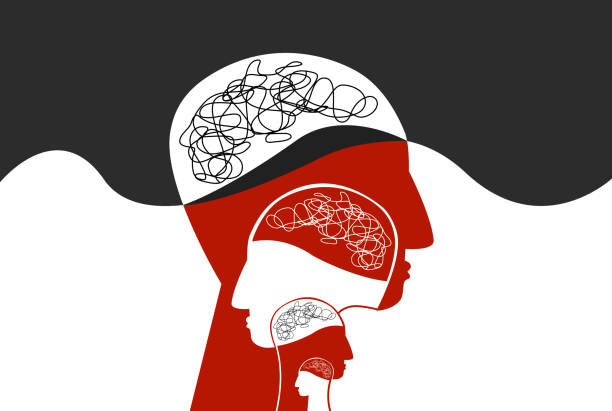
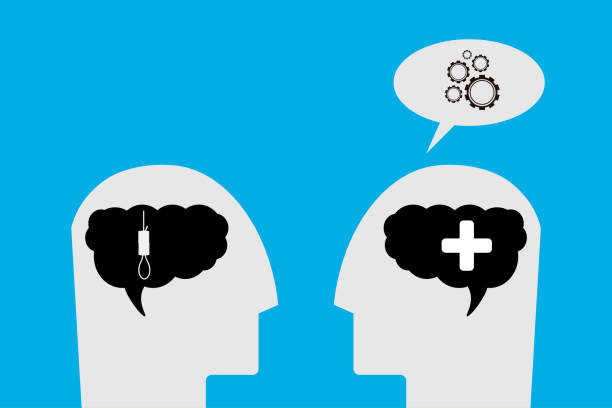
In the delicate ecosystem of a young mind’s development, beliefs form the bedrock of understanding. These beliefs, however, are not always accurate. A child might insist the moon is made of cheese, a teenager may cling to a harmful stereotype, or a student might hold a fundamental scientific misconception. For parents and educators, this presents a recurring dilemma: when should one directly intervene to challenge a doubtful belief, and when is it better to step back? The decision hinges on a careful balance between fostering independent thought and ensuring a foundation of truth, with the guiding principles being the belief’s potential for harm, its obstruction of learning, and the child’s readiness for dialogue.
The most urgent imperative for direct challenge arises when a belief poses a risk of physical or psychological harm. If a child doubts the necessity of looking both ways before crossing the street, a gentle explanation is insufficient; a clear, unambiguous correction is a matter of safety. Similarly, beliefs that seed prejudice, self-hatred, or cruelty toward others—such as discriminatory ideas about peers—must be confronted promptly and firmly. In these instances, the adult’s role as a protector and moral guide supersedes the goal of self-discovery. The challenge here is not merely about factual accuracy but about safeguarding well-being and nurturing empathy, establishing non-negotiable boundaries within which further exploration can safely occur.
Beyond immediate safety, direct intervention is crucial when a doubtful belief actively blocks the acquisition of further knowledge. In an academic context, foundational misconceptions are like faulty software; they corrupt every new piece of information processed. A student who fundamentally misunderstands the relationship between multiplication and division, or who believes that seasons are caused by the Earth’s changing distance from the sun, will find subsequent lessons confusing or unintelligible. Here, the teacher must skillfully dismantle the error to clear the path for understanding. This challenge is most effective when it is not a blunt contradiction but a guided process—using questions, experiments, or evidence that allows the learner to see the inconsistency for themselves, thereby transforming correction into a collaborative act of discovery.
However, not every doubtful belief warrants immediate correction. The developing intellect requires space for hypothesis, imagination, and even productive error. A young child’s fantastical explanation for how a plant grows, while scientifically inaccurate, is an exercise in early reasoning and creativity. Prematurely imposing complex botanical facts may stifle that nascent curiosity. The key is to assess the child’s cognitive and emotional readiness. A direct challenge is most fruitful when the individual has the capacity to engage with evidence and reason. With a teenager, a doubtful historical belief can be met with, “That’s an interesting perspective; what sources are you drawing from?” This initiates a Socratic dialogue rather than a lecture, building critical thinking skills that will outlast the specific fact being corrected.
Ultimately, the art of challenging a doubtful belief lies in discerning the why behind the when. It is an act that must be calibrated with compassion and pedagogical intent. The goal is never to simply win an argument or assert authority, but to steward a young person toward a more accurate and compassionate understanding of the world. This means sometimes speaking up clearly against danger and falsehood, and sometimes holding back to allow the intellectual muscles of inquiry and resilience to strengthen. By choosing their moments wisely—prioritizing harm prevention, removing barriers to learning, and respecting developmental readiness—parents and teachers do more than correct errors. They model how to pursue truth with both rigor and humility, equipping the next generation not just with a set of correct facts, but with the enduring tools to find truth for themselves.