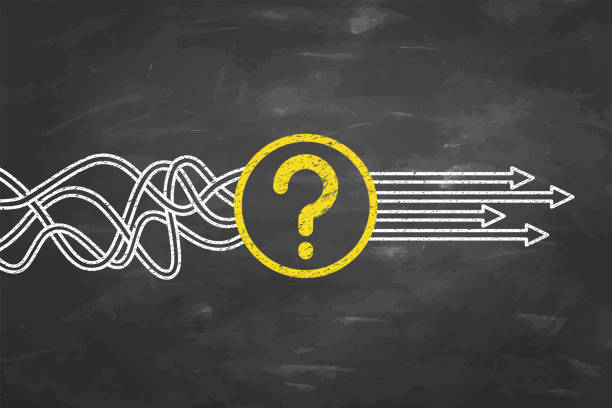
The mind of a questioner is a restless engine. It refuses to let half-truths settle, it picks at seams, it demands coherence where others accept convenience. This quality – the relentless drive to ask why – is a tremendous asset for critical thinking and personal growth. Yet for many who identify deeply with questioning, there comes a threshold where curiosity curdles into paralysis. The more you ask, the more you realize you do not know, and the more the world shrinks into a tangle of interdependent unknowns. You find yourself frozen at the intersection of a dozen open loops, unable to choose a direction because no single path has been fully verified. This is the prisoner of doubt – not the humble, clarifying doubt that sharpens inquiry, but the suffocating doubt that makes every step feel premature.
The path from this paralysis to purposeful action does not require the abandonment of questioning. It requires a fundamental shift in how you relate to uncertainty. Instead of treating doubt as a stop sign that demands total resolution before proceeding, you must learn to treat doubt as a compass that points toward the next manageable experiment. The healthy identity of a questioner is not one who has eliminated ambiguity, but one who has learned to move through ambiguity with a new set of tools: provisional commitment, iterative feedback loops, and a tolerance for imperfect information.
Consider the root structure of paralysis. It often arises from a hidden assumption: that a good decision requires perfect knowledge of outcomes. The questioner’s mind, trained to identify gaps, sees every gap as a potential failure point. So you research, consult, compare, and then research again, hoping to close every loophole before you act. But this is a mirage. In most areas of life – career choices, creative projects, relationships, even beliefs – the data needed for certainty will never arrive before the opportunity passes. The price of waiting for absolute clarity is forfeiture of the chance to learn by doing.
The first step out of paralysis is to embrace the concept of a “good enough” decision. This does not mean settling for sloppy thinking. It means recognizing that uncertainty is a permanent feature of reality, not a bug in your decision-making software. Frame your next action as an experiment. An experiment does not demand proof of success in advance; it only demands a hypothesis and a method to observe the result. When you step into a new job, a new relationship, or a new line of inquiry, you are not pledging eternal allegiance to a final answer. You are gathering data. The questioner’s identity becomes not “I must be certain before I move,” but “I will move in order to become more certain.”
Purposeful action emerges when you learn to sequence your questions. Instead of trying to answer all possible doubts simultaneously, you prioritize a single, high-leverage question that can be answered by one concrete act. For example, if you doubt whether your business idea is viable, do not spend months reading market reports. Instead, sell one prototype to one person. The doubt about customer interest will either soften or sharpen based on real-world feedback. The action itself becomes the teacher, and doubt is transformed from a wall into a curriculum.
Equally important is the practice of revisiting and revising. A questioner who moves into action must also build in reflection checkpoints. Purposeful action is not a single leap; it is a cycle. You act, you observe, you question the outcome, you adjust, you act again. This rhythm respects the questioning mind because it never insists that the first answer is final. It gives doubt a legitimate role – not as a force that stops motion, but as one that refines direction. Over time, you develop an unshakeable confidence that is not rooted in the false belief that you will never be wrong, but in the authentic experience that you can adapt and recover.
Finally, the move from paralysis to purpose requires a story you tell yourself about who you are. Instead of “I am someone who needs to know everything before I decide,” adopt the narrative: “I am someone who uses questioning to guide experiments, not to prevent them.” This shift in identity is subtle but profound. It honors your natural curiosity while freeing you from its trap. You become a questioner in motion, not a questioner stuck in a library of hypotheticals. Doubt no longer signals danger; it signals a frontier. And the only way to map a frontier is to take a step, mark what you find, and take another.
The healthy questioner does not despise doubt. They harness it – as fuel, not as brakes. Purposeful action is not the opposite of questioning; it is questioning’s truest expression, because only in action can a question be answered with evidence rather than with endless speculation. Step forward, not because you are sure, but because you are ready to learn.