
Skip to Content

Historical and Cultural Doubt Examination

The Myth of the “Dark Ages”: Reexamining a Biased Historical Narrative

The Myth of the “Dark Ages”: Reexamining a Biased Historical Narrative

For centuries, the term “Dark Ages” has conjured images of a Europe plunged into intellectual stagnation, superstition, and cultural decay following the fall of the Roman Empire.
The Doubt That Remade the World: Questioning Indulgences and the Birth of the Reformation

The Doubt That Remade the World: Questioning Indulgences and the Birth of the Reformation

In the early sixteenth century, a quiet but persistent doubt began to gnaw at the conscience of a German monk named Martin Luther.

The Questioning of Geocentrism: How the Doubt That Shook the Heavens Propelled Modernity

The Questioning of Geocentrism: How the Doubt That Shook the Heavens Propelled Modernity

For centuries, the cosmos appeared orderly and reassuring.

The Beat Generation: How Doubt Fueled a Countercultural Renaissance

The Beat Generation: How Doubt Fueled a Countercultural Renaissance

In the gray dawn of postwar America, a small but incendiary group of writers, poets, and wanderers began to voice a radical kind of doubt—not just doubt of authority, but doubt of the entire...

The Socratic Method: How Ancient Doubt Forged Unshakeable Confidence

The Socratic Method: How Ancient Doubt Forged Unshakeable Confidence

In the bustling agoras of ancient Athens, a man with a clay pot and an unrelenting series of questions became the most dangerous and most liberating force in Western thought.

The Myth of Cortés and the Fall of Tenochtitlan: Questioning the Narrative of European Superiority

The Myth of Cortés and the Fall of Tenochtitlan: Questioning the Narrative of European Superiority

Every schoolchild in the Western world learns a neat story: in 1519, a bold Spanish conquistador named Hernán Cortés landed on the coast of Mexico with a few hundred men, outwitted an entire empire...
The Power of Doubt in Reexamining Historical Narratives and Cultural Myths

The Power of Doubt in Reexamining Historical Narratives and Cultural Myths

Every society carries a collection of stories that are rarely questioned—the official version of a nation’s founding, the heroic tales of its ancestors, the traditions that define “how things have...

The Hippie Counterculture: Doubting the American Dream as a Catalyst for Critical Consciousness

The Hippie Counterculture: Doubting the American Dream as a Catalyst for Critical Consciousness

The 1960s counterculture, often romanticized as a season of peace, love, and psychedelic experimentation, was at its core a profound exercise in doubt.

Questioning the Myth of the “Golden Age”: How Doubting Cultural Nostalgia Fuels Personal Growth

Questioning the Myth of the “Golden Age”: How Doubting Cultural Nostalgia Fuels Personal Growth

Across nearly every culture and historical period, people have looked backward with longing, convinced that a previous era was purer, simpler, or more virtuous.

The Skepticism of Michel de Montaigne: How Radical Doubt Can Foster Self-Knowledge and Unshakeable Confidence

The Skepticism of Michel de Montaigne: How Radical Doubt Can Foster Self-Knowledge and Unshakeable Confidence

In the turbulent landscape of the sixteenth century, when religious wars tore Europe apart and ancient certainties crumbled, a French nobleman retreated to his tower library and began a project that...

The Doubt of Divine Right: How Questioning Monarchy Paved the Way for Modern Democracy

The Doubt of Divine Right: How Questioning Monarchy Paved the Way for Modern Democracy

For centuries, the divine right of kings stood as one of the most unquestioned pillars of Western civilization.
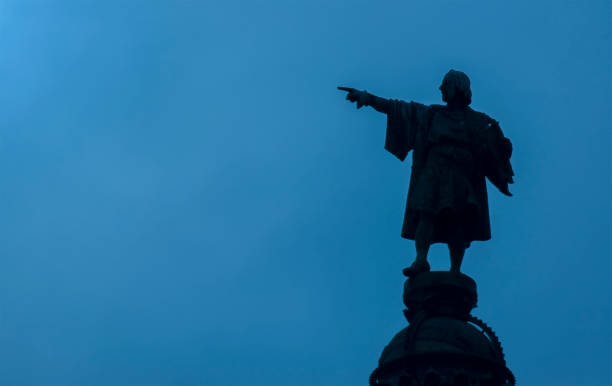
The Columbus Myth: How a Flawed Hero Became a Symbol of Doubt

The Columbus Myth: How a Flawed Hero Became a Symbol of Doubt

For centuries, the story of Christopher Columbus was taught as a triumphant narrative of discovery, bravery, and the unstoppable march of European civilization.

Seeds of Doubt

What role does emotional need play in historical doubt or denial?

Emotional needs—for identity, belonging, or moral superiority—can powerfully shape historical interpretation. A doubter may reject well-documented histories that make their group or heroes look culpable. This protects a positive self-concept. Growth involves acknowledging this emotional layer, separating feelings from facts, and finding pride in a complex, truthful identity that includes learning from past wrongs, which ultimately builds more authentic confidence.

How can leaders harness doubt within a team effectively?

Leaders must legitimize and channel doubt. Create psychological safety where questioning processes or assumptions is seen as valuable, not disloyal. Frame doubt as “how might we improve?“ rather than “this is wrong.“ Use structured methods like pre-mortems (“Imagine we failed; why?“) or red-team exercises. This transforms doubt from a disruptive force into a systematic risk-assessment and innovation tool, building team confidence through thorough examination and collective problem-solving.

How does confirmation bias affect a doubter’s research?

Confirmation bias is the tendency to seek and favor information that confirms existing beliefs. A doubter researching a contested event may only consume sources from one side, seeing them as “doing their own research.“ This creates an echo chamber. Harnessing doubt requires actively seeking out credible opposing viewpoints and evaluating evidence based on source quality, not just alignment with pre-existing doubts.

How does navigating doubt build superior critical thinking skills?

Critical thinking is the disciplined process of actively analyzing and evaluating information. Navigating doubt is its practical training ground. Each time you interrogate a claim’s source, evidence, and logic, or sit with your own uncertain conclusions, you strengthen mental muscles. You learn to distinguish emotion from evidence, recognize logical fallacies, and tolerate ambiguity. This practice moves you from passive acceptance to active discernment, enabling you to deconstruct complex arguments, make reasoned judgments, and build a worldview based on investigated understanding rather than inherited assumption.

What’s the key difference between healthy skepticism and corrosive cynicism?

Healthy skepticism is open-minded inquiry demanding evidence; it says, “Show me the data, and I’m willing to be convinced.“ It targets specific claims. Corrosive cynicism is a closed, pessimistic worldview that dismisses evidence preemptively; it says, “Nothing is ever true or genuine.“ Skepticism seeks clarity and truth, engaging with the process. Cynicism rejects the possibility of truth, disengaging from the process. One is a tool for discernment; the other is a defense mechanism that often leads to apathy and inaction.