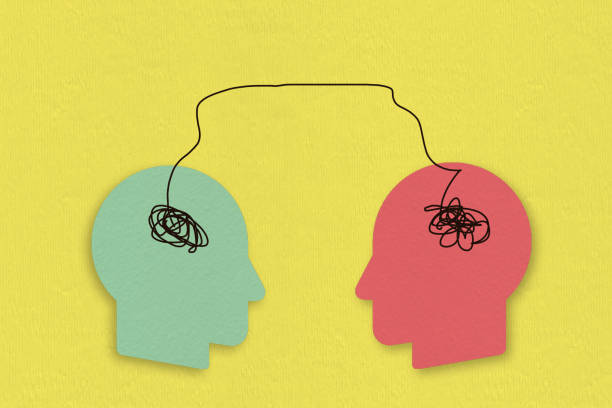
In the early sixteenth century, a quiet but persistent doubt began to gnaw at the conscience of a German monk named Martin Luther. He was not a revolutionary by temperament; he was a devout Augustinian, steeped in the rituals and doctrines of the Catholic Church. Yet, as he read the Psalms and the letters of Paul, a crack appeared in the edifice of his certainty. How could the church sell forgiveness? How could a piece of paper, purchased with coin, erase the stain of sin? That doubt was not an aberration. It was the seed of a transformation that would shatter a thousand-year-old religious monopoly, reorder the political map of Europe, and fundamentally alter how millions understood their relationship with the divine. The story of the Reformation is, at its core, a story of doubt—doubt directed at a deeply entrenched cultural and religious tradition that had gone unquestioned for generations.
The practice of selling indulgences—certificates that purportedly reduced the temporal punishment for sins—had become a lucrative enterprise by Luther’s time. Pope Leo X authorized a special indulgence to fund the rebuilding of St. Peter’s Basilica, and the Dominican preacher Johann Tetzel traveled through German towns peddling grace with the slogan, “As soon as the coin in the coffer rings, the soul from purgatory springs.” For most people, this was simply the way things were. The church was the unquestioned authority on salvation, and its rituals were woven into the fabric of daily life. To doubt the efficacy of indulgences was to doubt the pope, the priests, and the entire system of sacramental grace that had sustained Western Christendom for centuries.
But Luther’s doubt was not a cynical rejection of faith. It was a tormented, intellectual, and deeply spiritual inquiry. He questioned whether human effort—whether buying a document, performing penance, or even attending mass—could truly earn God’s favor. His study of scripture led him to a radical conclusion: salvation came through faith alone, not through works or purchases. This was not merely a theological opinion; it was an existential challenge to the cultural norm that defined the medieval world. The church had long positioned itself as the sole mediator between humanity and God. By questioning that role, Luther was implicitly asking: What if the emperor has no clothes? What if the entire system is built on a foundation of fear and exploitation rather than truth?
The doubt that Luther harbored did not remain private. In 1517, he composed his Ninety-five Theses, a list of arguments against indulgences, and reportedly nailed them to the door of the Wittenberg Castle Church. This act was itself a challenge to academic and ecclesiastical protocol—theses were meant for scholarly debate, not public protest. Yet the printing press, a relatively new technology, transformed Luther’s doubt into a wildfire. Within weeks, his writings were being read across Germany, spreading the subversive idea that an individual could interpret scripture without a priest’s oversight. The doubt became contagious. Others began to question: Why should we pay for salvation? Why should a distant pope in Rome have authority over our local churches? Why should tradition be accepted simply because it has always been so?
The ripple effects were enormous. The Reformation did not merely produce a new branch of Christianity; it triggered a crisis of authority that extended into politics, economics, and daily life. Peasants wondered whether they should still pay tithes to a church they now distrusted. Princes saw an opportunity to break free from papal interference and assert their own control over religious matters. The doubt that started in a monk’s study forced entire societies to reexamine assumptions that had been considered sacred for centuries. It was painful, violent, and divisive—the Thirty Years’ War and countless other conflicts arose from this rupture. Yet it also gave birth to new freedoms: the freedom to read scripture, to worship without a mediator, to question clerical authority, and to found communities based on personal conviction rather than inherited tradition.
For the modern individual grappling with doubt, the Reformation offers a powerful lesson. Doubt is not the enemy of faith; it is the engine of critical thinking. When we challenge societal norms—whether they are religious, political, or cultural—we do not always have to dismantle them. But we must be willing to ask why things are the way they are. Luther’s doubt was uncomfortable, even terrifying, but it led him to a more authentic and unshakeable confidence. He did not become an atheist or a cynic; he became a man who believed because he had internalized his faith, not because he had inherited it. In the same way, when we doubt the traditions we have been handed—be it the expectation to follow a certain career path, to accept a political orthodoxy without question, or to conform to social roles we do not feel fit—we open the door to growth. The doubt that challenges societal norms is the doubt that makes us truly free.