Skip to Content

Historical and Cultural Doubt Examination

The Doubt of Chivalry: Challenging the Medieval Myth of Honor and Courtly Love

The Doubt of Chivalry: Challenging the Medieval Myth of Honor and Courtly Love

For centuries, the image of the chivalrous knight has served as a cornerstone of Western cultural identity: a noble warrior who defends the weak, serves his lord with unwavering loyalty, and worships...
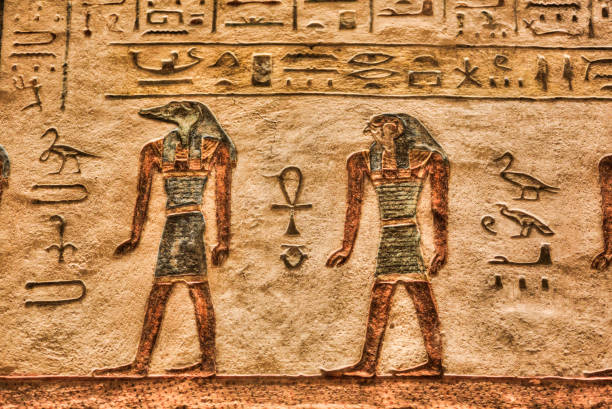
The Invention of the ‘Dark Continent’: Reexamining Colonial Narratives of Africa

The Invention of the ‘Dark Continent’: Reexamining Colonial Narratives of Africa

Few historical myths have proven as stubborn as the image of pre-colonial Africa as a “dark continent”—a land without civilization, written history, or complex political structures.

The Doubtful Origins of the Nuclear Family: Challenging a Cultural Tradition

The Doubtful Origins of the Nuclear Family: Challenging a Cultural Tradition

Few societal structures feel as timeless and natural as the nuclear family: two parents, their biological children, and a private household.

Montaigne’s ’Que Sais-Je?’: Doubt as the Seed of Unshakeable Confidence

Montaigne’s ’Que Sais-Je?’: Doubt as the Seed of Unshakeable Confidence

In an age of information overload, where certainty is often mistaken for strength and hesitation for weakness, the sixteenth-century essayist Michel de Montaigne offers a revolutionary counterpoint.

The Situationist International: Unleashing Doubt Against the Spectacle

The Situationist International: Unleashing Doubt Against the Spectacle

The Situationist International (SI), a small but fiercely radical group of artists, intellectuals, and revolutionaries active from 1957 to 1972, stands as one of the most potent examples of how doubt...

The Radical Doubt of René Descartes: How Methodological Skepticism Shaped Modern Critical Thinking

The Radical Doubt of René Descartes: How Methodological Skepticism Shaped Modern Critical Thinking

Few figures in the history of philosophy have dared to wield doubt as a weapon of liberation as boldly as René Descartes.
The Socratic Paradox: How Questioning Everything Built the Foundation of Critical Thinking

The Socratic Paradox: How Questioning Everything Built the Foundation of Critical Thinking

Among the dusty ruins of ancient Athens, a man walked the agoras asking questions that made the powerful squirm and the wise confess their ignorance.

The Doubt That Toppled Monarchies: How Questioning Divine Right Fueled the Enlightenment

The Doubt That Toppled Monarchies: How Questioning Divine Right Fueled the Enlightenment

For centuries, the idea that kings ruled by divine appointment was accepted as an unshakable truth.

The Crucible of Progress: How the Doubt of Traditional Authority Forged Modern Democracy

The Crucible of Progress: How the Doubt of Traditional Authority Forged Modern Democracy

Throughout human history, the most transformative leaps in social organization have emerged not from unwavering faith in established systems, but from the corrosive, unsettling power of doubt.

The Wisdom of Montaigne: Embracing Doubt as the Path to Self-Knowledge

The Wisdom of Montaigne: Embracing Doubt as the Path to Self-Knowledge

In the tumultuous landscape of sixteenth-century France, torn apart by religious wars and dogmatic certainties, Michel de Montaigne retreated to his library tower and began a radical experiment: he...

The Method of Doubt in the Enlightenment: How David Hume’s Skepticism Forged Modern Critical Thinking

The Method of Doubt in the Enlightenment: How David Hume’s Skepticism Forged Modern Critical Thinking

To the casual observer, skepticism appears as an obstacle—a force that undermines certainty and leaves the mind adrift.
The Socratic Method: Doubt as a Path to Wisdom

The Socratic Method: Doubt as a Path to Wisdom

To stand in the shadow of Socrates is to confront a paradox that still unsettles the modern mind.

Seeds of Doubt

Why do people often doubt personal growth or self-improvement advice?

Doubt towards self-improvement often stems from past failures, perceived complexity, or a fear of vulnerability. When advice promises quick fixes, it clashes with our understanding that meaningful change is hard. This doubt can be a protective mechanism against disappointment or perceived “scams.“ However, it can also be a valuable filter. Use this doubt to critically assess the advice’s source, evidence, and applicability to your unique situation, separating genuine strategies from oversimplified hype.

What role does emotional need play in historical doubt or denial?

Emotional needs—for identity, belonging, or moral superiority—can powerfully shape historical interpretation. A doubter may reject well-documented histories that make their group or heroes look culpable. This protects a positive self-concept. Growth involves acknowledging this emotional layer, separating feelings from facts, and finding pride in a complex, truthful identity that includes learning from past wrongs, which ultimately builds more authentic confidence.

How does confirmation bias affect historical interpretation?

Confirmation bias leads individuals to seek, favor, and recall information that confirms their pre-existing beliefs while ignoring or dismissing contradictory evidence. In history, this can mean a doubter only cites sources that support their alternative theory or interprets ambiguous evidence in a way that aligns with their desired outcome. It is a major barrier to objective analysis and must be actively guarded against.

How did philosophical doubters like Descartes use doubt as a constructive tool?

Descartes employed “methodological doubt,“ systematically questioning all beliefs to discover what was indubitable. This led to his famous “Cogito, ergo sum” (I think, therefore I am). He used doubt not to fall into despair but as an intellectual scalpel to remove uncertain assumptions and establish a firm foundation for knowledge. This demonstrates doubt as a disciplined method for building certainty, not destroying it.

How have historical doubters shaped scientific progress?

Historical doubters are the cornerstone of scientific advancement. Figures like Galileo or Darwin fundamentally questioned accepted truths, forcing paradigm shifts. This systematic skepticism—demanding evidence and challenging hypotheses—is the scientific method itself. By doubting the geocentric model or fixed species, they opened doors to entirely new fields of understanding. Their legacy shows that progress is often born not from blind acceptance, but from courageous questioning of the status quo.