
Skip to Content

Historical and Cultural Doubt Examination

How Self-Doubt Fueled the Brilliance of Marie Curie

How Self-Doubt Fueled the Brilliance of Marie Curie

The narrative of scientific triumph is often painted in bold strokes of unwavering confidence, a myth that obscures a more profound and human truth.
Navigating Historical Conversations: Bridging the Gap with Empathy and Evidence

Navigating Historical Conversations: Bridging the Gap with Empathy and Evidence

Attempting to communicate with someone who doubts a well-established historical fact, such as the Holocaust, the moon landing, or the historical figure of Jesus of Nazareth, can feel like a...
How Historical Doubters Have Fueled the Engine of Scientific Progress

How Historical Doubters Have Fueled the Engine of Scientific Progress

The popular narrative of science often paints a linear picture: a brilliant theorist has a eureka moment, presents evidence, and the world accepts a new truth.

The Engine of Uncertainty: How Doubt Fuels Social and Ethical Advancement

The Engine of Uncertainty: How Doubt Fuels Social and Ethical Advancement

Doubt is often perceived as a weakness, a state of paralyzing indecision that stalls progress.

Strengthening Critical Thinking to Master the Art of Doubt

Strengthening Critical Thinking to Master the Art of Doubt

Doubt is often perceived as an enemy of certainty, a corrosive force that undermines our convictions and paralyzes our decisions.

How Doubt Has Shaped a Better World: Historical Catalysts for Progress

How Doubt Has Shaped a Better World: Historical Catalysts for Progress

Throughout history, the act of doubting established truths has often been stigmatized as heresy or rebellion.

Healthy Doubt vs. Cynical Disbelief: The Historical Skeptic’s Balance

Healthy Doubt vs. Cynical Disbelief: The Historical Skeptic’s Balance

The pursuit of truth has always been shadowed by the question of how to question.
The Vital Spark: How Doubt Propels Science Forward

The Vital Spark: How Doubt Propels Science Forward

To the uninitiated, science can appear as a monolithic edifice of settled facts, an unassailable fortress of knowledge built by geniuses of the past.
Navigating Resistance: How to Respond When Challenging a Deeply Held Tradition

Navigating Resistance: How to Respond When Challenging a Deeply Held Tradition

Challenging a deeply held tradition is an act that requires both courage and conviction, often placing one in the precarious position of facing doubt, skepticism, and sometimes outright hostility.
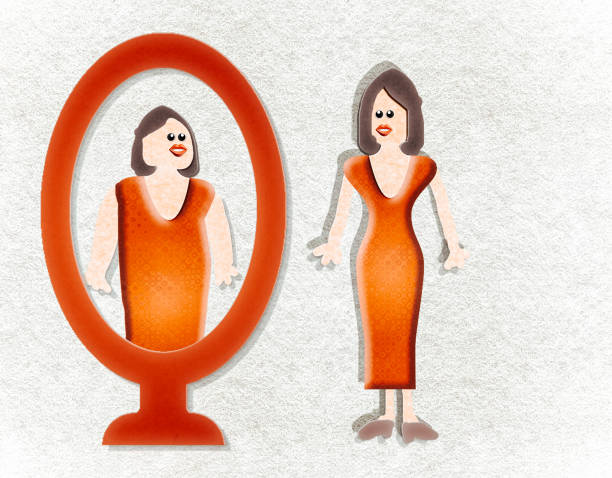
The Essential Role of Skeptics in Shaping a More Ethical World

The Essential Role of Skeptics in Shaping a More Ethical World

Throughout history, the narrative of moral progress is often framed as the triumph of courageous visionaries over ignorant masses.

Transforming Self-Doubt into a Tool for Growth

Transforming Self-Doubt into a Tool for Growth

Self-doubt is a universal human experience, a quiet whisper that questions our capabilities and worth at the very moments we need confidence most.
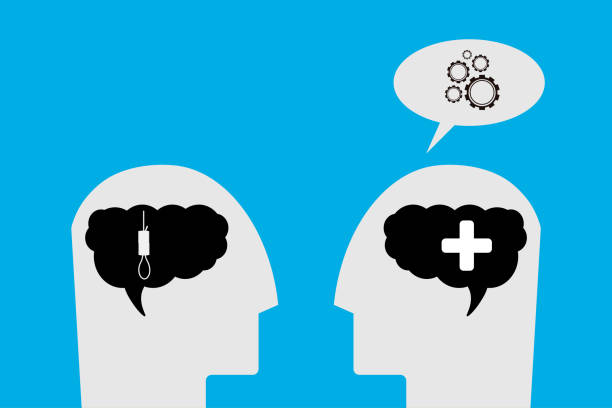
Navigating Doubt: A Thoughtful Response When Beliefs Are Challenged

Navigating Doubt: A Thoughtful Response When Beliefs Are Challenged

When someone questions our deeply held beliefs, the initial reaction is often visceral—a surge of defensiveness, a tightening in the chest, a flush of emotion that demands a swift and forceful rebuttal.

Seeds of Doubt

How Can I Respond to Doubters When I Challenge a Deeply Held Tradition?

Respond with empathy and clarity, focusing on your personal journey rather than attacking the tradition itself. Frame your choice as an evolution of understanding, saying, “This is what resonates with my values now.“ This approach disarms conflict and centers your agency. Use their doubt as a mirror to solidify your own reasoning, asking yourself why their challenge bothers you. This process transforms external pressure into internal confirmation, strengthening your authentic stance without needing to convince the doubter, thereby turning their skepticism into fuel for your own unshakeable confidence.

What historical examples show doubt leading to positive societal change?

The Enlightenment was built on doubting divine right and blind tradition, leading to democratic ideals. Doubt about segregation fueled the Civil Rights Movement. Public doubt about the safety of thalidomide or tobacco led to major regulatory reforms. In each case, refusing to accept “the way things are” sparked investigation, advocacy, and systemic improvement, proving that collective, evidence-based doubt is a powerful engine for justice and public good.

What is the relationship between doubt and intellectual humility?

Doubt is the experiential symptom of intellectual humility, which is the recognition that your knowledge is limited and fallible. Intellectual humility allows you to entertain the possibility that you might be wrong, opening you to new information and perspectives. Doubt is the active application of that humility—the moment you pause your certainty to ask, “Could there be another valid viewpoint or better evidence?“ Together, they prevent dogma, foster continuous learning, and make genuine dialogue and discovery possible.

How can I strengthen my critical thinking to navigate doubt effectively?

Develop a toolkit: actively seek out credible, opposing viewpoints; understand logical fallacies and cognitive biases; practice sourcing and verifying information. Ask probing questions: “What is the evidence? What are alternative explanations? What is the source’s motivation?“ Engage in thought experiments and debate. This disciplined approach turns reactive doubt into proactive inquiry, allowing you to discern between legitimate concerns and misinformation, building unshakeable, well-founded confidence.

How did historical skeptics differentiate healthy doubt from cynical disbelief?

Healthy doubt, as practiced by empiricists like Ibn al-Haytham, was active and inquiry-driven, seeking better evidence. Cynical disbelief is passive rejection without investigation. The key difference is intent: constructive skeptics like Hume doubted to clarify understanding and build stronger models, not merely to tear down ideas. Their doubt was a starting point for exploration, not a final, closed conclusion.