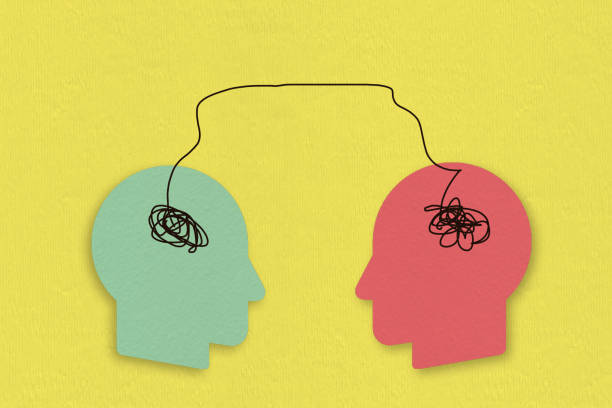
Doubt, often perceived as a weakness or a state of indecision, is in fact a powerful catalyst for intellectual growth. Far from being the enemy of certainty, doubt is its essential precursor—the rigorous quality control mechanism of the mind. When harnessed constructively, doubt does not paralyze; instead, it actively improves critical thinking skills by fostering deeper inquiry, challenging assumptions, and cultivating intellectual humility. The journey from a questioned belief to a well-reasoned conclusion is where true critical thinking flourishes.
At its core, critical thinking requires more than just absorbing information; it demands active engagement with it. Doubt initiates this engagement. When we encounter a claim, whether in a news article, a scientific study, or a persuasive argument, blind acceptance is the antithesis of critical thought. A healthy dose of skepticism, however, prompts us to ask the fundamental questions: “What is the evidence for this?“ “Are there alternative explanations?“ “What might be the source’s bias or motive?“ This interrogative process, sparked by doubt, forces us to move beyond surface-level understanding. We begin to analyze the structure of arguments, evaluate the credibility of sources, and distinguish between correlation and causation. In this way, doubt is the engine that drives the analytical component of critical thinking, ensuring we are not merely passive recipients of information but active investigators.
Furthermore, doubt serves as a crucial tool for deconstructing our own assumptions and cognitive biases. We all operate with ingrained beliefs and mental shortcuts—confirmation bias being a prime example, where we favor information that confirms our existing views. Doubt acts as an internal disruptor to this comfortable echo chamber. By consciously doubting our own initial conclusions or preferred narratives, we create mental space to consider opposing viewpoints and contradictory data. This practice of intellectual self-interrogation builds what psychologists call “cognitive flexibility”—the ability to adapt our thinking in light of new evidence. A thinker who never doubts their own position is not a critical thinker but an ideologue. Thus, doubt cultivates the essential critical thinking disposition of open-mindedness and fair-mindedness, allowing for more nuanced and balanced judgments.
The relationship between doubt and intellectual humility is also profound. To doubt is to acknowledge the limits of one’s own knowledge and the fallibility of human understanding. This humility is not a weakness but a strength. It recognizes that certainty is often provisional and that the most robust conclusions are those that have weathered serious questioning. A humble thinker, guided by principled doubt, is more likely to seek out new information, collaborate with others, and revise their stance when warranted. This stands in stark contrast to the arrogance of unquestioned certainty, which is brittle and resistant to growth. In professional, academic, and personal realms, the ability to say “I might be wrong, let’s examine this further” is a hallmark of both strong critical thinking and effective leadership.
Ultimately, doubt should not be seen as a destination but as a disciplined method of navigation. It is the practice of withholding final judgment until sufficient inquiry has been conducted. This does not lead to perpetual uncertainty but to more resilient and justified certainty. The conclusions we reach after rigorously doubting and testing them are far more reliable than those we adopt uncritically. By embracing doubt as an ally, we train our minds to resist manipulation, solve complex problems with greater creativity, and engage with the world in a more thoughtful and discerning manner. In a landscape saturated with information and misinformation, the skill to thoughtfully doubt—to question, probe, and verify—is perhaps the most critical thinking skill of all.