
Skip to Content

Philosophical and Existential Doubt Exploration

The Socratic Path: Turning Doubt into a Compass for Living

The Socratic Path: Turning Doubt into a Compass for Living

It begins as a whisper in the quiet hours—a gnawing sense that the ground beneath your beliefs might be thinner than you assumed.

Embracing the Void: Navigating the Search for Meaning through Existentialism

Embracing the Void: Navigating the Search for Meaning through Existentialism

The human experience is often punctuated by profound moments of doubt—a creeping sense of uncertainty regarding our purpose, our choices, and the very nature of the reality we inhabit.

The Brain in a Vat: How Radical Doubt Forges Unshakeable Confidence

The Brain in a Vat: How Radical Doubt Forges Unshakeable Confidence

Imagine, for a moment, that you are not reading these words on a screen.

The Brain in a Vat: How Radical Doubt Refines Your Relationship with Reality

The Brain in a Vat: How Radical Doubt Refines Your Relationship with Reality

Imagine for a moment that every sensation you have ever experienced—the warmth of the sun on your skin, the weight of a coffee cup in your hand, the sound of a friend’s laughter—is nothing more than...

The Absurd Hero: Finding Meaning in the Face of Existential Doubt

The Absurd Hero: Finding Meaning in the Face of Existential Doubt

The most persistent form of doubt is not whether a friend is lying or whether a conspiracy theory holds water, but whether life itself has any inherent purpose.

The Socratic Paradox of Free Will: How Questioning Choice Strengthens Your Agency

The Socratic Paradox of Free Will: How Questioning Choice Strengthens Your Agency

Few questions haunt the human mind with more persistent intensity than the nature of free will.
The Socratic Path Through the Doubt of Purpose

The Socratic Path Through the Doubt of Purpose

The question “Why am I here?” lingers in the quiet moments—between tasks, beneath sleep, at the edge of every success and every failure.

The Illusion of the Self: How Doubting Personal Identity Can Unlock Radical Freedom

The Illusion of the Self: How Doubting Personal Identity Can Unlock Radical Freedom

The question “Who am I?” has haunted humanity for millennia, yet few of us pause to consider that the very act of asking it might be built on a fragile assumption.

The Absurdity of Choice: Embracing Existential Doubt as a Path to Authenticity

The Absurdity of Choice: Embracing Existential Doubt as a Path to Authenticity

Every human being wakes into a world that offers no instruction manual.

The Practical Wisdom of Ancient Skepticism: How Suspending Judgment Cultivates Inner Peace

The Practical Wisdom of Ancient Skepticism: How Suspending Judgment Cultivates Inner Peace

The Western philosophical tradition has long wrestled with doubt as an obstacle to knowledge, yet an entire school of thought from antiquity embraced doubt not as a failure but as a deliberate, life-affirming practice.

The Problem of Skepticism: Can We Know Anything at All?

The Problem of Skepticism: Can We Know Anything at All?

The moment you begin to question whether the world around you is real, you have stepped into one of the oldest and most unsettling territories of human thought: radical skepticism.
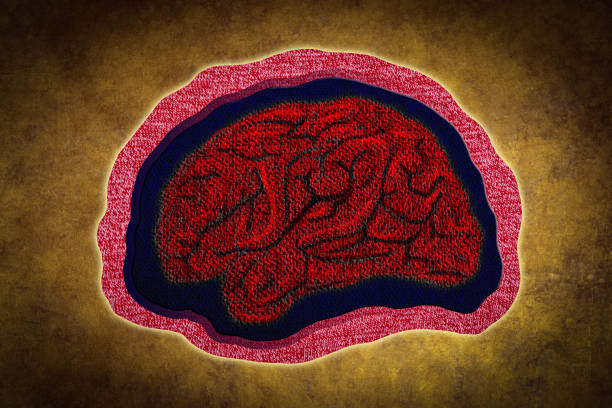
The Brain in a Vat: A Philosophical Crucible for Radical Doubt

The Brain in a Vat: A Philosophical Crucible for Radical Doubt

Consider for a moment the most unsettling possibility imaginable: that every sensation, every memory, every relationship, and every truth you hold dear is nothing more than electrical signals...

Seeds of Doubt

How can doubting myself lead to greater confidence?

Self-doubt, when engaged constructively, acts as an internal audit. It prompts you to question your capabilities, preparation, and assumptions not to cripple you, but to identify real gaps. By methodically addressing these areas—acquiring skills, gathering evidence of past successes, or reframing perspectives—you build competence and self-awareness. This process replaces fragile, untested confidence with a robust, earned assurance. You become confident not because you never doubt, but because you have investigated your doubts and fortified your foundation.

How does confronting doubt build unshakeable confidence?

Unshakeable confidence built through doubt is not the boastful certainty of being right, but the quiet assurance of being resilient. It’s the knowledge that you have faced internal uncertainty, questioned your foundations, and consciously rebuilt them. This confidence is earned, not inherited. It understands that beliefs may evolve, but your ability to critically think, adapt, and choose your values will hold firm. It is confidence in your process, not just in your current conclusions.

Who are the most famous philosophical doubters and what did they believe?

René Descartes famously used radical doubt to find a foundational truth, concluding “I think, therefore I am.“ He doubted everything except his own existence as a thinking being. Similarly, ancient Skeptics like Pyrrho argued that we cannot know the true nature of reality, advocating for suspension of judgment to achieve mental tranquility. These thinkers demonstrate that systematic doubt is not an endpoint but a powerful tool to strip away assumptions and build more robust understanding, aligning with your journey to use doubt constructively.

What is the core value of philosophical skepticism?

Philosophical skepticism is not about cynical disbelief but about rigorous inquiry. It challenges us to examine the foundations of our knowledge, beliefs, and assumptions. By systematically doubting, we move beyond passive acceptance to active understanding. This process strengthens reasoning, exposes biases, and builds intellectual resilience. When harnessed, it becomes a powerful tool for personal growth, transforming uncertainty from a source of anxiety into a disciplined method for achieving more confident and justified convictions.

What philosophical traditions view doubt as a virtue?

Skepticism in ancient Greek philosophy, notably Pyrrhonism, used doubt to suspend judgment and achieve mental tranquility. Cartesian doubt (Descartes) methodically questioned all beliefs to find an indubitable foundation for knowledge. In modern times, fallibilism (Peirce, Popper) holds that all knowledge is provisional and subject to revision, making doubt essential for scientific progress. These traditions champion doubt not as an end, but as a disciplined method to achieve clearer understanding, avoid error, and foster intellectual humility.