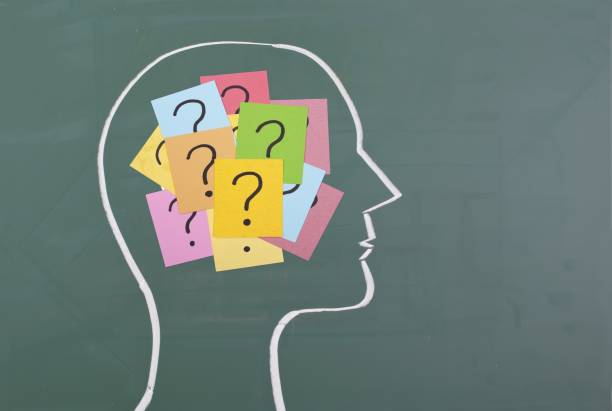
Doubt is rarely the enemy we imagine it to be. In its raw form, it is a signal—a flicker of awareness that something deserves closer attention. But when doubt loops back on itself, it becomes a spiral. You question a decision, then question your ability to make decisions, then question whether you are the kind of person who can trust anything at all. That spiral is paralysis. It feels like safety because it prevents mistakes, but it is actually a prison built from imagined futures that never arrive. Moving from paralysis to purposeful action requires a fundamental shift: not eliminating doubt, but reorienting your relationship to it.
The first step is to recognize that doubt is not a command to stop. It is a question, and questions are meant to be answered, not obeyed. When you feel stuck, ask yourself what exactly you are doubting. Is it the outcome? Your competence? The reliability of the information you have? Often, the doubt is vague, a diffuse unease that masquerades as clarity. Naming the specific fear drains much of its power. You cannot act on a fog, but you can act on a named fear. Once you say, “I am afraid this choice will hurt someone,” or “I am afraid I don’t know enough,” you have transformed an overwhelming feeling into a bounded problem. And bounded problems have solutions.
The second step is to lower the stakes of any single decision. Paralysis thrives when you treat one choice as a final verdict on your worth. But a healthy identity as a questioner understands that every decision is an experiment, not an exam. Experiments produce data, not judgments. If you choose a path and it leads somewhere unexpected, you have not failed; you have learned something about the territory. This is how scientists work, and it is how resilient people work too. They do not wait for certainty before moving. They move with the best available understanding, then adjust. Purposeful action is not the absence of doubt. It is doubt moving alongside you, like a junior partner whose input you acknowledge but do not let drive the vehicle.
A powerful technique for breaking the spiral is to impose a decision deadline. Give yourself a reasonable amount of time to gather information, weigh options, and consult your instincts. Then choose. The deadline forces your mind to stop cycling through infinite possibilities and begin engaging with the chosen one. You will notice that once a decision is made, your energy shifts from dreading the outcome to solving the problems the outcome presents. That shift is the essence of purpose. Purpose is not a grand destiny; it is simply the direction you commit to in the present moment. And commitment, even to an imperfect path, is almost always more productive than perfect hesitation.
Another key is to separate doubt from fear. Doubt is intellectual; fear is physical. Doubt asks, “What if I am wrong?” Fear says, “I cannot bear the consequences.” You can reason with doubt, but fear needs to be soothed through action. When you feel paralyzed, check your body. Are you holding your breath? Clenching your jaw? Racing heart? These are fear responses, and no amount of thinking will resolve them. Instead, take one small physical step—stand up, walk around, write a single sentence, make a single phone call. Action regulates the nervous system. Once your body calms down, your mind can think more clearly. This is why purposeful action is not the enemy of doubt but its medicine.
Finally, remember that the goal is not to become someone who never doubts. That person does not exist. The goal is to become someone who doubts without collapsing. You build that identity by taking small risks, observing the results, and realizing that uncertainty is survivable. Each time you act despite doubt, you teach yourself a deeper truth: that you are capable of navigating the unknown. That confidence is not the absence of questions. It is the presence of a self that can hold questions open while still moving forward.
In the end, the spiral is broken not by finding the perfect answer, but by remembering that you are bigger than the question. Doubt will always be part of the landscape. You simply stop waiting for the fog to lift before you walk. You walk, and the fog parts as you go.