
The Power of Falsification: How Karl Popper’s Criterion Sharpens Critical Thinking
Every day, we are bombarded with claims that purport to be true.

The Power of Shared Vulnerability in Questioner Communities
To build a healthy identity as a questioner, you must first accept that doubt is not a solitary affliction but a universal human experience.
Mastering the Art of Mindful Journaling to Silence Self-Doubt
The inner critic is a persistent, often harsh, internal voice that evaluates, judges, and undermines our sense of self-worth.

The Herd Within: Overcoming the Fear of Social Isolation to Question Group Norms
The human need to belong is one of biology’s most primal scripts.

The Semmelweis Reflex: How Doubt and Dogma Delayed a Lifesaving Discovery
In the mid-nineteenth century, a young Hungarian physician named Ignaz Semmelweis made an observation that should have revolutionized medicine.

The Practical Wisdom of Ancient Skepticism: How Suspending Judgment Cultivates Inner Peace
The Western philosophical tradition has long wrestled with doubt as an obstacle to knowledge, yet an entire school of thought from antiquity embraced doubt not as a failure but as a deliberate, life-affirming practice.

The Doubt That Sparked the Reformation: Martin Luther and the Birth of Modern Individualism
On October 31, 1517, a German monk named Martin Luther nailed a document to the door of the Castle Church in Wittenberg.

The Illusion of Certainty: Why Fear and Self-Doubt Often Masquerade as Intuition
There exists a quiet but persistent confusion at the heart of every major decision we face.

The Hidden Curriculum: How Childhood Praise Patterns Shape Your Imposter Syndrome Map
Consider the moment a five‑year‑old carefully colors inside the lines of a dinosaur worksheet, only to hear an adult exclaim, “You are so smart!” That single sentence, repeated across a thousand tiny...

The Fear of Being Wrong: Why Speaking Up with Half-Formed Ideas Builds Real Confidence
The most paralyzing moment in any workplace isn’t the quarterly review or the difficult conversation with a client.

The Radical Doubt of Descartes: How Questioning Everything Forged Unshakeable Certainty
In the quiet of a Dutch winter in 1619, a young French philosopher sat alone in a stove-heated room, determined to tear down every belief he had ever held.

The False Alarm: Why Fear Masquerades as Intuition and How to Tell Them Apart
Imagine standing at the edge of a decision that could change your life.

The Emotional Threshold: Why Healthy Skepticism Can Slip into Conspiratorial Thinking
The difference between a skeptical citizen and a committed conspiracy theorist is rarely a matter of intelligence or education.

The Grief of Losing a Universe
When a believer begins the process of deconstruction, they often expect an intellectual shift—a changing of minds about inerrancy, historicity, or moral positions.

The Paradox of Certainty: Balancing Skeptical Inquiry with Intuitive Wisdom
The human mind is a battlefield where two ancient generals wage a quiet war.

The Problem of Skepticism: Can We Know Anything at All?
The moment you begin to question whether the world around you is real, you have stepped into one of the oldest and most unsettling territories of human thought: radical skepticism.

The Silent Legacy: How Early Emotional Neglect Fuels Adult Self-Doubt
The adult mind often feels like a fortress built over a foundation laid in childhood, and for many, that foundation contains cracks invisible to the eye yet powerful enough to shape every thought.
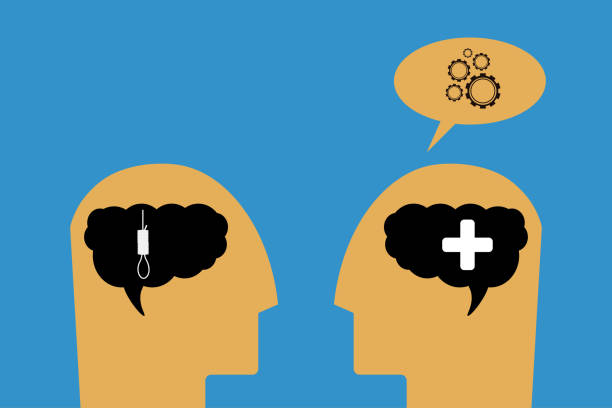
The Hidden Gift of Saying “I’m Not Sure Yet” in Relationships
The moment arrives in nearly every meaningful relationship.

The Five-Minute Courage Rule: Your Secret Weapon Against Analysis Paralysis
The voice of your inner critic is never louder than when you stand at the precipice of action.
The Underdog’s Secret: How a Process-Oriented Focus Slays Goliath-Sized Doubt
Every underdog story begins the same way: with a giant standing in the path.

The Empathy Imperative: Understanding the Emotional Roots of Conspiracy Belief in Close Relationships
When a loved one falls down the rabbit hole of conspiracy thinking, the natural instinct is to fight back with facts.

The Role of Vulnerability in Modeling Doubt for Children
True learning begins not when answers are given, but when questions are welcomed.

The Courage to Be Seen: Transforming Social Doubt into Authentic Connection
Every meaningful relationship begins with a single, terrifying act: the decision to let someone see you as you truly are.

The Trap of All-or-Nothing Thinking: How Perfectionism Fuels Self-Doubt
All-or-nothing thinking, also known as black-and-white or dichotomous thinking, is one of the most pervasive cognitive distortions that quietly undermines self-confidence.